
Questioning Egbert's Edict
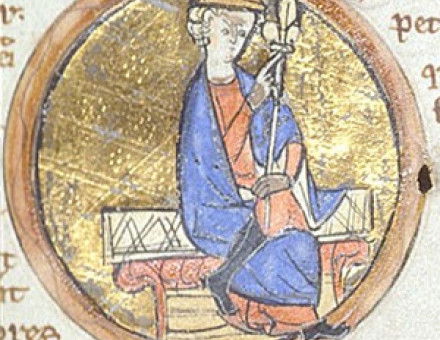
John Gillingham challenges an idea, recently presented in History Today, that the Anglo-Saxon King Egbert was responsible for the naming of England.
John Gillingham challenges an idea, recently presented in History Today, that the Anglo-Saxon King Egbert was responsible for the naming of England.
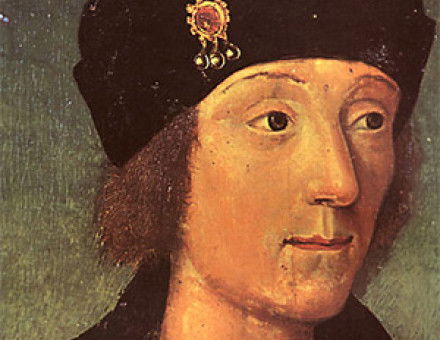
Derek Wilson looks at Henry Tudor’s long period of exile and asks what influence it had on his exercise of power following his seizure of the English throne in 1485.

Joan M. Fawcett utilises the household records for the Countess of Leicester, sister of Henry III, to retrace a crucial year for the de Montfort fortunes.
Garth Christian appraised the “ancient character” of Lewes, taking in its Puritanical influence, its legacy of ironworks and its architectural highlights.
J.D. Hargreaves appraised Swindon, “a city very much itself”, with a view of its idiosyncrasies, architecture and people.
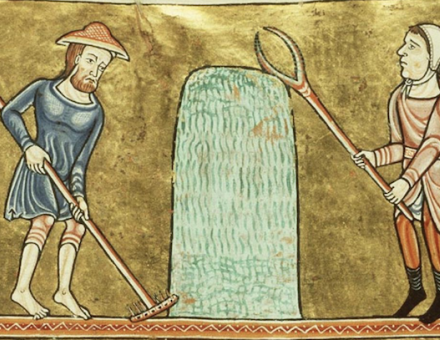
Whilst many Anglo-Saxons suffered under the Norman yoke, the Conquest came with the promise of freedom for England’s slaves.
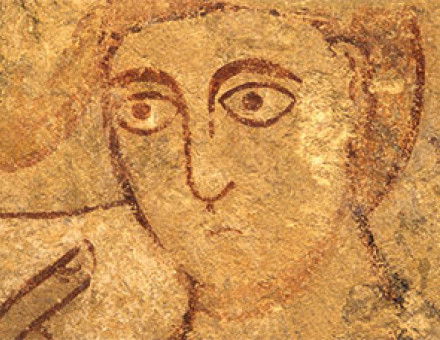
George T. Beech investigates whether a King of Wessex adopted a new name for his country in 828, but failed to implement the change.
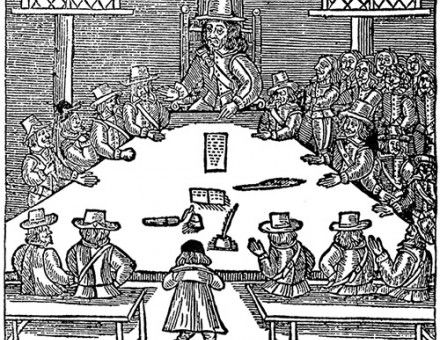
Philip Baker considers the lasting impact of the Levellers’ famous efforts to reform the English state in the aftermath of the Civil Wars by means of written agreements guaranteeing the sovereignty of the people.
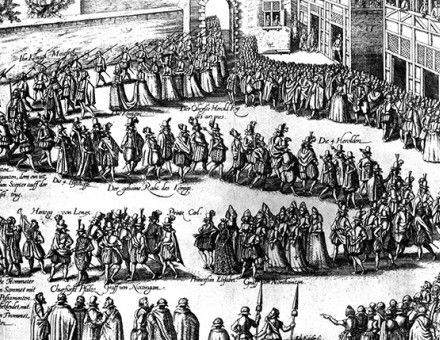
The wedding of Elizabeth Stuart and Frederick V took place on February 14th 1613.
Thomas Balston profiles John Boydell, Lord Mayor of London in 1790, who created the first great printselling business in Britain, and could count Reynolds, Romney, Fuseli, Benjamin West, and Wright of Derby among the artists who worked for him.