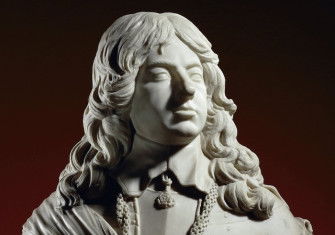
Samuel Taylor Coleridge once said that two writers above all others excited in him ‘the sense and emotion of the marvellous’. One was William Shakespeare and the other was a 17th-century historian called Thomas Fuller. ‘The Great Tom Fuller’, as Samuel Pepys called him, blazed like a comet in his lifetime and glowed for a good while afterwards, but then seemed to drop almost entirely out of the firmament. He is worth remembering today not only for the warmth of his voice and the strength of his intellect, but as a reminder of the power of history in times of extreme violence.
Register to read more articles for free.
When you register, you will receive the History Today newsletter. Click here to read our Terms of Use.
Samuel Taylor Coleridge once said that two writers above all others excited in him ‘the sense and emotion of the marvellous’. One was William Shakespeare and the other was a 17th-century historian called Thomas Fuller. ‘The Great Tom Fuller’, as Samuel Pepys called him, blazed like a comet in his lifetime and glowed for a good while afterwards, but then seemed to drop almost entirely out of the firmament. He is worth remembering today not only for the warmth of his voice and the strength of his intellect, but as a reminder of the power of history in times of extreme violence.
Thomas Fuller was a champion of moderation, which he described as ‘a mixture of discretion and charity in one’s judgment [sic]’. He was born in Northamptonshire in 1608 and, after attending Cambridge University, followed his father into the Church. He was a portly figure, ruddy and unkempt. One contemporary said he looked like a butcher. Another, his anonymous biographer, admitted that ‘it was with some trouble to himself to be either neat or decent’.
But Fuller was a force and he consistently impressed, both in the pulpit, where he drew in crowds from all over London, and as a historian with a remarkable memory. ‘A perfect walking library’ according to his biographer, Fuller could recite all London’s shop and tavern signs from Temple Bar to Cheapside Conduit, on both sides of the road, forwards and backwards.
When Charles I raised his standard against Parliament on 22 August 1642, marking the official beginning of the Civil War in England, Fuller was a lecturer at the Savoy Chapel, just off the Strand. Like a great many other Londoners, he campaigned for peace. ‘War makes a land more wicked’, he preached in December, ‘makes a land more woeful, is bad in itself, is worse in its train, destroys Christian people.’ He knew that moderates were ‘commonly crushed betwixt the extreme parties on both sides’ but he kept his mind open and his manner mild, staying in the city after many others had left to join the king in Oxford. In the summer of 1643 Parliament introduced a new loyalty oath, which required subscribers to promise not to support the forces of the king. Fuller refused to take it without reservation. Then, on 22 August, the first anniversary of the war, his baby daughter died. Five days later, he buried his wife. Personally and publicly devastated, he took the road to Oxford.
Hoary hairs
Like many reluctant royalists Fuller was critical of his own side, which he blamed in no small part for the Civil War. He believed that a monarch should be checked and balanced by an active parliament to safeguard the ancient constitution and the liberties of the people. The roots of the conflict, he thought, lay in ‘the church history of Britain’, particularly the recent authoritarianism of the Archbishop of Canterbury, William Laud. In Fuller’s opinion, Laud had used ‘more vinegar than oil’ in dealing with nonconformists (Fuller disliked the pejorative term ‘Puritan’) and was guilty of ‘over-meddling in state matters’. In the end, though, he sensed a greater threat from the Long Parliament, with its unlawful ordinances, arbitrary taxation and radical drive to dismantle the Mother Church. Whatever her flaws, Fuller argued, the Church was a pillar of the commonwealth: ‘My hoary hairs will go down to the grave in sorrow for her sufferings.’
He arrived in Oxford in September 1643 and stayed at Lincoln College, where, he quipped, ‘seventeen weeks cost me more than seventeen years in Cambridge’. He was appointed chaplain to Lord Hopton who commanded the king’s army in the west. He joked that his priority was no longer to study history, but to avoid becoming a history. According to his biographer, though, he never stopped researching. ‘With the progress of the war, he marched from place to place, and wherever there happened, for the better accommodation of the army, any reasonable stay, he allotted it with great satisfaction to his beloved studies.’
Fuller realised the imperative of preserving his nation’s heritage before it was shovelled into the furnace of war. Every day archives were being destroyed and monuments defaced. At Winchester Cathedral parliamentarian troopers rode down the aisle, shot at two statues of Charles I and his father James I and scattered all the ancient charters and deeds. Some were thrown into the river and some large parchments, recorded Winchester’s chapter clerk, ‘they made kites withal to fly in the air’. The mortuary chests of the old pre Conquest kings were broken open and the bones allegedly used to smash the cathedral’s stained-glass windows. Fuller could not understand how soldiers could behave so ‘barbarously’ towards innocent tombs. ‘Why malice should scratch out that which did not bite it is to me unknown.’ The Civil War created an urgency to pick up the shards of the past before they were lost forever. According to Fuller’s biographer, he sat for hours listening to the ‘circular rambles’ of ancient churchwardens and ‘other superannuated people for the gleaning of two lines to his purpose’.
Moving mountains
Fuller was also concerned about the false narratives coming out of the partisan newsbooks that had mushroomed since the collapse of censorship. His fear was that ‘the pamphlets of this age may pass for records with the next’ and that ‘what we laugh at, our children may believe’. He appreciated the power of facts to combat propaganda and carried his notebook like a weapon. ‘A commonplace-book’, he wrote, ‘contains many notions in garrison, whence the owner may draw out an army into the field on competent warning.’
In March 1644, after the royalist defeat at the Battle of Cheriton, Fuller fled with the rest of Hopton’s depleted force to Basing House, the home of the Marquess of Winchester in Hampshire. Both a royalist stronghold and a civilian refuge, Basing House was, Fuller observed, ‘the greatest of any subject’s house in England … The motto Love Loyaltie was often written in every window thereof and was well practised in it’. The garrison’s resistance had become legendary: the previous autumn, its 300 defenders had seen off an assault from a force of around 6,000 men. The summer would herald a 24-week blockade that would push the house to the brink of starvation. But conditions were relatively tolerable during Fuller’s sojourn, ‘only the noise of the cannon playing from the enemy’s leaguer interrupted the prosecution of digesting his notes’.
After about a month, Fuller went west to Exeter where he published a selection of prayers and reflections called Good Thoughts in Bad Times. In one, he began:
In Merioneth Shire in Wales, there be many mountains, whose hanging tops come so close together that shepherds, sitting on several mountains, may audibly discourse one with another. And yet they must go many miles before their bodies can meet together, by the reason of the vast hollow valleys which are betwixt them. Our Sovereign, and Members of his Parliament at London, seem very near agreed, in their general and public professions; Both are for the Protestant Religion. Can they draw nearer? Both are for the Privileges of Parliament. Can they come closer? Both are for the Liberty of the Subject. Can they meet evener? And yet, alas, there is a great gulf and vast distance betwixt them which our sins have made, and God grant that our sorrow may seasonably make it up again.
It would take 15 years, two more civil wars and a regicide before king and Parliament would reconvene.
For Fuller, the Interregnum was a wretched time. ‘I was feeble, an exile, a nobody,’ he wrote. But he kept on working and thinking and hoping. Good Thoughts in Worse Times, which was published in 1647, was eventually followed, in 1660, by Mixt Contemplations in Better Times. In May that year the monarchy was restored. Fuller was part of the group that sailed to The Hague and returned with Charles II. One year later, on 16 August 1661, he succumbed to a fever and died.
Worth remembering
In 1662 Fuller’s son John published the book that his father had been working on at Basing House and intermittently over the years. The History of the Worthies of England, popularly known as Fuller’s Worthies, was the first major dictionary of English biography. Because of the way Fuller structured it, situating his subjects within their counties and alongside their ‘native commodities and rarities’, it was a landscape as well as a portrait. He wrote about Cornish tin mines and Sussex foundries, Kent cherries and Cheshire cheese. He digressed on the moles in Hampshire (‘malignant pioneers, mischievous to grass, more to grain, most to gardens’) and the small dogs from Portsmouth that hunted them.
The men – and a few women – who illuminated the Worthies were warriors, statesmen and prelates, naturally, but also unlikely heroes – lawyers, librarians, musicians, inventors, the founders of free schools and almshouses, the builders of bridges and conduits, and ‘memorable persons’ who were simply exceptional (‘this last topic is like a public inn, admitting all comers’).
A Victorian illustration of the end of the Siege of Basing House, 1873. British library/Flickr.
He wrote about James Yorke, a Lincolnshire blacksmith whose horseshoes were so thin and light that ‘if Pegasus himself would wear shoes, this man alone is fit to make them’. He introduces us to Edward Bone, a deaf mute from Cornwall who taught himself how to lip-read and sign. And to Thomas James, the first librarian of the Bodleian in Oxford: ‘Some men live like moths in libraries, not being better for the books, but the books the worse for them, which they only soil with their fingers. Not so Dr James, who made use of books for his own and the public good.’ Fuller included Joan Tuckvile, who ensured that Exeter’s criminals were decently buried, and John Roman, ‘a short clownish grub’, who could carry an ox.
What comes across powerfully from a reading of Fuller’s Worthies is his fondness for the English landscape, its culture and people, in all their variegations, with all their flaws. Like a portrait painter, he fixed upon the details that made his subjects distinctive and real. His writing is suffused with an elegiac strain. On the subject of an oak tree that reportedly sprouted green leaves every Christmas, he wrote:
It groweth nigh Lindhurst in the New Forest, and perchance I could point more exactly at the position thereof, but am loath to direct some ignorant zealot, lest he cut it down under the notion of superstition, and make timber of this oak, as some lately have made fuel of the hawthorn at Glassenburie.
The Christmas-flowering ‘holy thorn’ at Glastonbury was associated with the legend of Joseph of Arimathea and the early Christians. It survived the dissolution of the abbey, but was cut down and burned by a Roundhead soldier in the Civil War. When Wenceslaus Hollar engraved Glastonbury after the war, he put the tree back in.
Fuller’s legacy endures in the successor to his Worthies, The Oxford Dictionary of National Biography. He also wrote seminal works on the Crusades and the history of Christianity in Britain, but it is his salvage effort, his attempt to reclaim the land that he loved and return colour to memories blanched by trauma, that chimes loudest today.
Jessie Childs’ latest book is The Siege of Loyalty House: A Civil War Story (Bodley Head, 2022).