
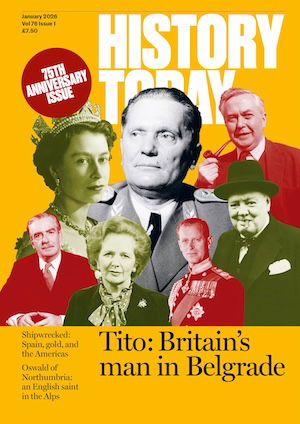
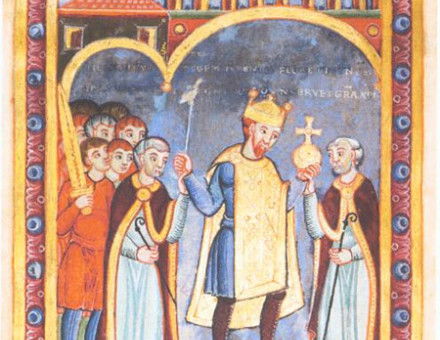
The Emperor Henry III
Peter Munz finds that the eleventh-century Holy Roman Emperor was one of those rare rulers who took the ethics of their calling literally.
Peter Munz finds that the eleventh-century Holy Roman Emperor was one of those rare rulers who took the ethics of their calling literally.

An international merchant, Jacques Coeur became banker to the court of Charles VII of France. By 1450, writes A.R. Myers, Couer had reached a magnificent height of prosperity
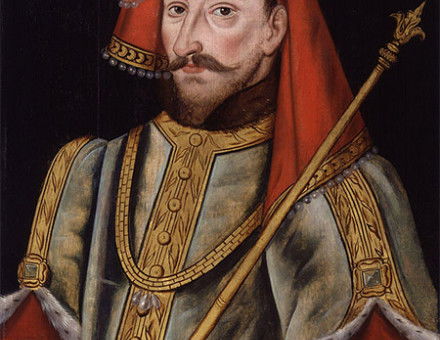
During the troublous reign that began when he dethroned his cousin Richard, Henry IV encountered a long series of exhausting crises. He met his troubles, writes A.L. Rowse, with resilience and courage.
About the beginning of the fourteenth century, writes A.L. Moir, a prebendary of Lincoln Cathedral completed his ambitious world map, in which geographical information is mixed with historical details and pictures of fantastic legendary monsters.
C.T. Allmand introduces the chronicler, Jean Froissart, who left to posterity a fascinating account of the events and attitudes of his age, which he himself mirrored so faithfully.
Hugh Ross Williamson describes how, in the fierce dynastic struggles of the later fifteenth century, Edward IV’s brother, George Plantagenet, played a devious and ill-fated part.
Just when the great merchant-banker had reached the zenith of his career, writes A.R. Myers, Jacques Couer was suddenly disgraced and imprisoned. Three years later, he was able to escape and took refuge, first in Provence, then in Rome with a sympathetic Pope.
Though ill-famed, even in his own day, Louis XI was also described as “the wisest and most dexterous” of medieval rulers. By J.H.M. Salmon.
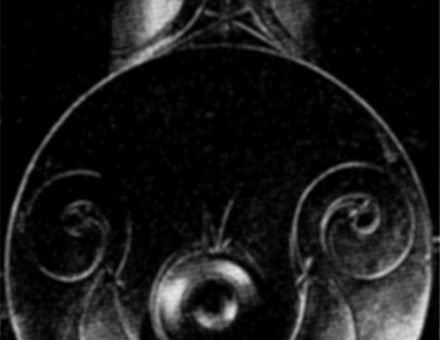
Between the coming of St. Patrick and the arrival of the Normans art, literature and religion flourished in a country that had no organised central government.