

Mary Stewart in France and Scotland
Retha Warnicke examines the tumultuous career of Mary, Queen of Scots, before her long incarceration by her cousin Elizabeth I of England.
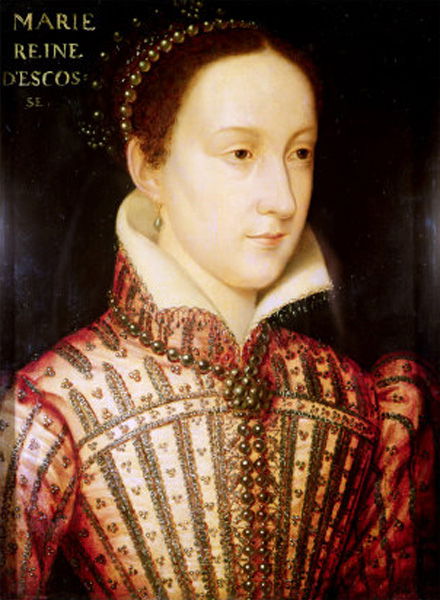 Many events in the life of Mary Stewart are controversial, from her birth in 1542 to her death in 1587. The two most well-known modern studies of her are by Antonia Fraser and Jenny Wormald. Fraser views her as a romantic figure, interpreting her union with Henry Stewart, Lord Darnley, as one of passion and her alliance with James Hepburn, fourth earl of Bothwell, as a response to his rape of her. Generally agreeing with Fraser about the nature of these two marriages, Wormald concentrates on condemning Mary’s effectiveness as a ruler. This essay will argue not only that she sought to be an effective ruler but also that she did not enter into a marriage of passion with Darnley. It will, however, validate the charge of Bothwell’s sexual violence.
Queen Regnant in Scotland
Scholars have debated whether Mary was born on 7 or 8 December 1542, even though she celebrated her birthday on the 8th. As her contemporaries were sometimes vague about dating events that occurred shortly after midnight, it is likely that she was born in the early hours of the 8th at Linlithgow Palace to Mary of Guise, the second wife of James V of Scotland, whose parents were James IV and Margaret Tudor, a sister of Henry VIII. As Mary’s father died a few days after her birth in despair because of the recent English victory at Solway Moss, she could not remember a time when she was not queen regnant.
The immediate accession controversy was not over her sex but her age, for she required a regent. The heir presumptive, James Hamilton, second earl of Arran, gained the office with English aid but soon found that his arrangements for Mary to wed Henry VIII’s heir were extremely unpopular. Arran’s major rival was Matthew Stewart, fourth earl of Lennox, who returned from exile as a French partisan and claimed to be the rightful heir presumptive and regent because of some irregularity in the marriage of Arran’s parents. After Mary’s coronation in September 1543, Arran rejected the English alliance, and in 1548, having been promised the dukedom of Châtelherault, agreed to her removal to France as the betrothed of Francis, the dauphin, who was born in 1544. Meanwhile, the English invaded Scotland, attempting to seize Mary, a claimant to their throne as a grandchild of Margaret Tudor, in raids called the Rough Wooing. Lennox retreated to England and wed Margaret Douglas, the daughter of Margaret Tudor, who gave birth to Darnley in 1545.
French Interlude
In France, Mary joined Catherine de Medici’s and Henry II’s children in the royal nursery. As his son’s betrothed, Henry granted her status over his daughters and removed several of her Scottish attendants, including four girls named Mary, who were educated at a convent. Besides French, Mary learned how to dance, embroider, to play the lute, and received a typical Renaissance education, studying the classics on the Erasmian model. An intrepid horsewoman, she developed a deep love for outdoor sports. By her ninth year, she had learned to use ciphers to keep her communications secret. To protect their honour, the nobility attempted to prevent spies, especially at court, from gathering information about their activities. In addition, the governmental matters about which Mary of Guise informed her daughter required secrecy. From her uncles, principally Charles, cardinal of Lorraine, Mary learned the value of solidarity in advancing family interests, especially by prestigious marriages.
In 1550, when her mother visited France seeking assistance in replacing Châtelherault as regent, she was horrified to learn, just before she departed, about a foiled plot to poison her daughter. This scare made a deep impression on Mary, who obtained personal vessels for her first communion in 1554, possibly because of poisoning fears. That year in Scotland, the queen dowager won parliamentary confirmation of her daughter’s majority and replaced Châtelherault as regent. She also funded a separate household for Mary at the French court. The cardinal, who supervised the arrangements for Mary’s household, noted that she suffered eating disorders, probably early symptoms of the chronic disease that later disabled her.
In April 1558, she wed the dauphin at the Cathedral of Notre Dame in a magnificent ceremony. During the next two years, four deaths impacted upon her status. First, in November 1558, Mary Tudor died and was succeeded as queen of England by her sister Elizabeth, whom many Catholics believed to be illegitimate. Challenging her accession at the behest of Henry II of France, Mary and Francis assumed the style and arms of English sovereigns, eliciting protests from Elizabeth’s ambassador. Then in mid-1559, Henry was mortally wounded in a tournament, leaving Francis as his successor. At his coronation, Mary met Darnley, who pleaded unsuccessfully for the return of his father’s estates that were confiscated when he fled to England.
In June 1560 in Scotland, Mary of Guise died while struggling against the rebellion of the Lords of the Congregation, whose members included Châtelherault and Lord James, an illegitimate son of James V. Because Huguenot rebels were also protesting at the power of her Guise brothers in France, they were unable to send aid to her. In Scotland in July, France and England negotiated the Treaty of Edinburgh, which provided for the departure of all foreign troops and for Mary to cease bearing the English arms. She refused to assent not only to the treaty but also to the abolition of the mass and to the other religious statutes of the Reformation Parliament that convened in August.
Possible Abductions
In December 1560, after Francis II died following a painful ear infection, his widow, Mary, determined to return home. In August 1561 she reached Edinburgh after a voyage of five days. Although she agreed to enforce the Reformation statutes, her private worship as a Catholic created controversy. In late August John Knox preached against the mass at court, and in early September the Edinburgh council produced pageants at her official entry that extolled Protestantism and excoriated Catholicism. She later held the first of four audiences with Knox in which she accused him of writing a treatise against her queenship. He responded that his intent was to disclose the tyranny of the pope, the Antichrist.
In addition, Mary also encountered the threat of abductions. Noblemen viewed women rulers as naturally subordinate to them and susceptible, like minors, to their authority if captured. Furthermore, men sometimes abducted heiresses and ravished them to force them into marriage. The penalty for the abduction was a payment to their wives’ parents or guardians for their lost property.
In November 1561 an abduction scare arose from an alleged comment of James, earl of Arran, Châtelherault’s heir. He supposedly asked why it would not be as easy to abduct Mary from Holyrood, as others had thought it would be to seize her mother there. On the 16th, when Mary became frightened by rumours that Arran was approaching with an armed band, her illegitimate half-brothers, Lords Robert and John, kept watch that evening.
Then, in March 1562, Arran charged James Hepburn, Earl of Bothwell, with planning to seize Mary and take her to Dumbarton Castle, which was in Châtelherault’s keeping. As Arran was descending into madness, he was somewhat incoherent, making it difficult for the privy council to separate facts from delusion. It finally ordered both earls imprisoned, but in late August Bothwell escaped and fled to England, actions that seemed to validate Arran’s testimony.
The third threat also occurred that year. In August Mary went on a progress northward, attended by, among others, Lord James and the master of her household, James Ogilvy of Cardell. When she entered Gordon territory, Elizabeth, countess of Huntly, attempted to intercede for her son, John Gordon of Findlater, who had escaped from the Edinburgh Tolbooth where he was incarcerated for mutilating the right arm of James, fifth Lord Ogilvy of Airlie, the guardian of Cardell’s grandson and heir. The assault on Lord Ogilvy was an episode in an ongoing inheritance dispute between Findlater and Cardell. Following Mary’s instructions, he appeared before the court of justiciary, which demanded that within seven days he repair to Stirling for confinement, an order that he disobeyed.
His father, George, fourth earl of Huntly, had long administered the estates of the earldom of Moray, which Mary had secretly granted to Lord James in February. At Darnaway Castle, she decided to respond to Findlater with force and to recognise her brother as Moray. In late October, after Mary’s army defeated their smaller force at Corrichie, Huntly died probably of a stroke and his heir George suffered imprisonment. Some observers claimed that Huntly had planned to force Mary to wed Findlater, who was executed, in order to usurp her throne. A controversial aspect of this struggle was that a Catholic queen destroyed the power of Huntly, who headed the most prominent Catholic family in Scotland. However, the Gordons defied her, attacked her army, and probably meant to abduct her.
Queenly Business
Meanwhile, Mary attended to the business of governance. In 1561 she appointed l6 members to her privy council, the guidelines of which designated court residence for a specified number of noble advisers, whose attendance was, nevertheless, erratic. By contrast, although no written statement addressed her presence in the council house, historians have concluded that she was a failure as a monarch partly because she attended too few of the meetings cited in the privy council register. Yet a comparison of her record with that of her son James VI’s, usually judged a competent Scottish ruler, casts doubts on the register’s validity as evidence for her governance. From 1585 for several years when he was about her age, his presence in the council house was not much greater than hers.
Negative assessments of Mary’s qualities as ruler have virtually ignored the dispatches of Thomas Randolph, the English ambassador, who, although sometimes misled by Mary’s statements, usually was aware of her whereabouts. It is interesting that the register has no entries concerning her meetings with the council that Randolph witnessed. In 1561 he named five occasions, for example, when she consulted with the council that are not in the register. While absent, she was likely disposing of other business. On 17 February 1566, for instance, she reported to Sir Robert Melville, another ambassador, that she had just pardoned John Johnston for delivering English funds to her rebels and that, as Randolph was then conferring with her council, she immediately ordered him to leave her realm. His dispatches also reveal her interest in the law.
In 1563 she augmented the stipends of the lords of Session and replaced the old ecclesiastical courts with Edinburgh’s Commissary Court and provincial commissariats. Three years later her appointment of James Balfour of Pittendreich and others to revise Scotland’s laws resulted in the publication of the first complete edition of the acts of parliament, known as the Black Acts, a milestone in the history and use of statutory law.
Another measure of success is the willingness of rulers to be seen dispensing law and order throughout the realm. In her short personal reign, she stayed with 82 hosts in many parts of Scotland. She covered 1,200 miles between August 1562 and September 1563 and travelled extensively thereafter. Furthermore, in 1562, she approved a financial settlement for the Kirk. The holders of Catholic benefices retained two-thirds of their income for their lifetimes, and the crown confiscated the other one-third to cover governmental costs and to support Protestant ministers. This settlement accepted the existence of a two-structured church, one reformed, one Catholic, although priests were still forbidden to say mass except at court.
In diplomacy, she used her English claims and marriage opportunities to further negotiations with major powers. She was disappointed when a meeting arranged with Elizabeth in 1562 was postponed indefinitely because of the French Religious Wars.
Darnley: Matrimony and Murders
Meanwhile, rumours were circulating concerning her next husband. Although Mary preferred Don Carlos of Spain, Lorraine was attempting to match her with Charles, archduke of Austria. Noting that her likeliest candidates were Catholic, Elizabeth proposed in 1564 that Mary wed Lord Robert Dudley, who was advanced to the earldom of Leicester.
That same year Elizabeth permitted Lennox to return home to recover his estates. After his arrival, he proposed that Darnley join him to be enfeoffed with him in the property. Probably, Elizabeth and her minister, Sir William Cecil, were so worried about a Guise conspiracy to destroy Protestantism and so convinced that Mary would wed her uncle’s choice, that it never occurred to them that she might actually select Darnley.
Although he reached Scotland in February 1565, it was not until April when he contacted the measles that Thomas Randolph became aware that Mary favoured Darnley. Randolph complained that she sent him meat directly from her table and delayed the court’s journey while he mended. Meanwhile, his relatives in England spread the erroneous story that she had jeopardised her health by nursing him through that infectious illness.
While she was allegedly besotted with Darnley and involved in an orgy of passion and nursing, Mary sent her ambassador, William Maitland of Lethington, to London to explore the possibility of marriages with both Don Carlos and Leicester. Not only did Philip II decline to permit his emotionally disturbed heir to wed her, but also Elizabeth refused to validate publicly Mary’s English succession rights, a concession without which she would reject Leicester. Following these setbacks, she chose Darnley, who was, like her, Margaret Tudor’s grandchild and a claimant to the English throne.
After Mary granted Darnley the title of king, they were wed on 29 July. When Moray, Châtelherault, and Archibald Campbell, fifth earl of Argyll, responded with a rebellion, the Chaseabout Raid, against her, Mary recalled Bothwell and liberated George, fifth earl of Huntly, to augment her army with their followers. Faced with this larger force, the raiders fled to England. Meanwhile, Darnley was disappointed that his royal title had failed to endow him with regal power.
As it soon became evident that he did not wield authority as her husband and the head of their household, speculations spread concerning which man or men were influencing the Queen’s policies. Contemporaries worked to undermine female rulers with accusations that they were involved in sexual relationships with their advisors. Randolph principally targeted David Riccio of Savoy, her French secretary since 1564, although he named others, including Balfour. Egged on by his Protestant relatives, the Douglases, and surely by Lennox, Darnley moved to establish control of his household and thus the kingdom by leading assassins into Mary’s supper chamber at Holyrood in March 1566 for the purpose of killing Riccio. They accosted the pregnant queen, dragged Riccio outside, and knifed him some 50 times, thereby apparently restoring Darnley’s honour.
Somehow Mary was able to convince her husband that they were both captives of Riccio’s murderer, and together they escaped to Dunbar. She believed the conspirators had also planned to hang Balfour, who likewise escaped. When Huntly and Bothwell, who were elsewhere in the palace, learned that Moray was returning from exile as Darnley’s ally, they assumed he planned to surrender them to their enemy, and they also took flight. Publicly, Darnley later denied involvement in the murder.
After reestablishing control, Mary retired to Edinburgh Castle and gave birth to her son on 19 June after a long, difficult labour. She then attempted a reconciliation with her husband, but their son’s gala Catholic christening, delayed until December, created more marital discord. Mary named Elizabeth as his godmother, even though English officials were refusing to recognise Darnley’s status as king.
Meanwhile, Mary attended a justice-ayre at Jedburgh concerning border violence. Just before she arrived, Bothwell was seriously injured while killing Sir John Eliot of the Park in hand-to-hand combat at Liddesdale and was taken to Hermitage castle for medical treatment. With Moray, Bothwell’s enemy whom she had pardoned, she rode the 25 or so miles to confer with him, not on a love mission (as some have asserted) but on a business trip about Border administration. After returning to Jedburgh, she suffered convulsions, fell into a coma, and vomited many times. Most of her symptoms, including a recurrent side ache, were like those of Porphyria, the hereditary disease that afflicted her descendant, George III. Until her death, she was troubled by chronic ailments that finally prevented her from walking without assistance.
After recovering from this attack, she stopped at Craigmillar on the way to Stirling to finalise financial arrangements for the christening. She conversed there with Bothwell, Maitland, and others about divorcing Darnley but warned them that she would do nothing that would besmirch her honour or cast doubts on her son’s legitimacy. The christening itself was subsequently a great triumph, except that Darnley refused to attend it to avoid being slighted by the English ambassador.
Afterwards, Darnley left for Glasgow, where he contacted a contagious disease, perhaps smallpox, possibly syphilis. After sending her physician to him, Mary visited him and persuaded him to return to Edinburgh. It was considered the duty of all women to nurse their close relatives back to health, and failure to do so stained their family’s honour. Unwilling to expose their son at Holyrood to her sick husband, she suggested he convalesce at Craigmillar, but Darnley selected Kirk o’ Field, the home of Balfour’s brother, Robert. Early on 10 February when she was at Holyrood, the house was blown up; Darnley escaped but was apparently smothered in the garden.
Bothwell: Rape and Marriage
Darnley’s death is often interpreted as a step in Bothwell’s long-term plan to wed Mary. It is more likely that Bothwell took advantage of a successful bloodfeud to abduct her. Irate that the Riccio murder threatened their lives and that Darnley denied involvement in it, Balfour, Bothwell, and the Douglases, among others, conspired to assassinate him. Although rumours identified several murderers, they focused on Bothwell partly because it was thought that a powerful earl had to be involved in a prince’s death; he also had a reputation for lechery and violence.
Leaving James in Bothwell’s and Huntly’s custody, Mary went into secluded mourning. Emerging in late March, she transferred her child to the charge of John, earl of Mar, at Stirling. Meanwhile, Lennox demanded that Darnley’s assailants be tried for murder. Scottish justice still relied on private individuals, especially among the nobility, to obtain remedy usually in the form of money compensation for injuries to their relatives. The privy council established a date for Lennox’s accusation of Bothwell in early April, but when Lennox failed to raise as many troops as Bothwell for the purpose of influencing the assize’s decision, the customary noble procedure, he fled to England, leaving Bothwell to be acquitted, since no evidence was introduced against him.
Bothwell took the opportunity his success offered to persuade some members of a recent parliament, while they were at Ainslie’s Tavern, to sign a band validating his acquittal and proposing that he wed Mary. On 24 April, as she was returning from visiting her son, Bothwell approached her with 800 horsemen, grabbed her bridle, and warned her it was dangerous to continue on to Edinburgh. She dispatched an attendant to alert the citizens who guessed that she was in trouble, but they managed only to fire their cannon as Bothwell’s forces sped by to Dunbar. There, after he raped her, she agreed to wed him. Like many other victims, she felt polluted and refused to reveal the violence for fear of being deemed immodest for speaking of such matters. To protect her honour, she was willing to endure religious and political censure.
That her abduction was opportunistic is indicated by the complication that Bothwell still needed to divorce his wife, Jean Gordon. Although Edinburgh’s Commissary Court granted the divorce, John Hamilton, archbishop of St Andrews, by virtue of his position as papal legate a latere, also annulled their union. Even before their Protestant wedding on 15 May, Mary’s subjects began signing bands that led to another rebellion. In early modern Britain, each female monarch or regent who married encountered strong opposition from her subjects.
Some observers believed that Mary colluded in the abduction because she needed a husband to help her rule Scotland; others charged her with aiding Bothwell in killing her husband. Validating these rumours requires disregarding the statements of the French ambassador in Scotland who claimed after the wedding, which he boycotted, that she never ceased weeping and was overheard contemplating suicide. The major evidence for the charge that she was Bothwell’s adulterous accomplice are the documents contained in a silver chest discovered at Edinburgh Castle, the so-called Casket Letters. As their French originals, if they ever existed, are no longer extant, it is impossible to conclude definitively about their authorship, although it borders on the incredible to believe that a woman, who learned in her childhood to cipher all sensitive correspondence, would have so radically rejected that training. As an English captive, she became famous for her use of ciphers.
Sisterly Solidarity?
In Scotland in 1567, her successful rebels imprisoned her at Lochleven where she had a miscarriage, probably of twins, and was forced to abdicate in favour of her son. A year later, she escaped, but in May, after her allies led by Argyll lost the Battle of Langside, which prevented her retreat to the safety of Dumbarton Castle, she fled to England and life-long captivity. With hindsight, the flight seems clearly a blunder, but Mary’s options were few. Sailing across the treacherous sea to France on a fishing boat was impossible; she also lacked means to defend herself against pirates or other enemies.
Shortly after reaching England, she informed Gilbert Kennedy, fourth earl of Cassilis, that ‘for the safety of my body finding no sure access nor place within my realm to retire’, she was constrained to depart for England. Relying on her close kinship with Elizabeth to seek assistance, a usual family impulse in her culture, Mary apparently believed that she could win her ‘good sister’s’ help in regaining her throne. But in this, of course, she was mistaken.
Issues to Debate:
- Can the judgement that Mary was an ineffective ruler of Scotland be sustained?
- In what ways did Anglo-Scottish rivalries influence the career of Mary, Queen of Scots?
- How convincing is the ‘black legend’ that Mary conspired with Bothwell (her lover) to murder Darnley (her husband)?
Further Reading:
- Gordon Donaldson, All the Queen’s Men: Power and Politics in Mary Stewart’s Scotland (Batsford, 1983)
- Antonia Fraser, Mary Queen of Scots (Weidenfeld and Nicolson paperback edition, 2002)
- Julian Goodare and Michael Lynch (eds), The Reign of James VI (Tuckwell Press, 2000)
- Michel Lynch (ed), Mary Stewart, Queen in Three Kingdoms (Blackwell, 1988)
- Marcus Merriman, The Rough Wooings: Mary Queen of Scots, 1542-1551 (Tuckwell Press, 2000)
- Susan Watkins, Mary Queen of Scots (Thames and Hudson, 2001)
- Jenny Wormald, Mary, Queen of Scots (Tauris Parke, paperback 2001)

