

The Father of the Permissive Society
Geoffrey Best looks at the life of A.P. Herbert, writer, wit and MP, who played a major role in the liberalisation of British life with his reform of the draconian divorce laws.
Geoffrey Best looks at the life of A.P. Herbert, writer, wit and MP, who played a major role in the liberalisation of British life with his reform of the draconian divorce laws.
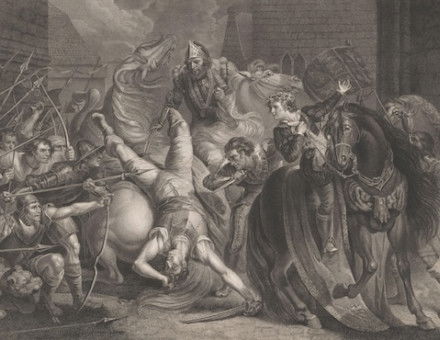
In 1381 England witnessed a medieval ‘summer of blood’ as the lower orders flexed their muscle in what became known as the Peasants’ Revolt.
The year 2009 sees a remarkable coincidence of anniversaries that tell the history of modern China. Some will be celebrated by the authorities on a grand scale, others will be wilfully ignored, but all reveal important aspects of the country’s past, as Jonathan Fenby explains.
The past is more than a set of events with an inevitable outcome. Historians must strive to capture it in all its fascinating strangeness, argues Chris Wickham, as he ponders the problems of writing about the Middle Ages.
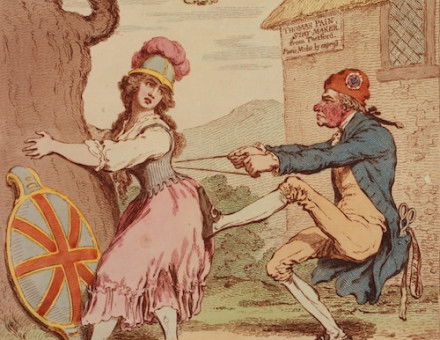
Thomas Paine inspired and witnessed the revolutions that gave birth to the United States and destroyed the French monarchy. A genuinely global figure, he anticipated modern ideas on human rights, atheism and rationalism.
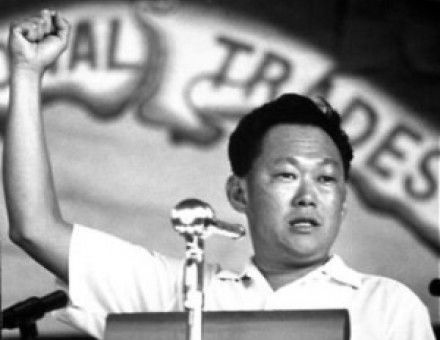
Richard Cavendish remembers how a former-British colony gained a long-serving leader.
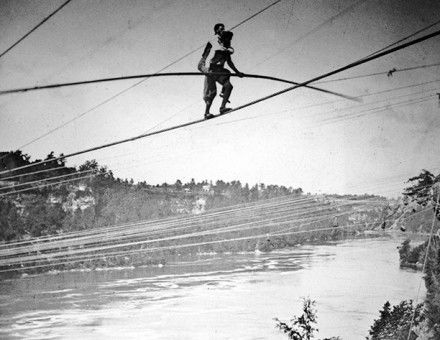
Richard Cavendish remembers how the daredevil Jean-François Gravelet stunned the world on 30 June 1859.
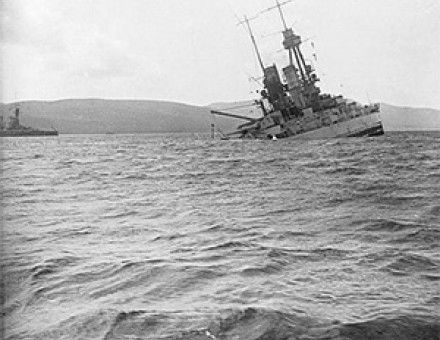
Richard Cavendish records how Germany sank its own navy in the aftermath of the First World War, on 21 June 1919.
Paper was used in the Islamic world long before it appeared in the Christian West. But when Renaissance Europe mastered its manufacture, writes Matt Salusbury, it presented Muslim scholars with some theological conundrums.
‘We don’t want cinemas, we want peace.’ David Woodward introduces a little-known First World War insurrection in the Austro-Hungarian fleet, framing it within the context of that empire’s multicultural makeup and the revolutionary spirit of the times.