

Old London Bridge
Completed in 1209, finally demolished in 1832, this famous construction was for more than five hundred years—until the opening of a new bridge at Westminster in 1750—London’s only thoroughfare across the Thames. By R.B. Oram.
Completed in 1209, finally demolished in 1832, this famous construction was for more than five hundred years—until the opening of a new bridge at Westminster in 1750—London’s only thoroughfare across the Thames. By R.B. Oram.
In 1748 Sweden embarked on the construction of an elaborate island fortress. This was her last attempt, writes Anthony Wood, to check the Russian thrust westwards.
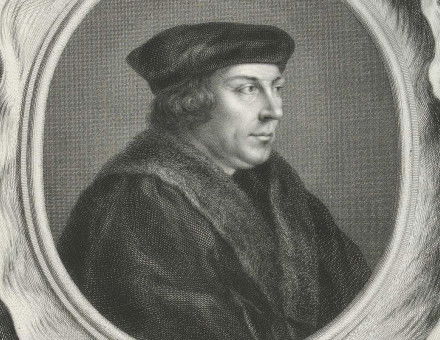
The ‘moving spirit’ of the English Reformation was a skilful and far-sighted statesman, writes Geoffrey Elton.
Charles Seltman introduces Pythagoras, a man of great personal authority and astonishingly diverse gifts, who founded one of the most influential schools of philosophy in the ancient world.
When Alexander assumed the despotic state of the Eastern monarchs he had overthrown, he aroused growing resentment among his loyal Macedonian followers. E. Badian carries the story on, to his early death in the year 323 B.C
John Lomax recounts how, for nearly two centuries, a priestly protectorate ruled over the native tribes of Central South America. In an age of slavery and merciless exploitation, the Jesuit fathers established a government based on justice, peace and harmony. Their subjects began the working day, and marched homewards again, to the sound of music, preceded by the Mayor and his officers wearing gold-trimmed uniforms and plumed hats.
When the rapacious warriors of the Fourth Crusade seized Constantinople at the beginning of the thirteenth century, two Byzantine princes set up an empire-in-exile stretching from Georgia along the Black Sea coast. This new empire outlived the parent city. Until 1461, writes Anthony Bryer, it remained an unconquered outpost of Greek-Christian civilization.
Jacquetta Hawkes describes how archaeological discoveries have had a profound effect on modern views of human progress. While archaeology has been helping to build the edifice of materialist and progressive history, at the same time it has been working to undermine its foundations.
In this article, a British military commentator attempts to sum up the force of events that led to the establishment of the state of Israel.
For seven-and-a-half centuries, Rome's Santo Spirito has remained an “oasis of security and peace." Its foundation on the site of an Anglo-Saxon hospice, Iris Origo writes, was inspired by the dream that visited an early thirteenth-century pontiff.