

The Two Worlds of Colonel Skinner, 1778-1841
Among military adventurers who have served in India, Mildred Archer writes, none was more dashing than the half-Indian leader of the famous Irregular Cavalry Corps known as Skinner’s Horse.
Among military adventurers who have served in India, Mildred Archer writes, none was more dashing than the half-Indian leader of the famous Irregular Cavalry Corps known as Skinner’s Horse.
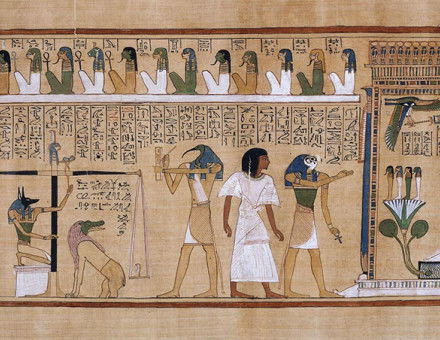
S.G.F. Brandon explains how, early in the history of Egyptian religion, Osiris, the slain king, emerged as the classic prototype of the saviour-god, whose death and resurrection assures his worshippers a new life.
Anthony Bryer explains how Byzantines, Bulgars and Serbs all left their imprint on medieval Macedonia; for six turbulent centuries the Churches of Ochrida exerted a powerful influence on Balkan politics and Eastern Christianity.
During his lifetime, George II's son accomplished little of note. However, writes Romney Sedgwick, Frederick's propaganda in his own political interests left behind two fictions that profoundly influenced later historians.
Robin Fedden takes us on a visit to snowy Alpine passes where, for three quarters of a century, at the end of the Dark Ages, Saracen forces dominated the chief land routes between Italy and France.
Civil war was always the bane of the Italian city-states. E.R. Chamberlain describes how, at the end of the fourteenth century, it seemed that the whole peninsula might soon be re-united under a single man's control.
S.G.F. Brandon explains how, from the religious conceptions of the ancient Hebrew people, sprang the traditional idea of how mankind originated.
James Shiel introduces Jerome, a charming letter-writer and worldly-wise mentor of fashionable proselytes, a learned theologian and fiery controversialist. He lived through a critical period in the history of Western civilization, when the Church established its authority and Rome was sacked by a barbarian foe.
J.J. Saunders continues the story of the first, and perhaps the greatest, of Islam’s Commanders of the Faithful. The Caliph Omar, after triumphantly laying the foundations of the Arab Empire, fell to a Persian Christian assassin in the year 644.
How accurate are Shakespeare’s historical plays? Harold F. Hutchison compares the dramatist’s account of Richard’s downfall with the actual course of events.