
Agincourt’s First World War Legacy
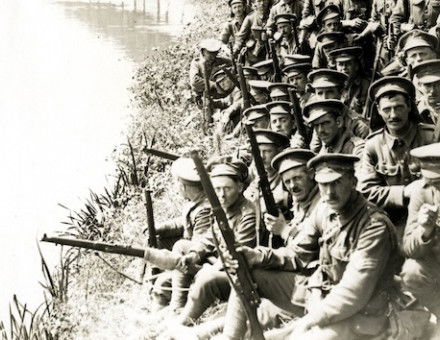
On the 500th anniversary of the Battle of Agincourt, Britain found itself in need of a national myth to bolster enlistment and morale. The victory of 1415 was soon put to service by the army of 1915.
On the 500th anniversary of the Battle of Agincourt, Britain found itself in need of a national myth to bolster enlistment and morale. The victory of 1415 was soon put to service by the army of 1915.
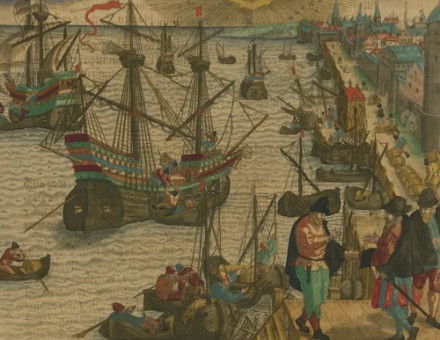
Poor and small, Portugal was at the edge of late medieval Europe. But its seafarers created the age of ‘globalisation’, which continues to this day.
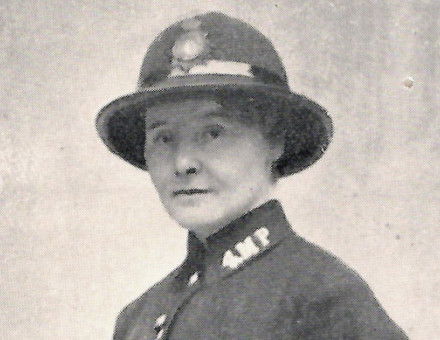
Throughout the 20th century responses by Britons to the sexual abuse of children have been hindered by the desire to avoid scandal and blame the victim, argue Adrian Bingham, Lucy Delap, Louise Jackson and Louise Settle.

Too many historians and commentators view history from a western perspective. In doing so, they turn their back on the roots of our global system, argues Peter Frankopan.
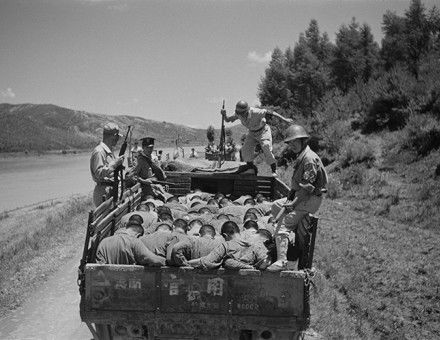
Prisoners of war are driven to their execution in a harrowing image from 1950.
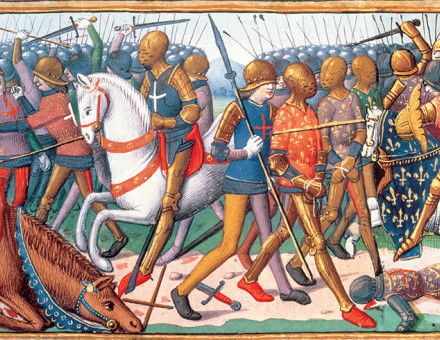
The Battle of Agincourt is among the most celebrated of all English victories. Yet, argues Gwilym Dodd, Henry V’s triumph against overwhelming odds sowed the seeds for England’s ultimate defeat in the Hundred Years War.
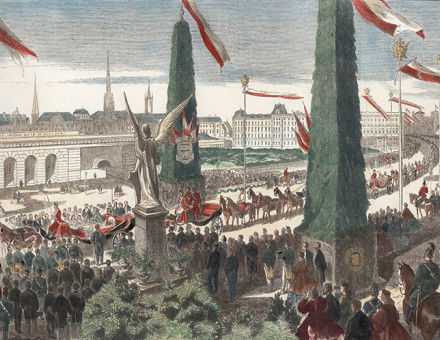
Emperor Franz Joseph officially opened the Ringstrasse on May 1st, 1865. Adrian Mourby looks at its 150 years as a Viennese landmark.
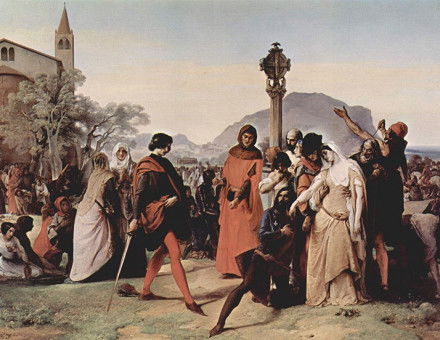
In drawing parallels with international events of the 1980s and 1990s, Michael Antonucci’s article from 1993 neglected the ideology that underpinned Byzantine diplomacy.

The Paleolithic illustrations were found on 12 September 1940.
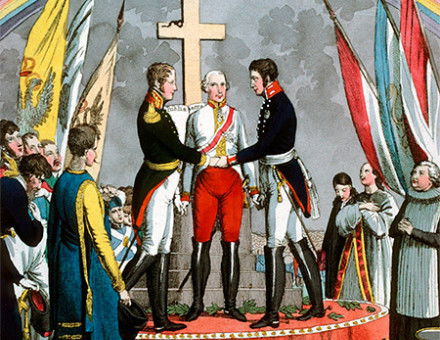
Following Napoleon’s defeat at Waterloo, France’s Bourbon monarchy was restored. It was the first, fragile step in a diminished state’s return to the family of European nations.