

50 Years of the NHS
Charles Webster reflects on the achievements and shortcomings of fifty years of the National Health Service.
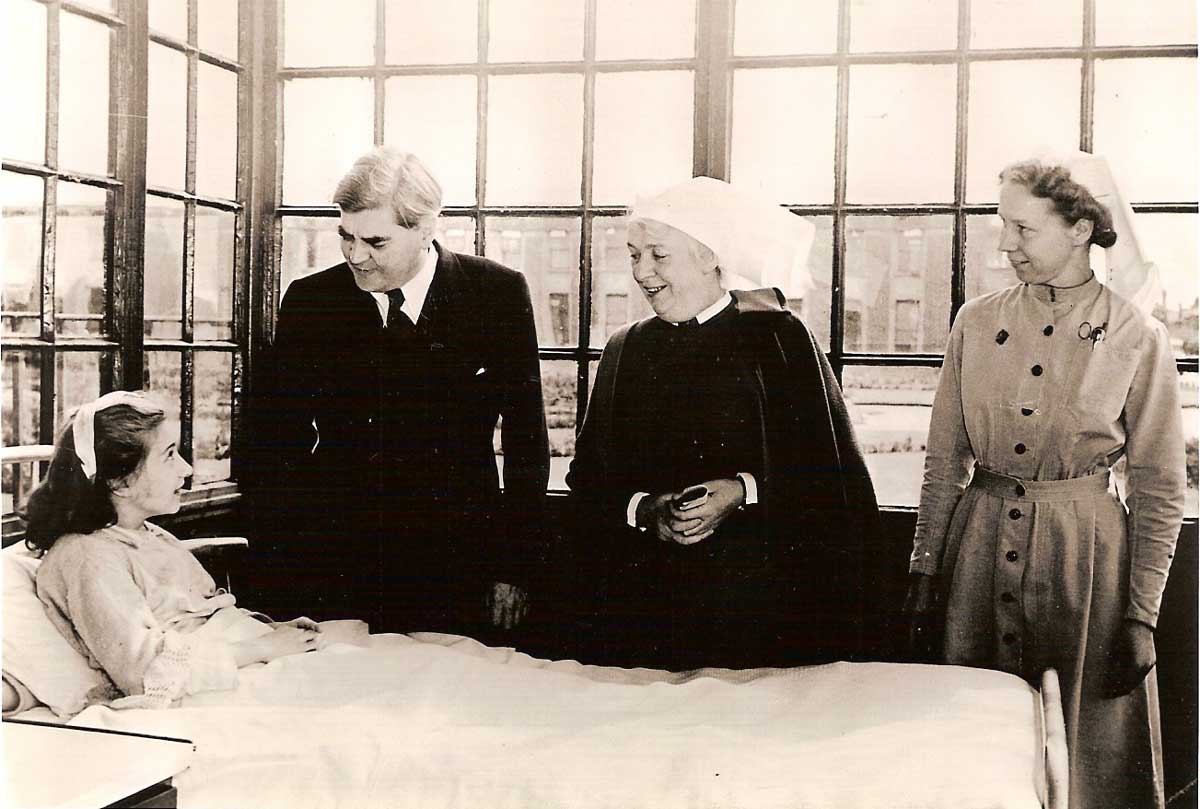
The fiftieth anniversary of the National Health Service, which falls on July 5th, 1998, is a particularly suitable moment for reflecting on its record and also for considering some of the sources of disadvantage that have affected the system since the outset. This will help to explain the paradox that despite its early recognition as a great national institution, the NHS has for most of its history been perceived as being in a state of crisis and on the verge of breakdown.
Modern research has not seriously questioned the scale of the achievements of 1948. Memories are constantly being rekindled, as for instance with Mr Blair’s recent White Paper, The New NHS, which adopted the title of the house-to-house leaflet distributed in April 1948 to explain the benefits offered by the new health service. A photographic illustration of the title page of the original leaflet is granted a place of honour as the first illustration in the White Paper, even taking precedence over the photograph of the prime minister in the foreword.
Aneurin Bevan deserves huge credit for turning an almost impossible situation to advantage. As Attlee’s unexpected choice as Minister of Health in the 1945 Labour Government, Bevan took on an unenviable challenge. Not only was the health service in urgent need of modernisation and radical reconstruction, but his department was also responsible for wrestling with the great housing problem. On the health front he faced a bleak outlook. The Coalition Government had been committed to reforming the health service since near the beginning of the Second World War, but in 1945 there was a total stalemate among the relevant negotiating bodies. Therefore, there was every prospect of a repeat of the policy failures that had thwarted moves towards a comprehensive health service after the First World War.
Bevan seemed ill-suited to this particular mission. He was totally without experience in government and had played no part in wartime deliberations on health policy. There was also doubt whether this maverick politician of the Left was temperamentally suited to the delicate task. In the event Bevan rapidly dispelled the scepticism of his critics and proved himself eminently capable as negotiator and constructive policy-maker.
The Coalition Government had promised that the post-war health service would be comprehensive, available to the entire population, and in most respects free at point of delivery. Bevan stood by these principles and also promised a first-class quality of treatment. With regard to financing the new organisation Bevan introduced a further important change of emphasis, by rejecting previous plans to derive a substantial contribution from National Insurance and local taxation. Instead, in expectation of obtaining adequate resources and guaranteeing greater equality of provision, he placed the main burden on general taxation.
In devising a viable administrative framework for the new health service, Bevan’s inexperience was something of an advantage because it enabled him to approach the subject with a fresh mind, thus permitting a decisive break with the ill-fated wartime planning exercises. This entailed abandoning the long-sought ideal of administrative unification of health services at the local level in favour of entirely separate administration for local government, independent contractor and hospital services. Local authorities were left in charge of a miscellaneous collection of services such as specialised clinics and the ambulance service, while independent contractors (general practitioners, dentists, pharmacists and opticians) were employed under the form of administration inherited from National Health Insurance. This represented a concession to the profession and it was particularly helpful for circumventing a potentially disastrous confrontation with the British Medical Association. Thereby Bevan was able to concentrate on the main innovation of his scheme, the nationalisation of all municipal and voluntary hospitals and their rationalisation under a unified regional hospital system. Nationalisation and regionalisation certainly went against the grain among the dominant health service interests of the time, but were concepts consistent with the most advanced thinking of the day.
Bevan’s health service was an untried experiment in social administration, but it worked better than his many critics predicted. Both independent contractors and local authorities greatly extended their functions under the new health service. They performed urgent and important remedial tasks. The local authorities undertook work as diverse as mass screenings for tuberculosis, establishing maternity and child welfare clinics on new housing developments and modernising the ambulance service, as well as the introduction of entirely new services, such as those provided by home helps and medical social workers. It is particularly well-remembered that independent contractors were deluged with demand for prescriptions, glasses and false teeth. During the first few years of the new health service these items were provided in their millions. The provision of hearing aids, false teeth and efficient glasses improved the quality of life of a major part of the population, especially the elderly, all of which explains the feelings of sincere gratitude that extended to the new service.
With respect to the more serious problems of health, the main strengths of the new service rested on its success in establishing comprehensive consultant and specialist services. Despite an environment of severe austerity, the regional hospital service succeeded in keeping up with the demands of modernisation and it recorded impressive increases in output. In its first decade the hospital service was preoccupied with building up its regional complements of specialities, and in providing such basic facilities as new operating theatres, pathology laboratories and blood transfusion services, and those for outpatients or accident and emergency admissions. The 1960s marked the start of a hospital rebuilding programme and important developments in high-technology medicine such as renal dialysis, advanced cardiovascular surgery, as well as replacement or transplantation treatment. Later decades witnessed important developments in diagnostic imaging such as computerised tomography and the application of the above innovations on a much greater scale and with increasing safety.
In 1979 some 24,000 hip replacements were performed, while in the mid-1990s this level had doubled. About 800 renal transplants were performed in 1979; by the mid-1990s this figure also had doubled. Over the same period there was a four-fold increase in the targets adopted for the treatment of patients suffering from end stage renal failure. At the beginning of the health service only about 30 per cent of births occurred in hospital, but by the mid-1990s hospital confinement was the norm, and was associated with the provision of the elaborate intensive care facilities of Special Care Baby Units. Reflecting improvements in obstetric services and acting as a general index of improving health, the rate of perinatal mortality in England and Wales was brought down from 38.5 per thousand live births in 1948 to 8.6 in 1996. It is therefore on the basis of a firm record of achievement on many fronts that the NHS has earned the positive image by which it is remembered.
As was fully anticipated by the architects of the new NHS, it involved a formidable commitment of resources. On account of the expanding capabilities of medicine and the ageing of the population, there was also every reason to believe that this would be a continuing and indeed escalating liability. These early expectations proved to be entirely correct. The health service workforce was already substantial at the outset, numbering about half a million. Owing to the increased labour intensiveness of modern medicine, the workforce had doubled by the 1980s, although the number of beds had been drastically reduced owing to the run-down of the mental hospitals made possible by community care and new forms of drug treatment. During the 1980s the workforce also contracted, largely owing to the privatisation of support services. However, the number of clinical and nursing staff has continued to expand, while the cost of all the collectivised and privatised elements contributing to the NHS continue to exercise their relentless upward pressure.
Supplying adequate resources to support the diverse humanitarian activities of the NHS has constituted a persistent source of difficulty. Bevan no doubt anticipated that the strong Cabinet voice of the health minister and the pressure of public opinion would guarantee favourable treatment for the NHS at each annual expenditure round. However, for most of the time the ministerial voice has been weak and public sentiment ineffective. For much of its life, the NHS has fared less well than its competitors among the spending departments, and health spending has been a favoured target for cuts at times of economic crisis. Consequently, although expenditure on the health service has gradually increased, it has never been easy to meet even essential commitments. Public spending on the service has only increased from about 4 per cent of GDP in 1950 to just below 6 per cent currently, which is just half the level found in many comparable economies. Attempts to boost health service spending by such measures as direct charges have yielded only minor gains and have proved consistently contentious and hard to implement ever since their first introduction by Labour in 1951.
The actual course of events gives little support for the widely held view that the health service has constituted a bottomless pit for public expenditure. No doubt the fundamental stability and ease of containment of NHS spending accounts for the unwillingness of successive governments to countenance departure from existing funding arrangements. The NHS has therefore attracted the envy of the world’s finance ministers, but this has been at a cost to the service, which for most of its history has been limping along under conditions of extreme resource constraint. Cries of crisis within the health service have therefore never been far from the headlines. Maintaining the core Acute and Emergency services has involved recourse to some tough and inhumane expedients.
Prominent among the casualties of the regime of retrenchment have been groups relying on community care or long-term hospital accommodation. At the beginning of the health service, the first major policy objective to be scrapped was the health centre. The health centre programme was not launched until the mid-1960s, but it was aborted in the mid-1970s and has never since been revived. Shortage of resources meant that little major hospital building was undertaken until after the 1962 Hospital Plan. This programme was cut back in the late-1970s, but continued at a lower level until 1990, when once again large hospital projects went off the agenda. In response to this crisis, the Private Finance Initiative was invoked to revive the hospital capital programme, but this innovation has proved contentious and has been dogged by technical difficulties, with the result that the first hospitals associated with this scheme will not be completed until the next millennium.
The Private Finance Initiative represents one of the most recent of the many innovations introduced within the health service to secure better value for money. Such measures are calculated to extract a greater volume of care from the limited resources available. Of all these policies, the most radical have involved complete structural overhaul or ‘reorganisation’ of the entire service. Because Bevan’s system was hastily devised, untried and anomalous in its characteristics, from the moment it was devised there was speculation that the efficiency of the service might be radically improved if it were replaced by an alternative model. Reorganisation of the NHS has therefore become one of the obsessions of politicians. Since the mid-1960s, commitment to some form of reorganisation has become a virility test for parties aspiring to government. There could be no better reminder of the salience of this issue than the production of the three national White Papers on NHS reorganisation in England, Scotland and Wales, produced by the Labour Government, only a few months after its return to office. Notwithstanding the high priority given to reorganisation, there is little sign that the vastly complex and disruptive attempts at reorganisation have yielded anything like the benefits claimed by their advocates.
A brief glance at the chronology of reorganisation of health care in Britain confirms the sense of gathering insecurity about the system. Meanwhile, the interval between major reorganisations has been progressively diminishing. Bevan’s scheme lasted for twenty-six years. Even with the correctives introduced in 1982, the Joseph reorganisation of 1974 survived for only seventeen years. The internal market experiment introduced in 1991 at the instigation of Mrs Thatcher is about to be radically altered after only about seven years. Indeed, the 1990s will have witnessed almost incessant structural change. Historians of the future will recognise the 1990s as the period of greatest structural instability in health care to be experienced in the course of the present century. The optimist will regard this as indicative of a healthy spirit of innovation and progressive problem solving; others will adopt a more pessimistic interpretation, and detect dangers of infinite regress.
The NHS, therefore, rightly celebrates its fiftieth birthday as the occasion for satisfaction at its heroic achievements, but it approaches the next millennium in a mood of great uncertainty concerning the will of Government to replicate the heroic successes of Aneurin Bevan.

