

Mormons reach the Great Salt Lake, Utah
The advance party reached their final destination on July 24th, 1847.
‘A broad and barren plain hemmed in by mountains ... the paradise of the lizard, the cricket and the rattlesnake' was one description of the sight that met the advance party of 'latter day saints' arriving in the American far West in July 1847 after a six-month trek from the Missouri River. Despite this unpromising vista, the site was truly to prove a Promised Land for one of America's most original and dynamic new 'religious groupings, one that was to found a city there and set its distinctive stamp on what was to become the state of Utah.
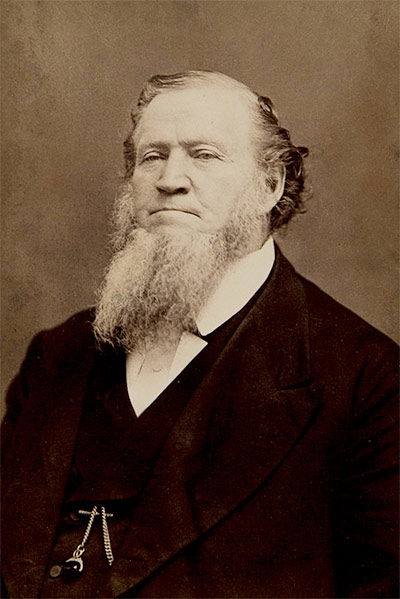
The decision by the Mormon leader Brigham Young to take 15,000 of his followers to a new home close to the Oregon trail that had become the established route for settlers heading West, came after more than a decade of persecution and controversy that the movement had faced since its foundation in 1830 by the New York state farm hand, Joseph Smith.
Smith's 'gospel', based on visions he claimed to have received from the angel Moroni which led to him recovering golden tablets said to reveal a lost section of the Bible, The Book of Mormon, fundamentally challenged many of the careful balances of toleration but separation in religious matters that the new American republic had worked out. The new Mormon scripture with Smith's ‘130 special revelations from the Lord' including a justification of polygamy, attracted converts and violent opposition in equal measure.
The Mormon were able to capitalise on existing trends in American Protestantism because of their emphasis on equality, an endorsement of democracy and emphasis on America as the Promised Land - with attendant communal sharing of goods and involvement of the laity in the Church of Latter Day Saints.
Growing success, influence and prosperity, however, fed their critics' attacks; throughout the 1830s the Mormons were on the move from New York State to Ohio, Missouri and finally to Nauvoo, Illinois. Here their involvement in state politics - where Smith tried to suppress an anti-Mormon newspaper - provoked schism and the arrest of Smith and his brother Hyrum, ant culminated in their deaths at the hands of a Iynch mob in June 1844.
After Smith's death the Saints splintered and seemed to be heading for oblivion but were saved by the diplomacy and leadership skills of his successor, the new Prophet, Brigham Young. He extricated the group from Nauvoo and chose a new destination in Utah on the basis of publicity material about the West. It was his able organization that ensured that when the Mormons set off on their great trek they did not suffer the fate that overtook many of the other poorly-prepared wagon trails seeking new frontiers.
Once settled by the Great Salt Lake, under Brigham Young's direction, and using a system of cooperative labour, the Mormons created an elaborate irrigation system that was able to utilise streams of melted snow from the mountains to the east and north of the lake, greening the deserts to its west and south.
Like all pioneers, the Mormons had their own sacred symbols and saving events associated with their early years - like the sego lily whose roots provided a counterpart to the Israelites manna in the wilderness and enabled them to fight off starvation. Equally celebrated were the seagulls that arrived to devour a plague of crickets that threatened their first wheat crop.
The federal government remained suspicious of the settlement with its quasi-independent and theocratic basis and right through the tense 1850s there were skirmishes. But eventually their position was secure and by the time of Brigham Young's death in 1877 the Mormons had over 300 settlements and 140,000 followers spread across the Utah territory, with their capital, Salt Lake City, as a monument to their survival skills and one of the most extraordinary products of religious revivalism in nineteenth-century America.

