

Chimes of Big Ben Broadcast for the First Time
Big Ben was first heard over the radio at midnight on 31 December 1923, to announce the New Year.
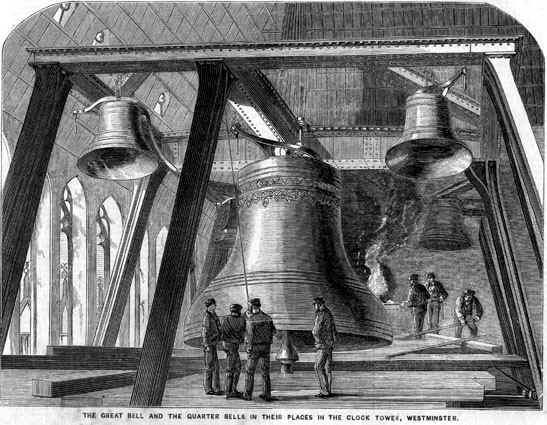
The sound of the Houses of Parliament clock chiming the hour signifies a daily ritual for many a radio listener. Sited in St Stephen's Tower, the clock is better known as Big Ben - though the name strictly applies only to the largest of the Tower's bells. Its chimes are broadcast on BBC radio as part of its time signal service and to herald the start of Radio 4's Six O'Clock News.
From its inception in 1922, the BBC has broadcast time signals over the radio. Originally the signal was a tune played by the announcer on a set of tubular bells. In 1924 a regular time signal service from the Greenwich Observatory was broadcast as a series of six electronically produced 'pips'.
Big Ben was first heard over the radio on New Year's Eve, 1923, when its chimes were broadcast at midnight to announce the New Year. From February 17th, 1924, the bell of Big Ben could regularly be heard on BBC radio, along with the Greenwich 'pips'.
Since their conception in 1844 as part of Sir Charles Barry's design for the new Houses of Parliament, the clock and its bell have been plagued with misfortune. The clock was finished in 1854, but remained at the manufacturer's workshop for five years as the tower was not ready to receive it. In 1856 the clock's great bell was cast. Because of a miscalculation the finished bell weighed sixteen tons instead of the fourteen intended. During testing the bell developed a four-foot crack and was pronounced 'porous, unhomogenous, unsound and a defective casting'. It was broken up and the material used to cast another.
When the clock was finally placed in position within the Tower, it was found that the 2½-ton cast-iron hands were too heavy to move and so were replaced with hands made from a lighter material. On May 31st, 1859, the clock and bell became operational, but within a few months the bell cracked again. Too large a hammer had been fitted, so instead of recasting the bell, a lighter hammer was fitted.
The chimes have been broadcast daily since they were started. With the outbreak of the Second World War, however, it was decided that they should not be transmitted after dark. In 1940, the telegraph line that was used to check the clock's accuracy with the Greenwich Observatory was destroyed. The link was never repaired as the Westminster clock had proved remarkably accurate - it had been no more than a second out on 347 of 365 days the previous year.
Big Ben was out of action for several months in 1934 and 1956 when it was cleaned and repaired. The chimes of Great Tom, the bell at St Paul's Cathedral, were used as a replacement time signal.
On February 18th, 1956, radio listeners heard an odd time signal. The clock's microphone picked up and broadcast to the nation a mixture of chimes and workmen's conversation.

