

The New Tourists
The visitors’ books of 19th-century hotels, pubs and inns show Victorians on holiday, revealing them to be irreverent pleasure seekers, capable of highfalutin pomposity and touristic wrath.
The visitors’ books of 19th-century hotels, pubs and inns show Victorians on holiday, revealing them to be irreverent pleasure seekers, capable of highfalutin pomposity and touristic wrath.
The visitors’ books of 19th-century hotels, pubs and inns show Victorians on holiday, revealing them to be irreverent pleasure seekers, capable of highfalutin pomposity and touristic wrath.
The Pen-y-Gwryd Hotel, a small inn at the foot of the Llanberis Pass in North Wales, seems an unlikely arena for class warfare. Built around a farmhouse, the hotel was a popular tourist destination from the middle of the 19th century. Visitors included the novelist Charles Kingsley and his ‘muscular Christian’ brother Henry, Liberal statesman William Gladstone and Thomas Huxley, known for his role as ‘Darwin’s Bulldog’ in the 1860 Oxford evolution debate. The inn was also a base for mountaineers. The Climbers’ Club, one of several launched in the late Victorian era to promote mountaineering in Britain, was founded there in 1898 and in the mid-20th century Pen-y-Gwryd would serve as the training headquarters for the team that reached the summit of Everest in 1953.
Like many other Victorian tourist establishments, Pen-y-Gwryd had a visitors’ book. This was not an official register of guests, but an informal album in which visitors could write comments about the hospitality, recount their activities in the area and share their attempts at poetry or sketching. By 1884, however, one regular guest became so exasperated by the poor quality of some of the entries that he contributed a new book equipped with a padlock and key, to avoid the ‘sort of nonsense scribbled by the casual passer-by’. His suggestion was followed and the Locked Book became from then on an elite document, in which climbers, amateur botanists and geologists, anglers and other members of the professional middle classes could enter their thoughts, but from which plebeian comments were excluded.
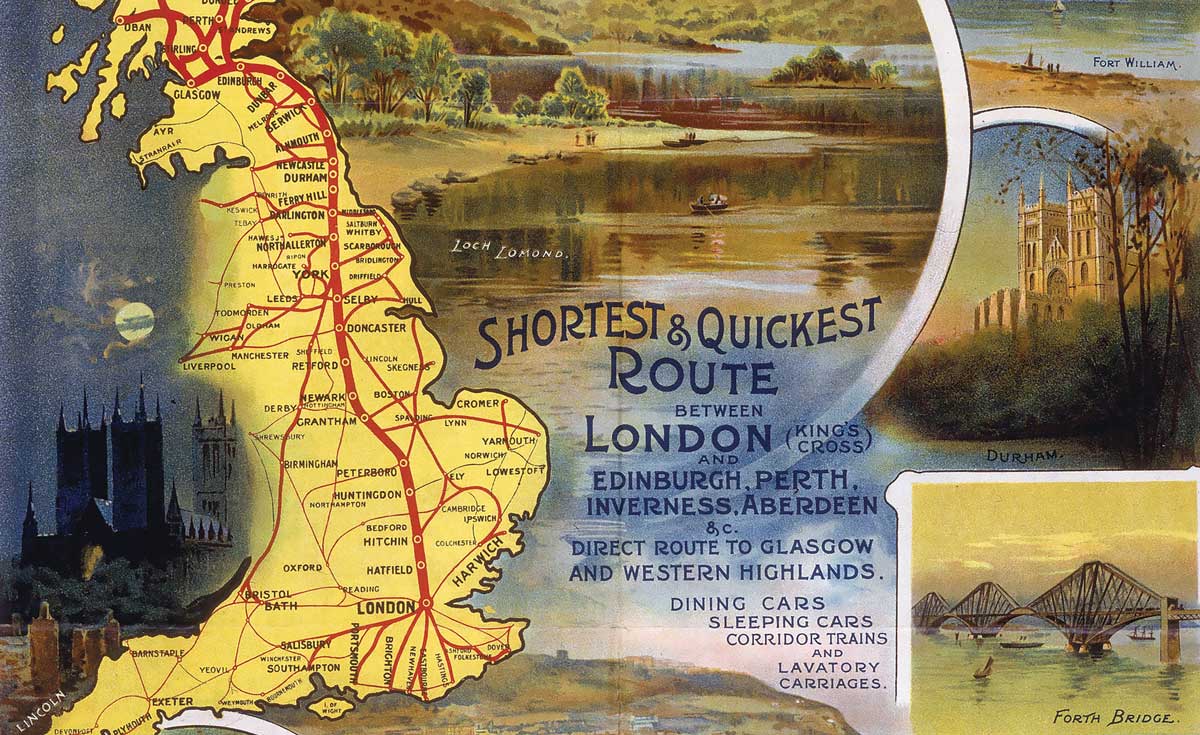
A similar dynamic was taking place in hotels and inns throughout the country during the second half of the 19th century. As more people had access to leisure time and disposable income, the well-heeled heirs of the 18th century’s Grand Tourists found themselves rubbing shoulders with the kind of people who would formerly only have entered hotels as employees. The lower middle classes were the beneficiaries of rising wages, increased leisure time – including paid bank holidays from 1871 – and a vastly expanded transport network. As a result, clerks, shop workers, domestic servants and other ordinary people, who a generation previously could never have imagined travelling on holiday, were in a position to visit new areas of the British Isles.
The voices of these new tourists are rarely heard in the historical record. While upper- and middle-class travellers left plenty of published accounts of their travels – in mountaineering memoirs, for example, or books with such titles as Scotland With Rod and Reel – the average bank clerk or shop worker lacked the cultural capital to have their account of a seaside excursion or bank holiday weekend in the Lake District published anywhere. One place they could record their impressions, however, was in the pages of visitors’ books and those that survive offer unexpected glimpses of attitudes rarely seen in mainstream published texts.

Hotels were not the only establishments with visitors’ books. Many museums, monuments, stately homes open to the public (such as Lord Byron’s family seat, Newstead Abbey, or Walter Scott’s Abbotsford in the Scottish Borders) and sporting estates maintained books in which guests could write anything from a simple signature and place of origin to elaborate sketches or pages of doggerel. These remain valuable records of how the elite of Victorian and Edwardian society spent its leisure time. The ‘Livres des Voyageurs’ of the Glenquoich estate in the Highlands, for example, boasts entries by Gladstone (who visited in 1853 while Chancellor of the Exchequer, signing himself as ‘Extortioner-General during Her Majesty’s Pleasure’), the French writer Prosper Mérimée (who complained bitterly about the midges), the artist Edwin Landseer, the Punch illustrator Richard Doyle, the brewing magnate William Whitbread, the legal reformer Caroline Norton and Baron James de Rothschild. Edward VII also visited Glenquoich in the early years of his reign, but the list of professions in the visitors’ book, including merchant, minister, book-keeper, physician, advocate and barrister, testify to the growing political, economic and social prominence of the middle classes during the 19th century.
For anyone interested in how ordinary people lived, worked and played, however, it is the guest books of more humble inns and hotels that provide the richest seam of evidence. Since few if any landlords chose to follow the example of the Pen-y-Gwryd by placing their books under lock and key, visitors’ books were among the very few texts where ordinary tourists could write down their thoughts without prior restraint. In some ways, they can be seen as a precursor to modern social media, combining the memorialising function of Facebook or Twitter with the democratic ability to post reviews offered by TripAdvisor. Unlike the victims of bad TripAdvisor reviews, though, Victorian hotel proprietors could and often did censor or excise comments they found offensive; the books that survive in archives show plenty of evidence of missing sections and lines crossed out in black ink. ‘Adverse reviews are not to be found’, noted the suspicious writer of an article on guest books in the Saturday Review in 1879, who found it ‘difficult to believe that no irate tourist has ever committed his wrath to writing’.

If criticism of the inn itself rarely survived the proprietor’s intervention, more general moans about the tourist’s lot can still be found. ‘We came to Scotland for a change and a rest’, recalled one visitor to the rudimentary hotel on the summit of Ben Nevis: ‘The waiters got the change, the landlords got the rest.’ This remark in the book of one of Britain’s smallest and most remote hotels, located in an outbuilding of the meteorological station that operated on the country’s highest peak, was echoed by visitors to more conventional establishments. The visitors’ book of the Tibbie Shiels Inn in the Borders features an entry from another disgruntled visitor: ‘Scotland’s lakes are bonnie/Scotland’s hills are high/So are Scotch hotel bills/Scotland goodbye.’
These visitors’ books survive in a range of locations; some are in private hands, some are held in county or national archives, and others, including the Locked Book of Pen-y-Gwryd, remain on the original premises. Many comments in these books belie the widely held view of the Victorian period as a time when respectability, deference and restraint held sway. Instead, they attest to alienation, conflict and a healthy sense of disrespect from working-class or lower middle-class tourists towards their putative social superiors. Entries in the books range from the respectful to the scabrous, the pious to the irreverent, the playful to the downright rude.
Some visitors chose to advertise a hedonistic, carefree attitude at odds with the supposedly prevailing ethos of ‘rational recreation’. ‘Enjoy yourself while you live for you are a long time dead’, wrote one guest at the Rose and Crown in Hitchin, Hertfordshire in 1898, where three fellow visitors reported themselves ‘all drunk as usual’. The pleasures of what Victorians called ‘going on a spree’ are a frequent theme of visitors’ book entries. Even in Scotland and the Lake District, areas generally associated by the Victorian middle classes with the bracing outdoor pleasures of rambling, mountaineering and field sports, some visitors felt that food and drink took precedence over the approved sights and activities. Albert Dixon of Cheshire, staying the night at the Ben Nevis summit hotel in July 1905, noted that it had taken him ‘three hours from Fort William Pier to see nothing but mist, tho’ I enjoyed a good luncheon’, while three Glaswegian visitors to the same establishment that summer drew a sketch of someone eating and drinking with the caption: ‘The best bit of the Ben.’ John Gordon of Dukenfield, staying in the comparably primitive ‘hotel’ on the summit of Snowdon in 1862, noted how he ‘consumed one shilling worth of bread and cheese, about half a loaf of bread, and half a gallon of coffee and sugar at one sitting’. A subsequent visitor scrawled the word ‘glutton’ across this entry.

Similarly, the Wasdale Head Hotel, regarded as the cradle of rock climbing in the Lake District, hosted such renowned Victorian climbers as Albert Mummery, Owen Glynne Jones and Cecil Slingsby, not to mention the occultist, mountaineer and ‘Wickedest Man in Britain’ Aleister Crowley (the self-described Great Beast’s entry in the visitors’ book rather disappointingly reads: ‘I was as comfortable as ever’). Yet the Wasdale Head visitors’ books also testify to the number of tourists who were more interested in creature comforts than peak-bagging. Numerous references to ham and eggs, ‘hot cakes and figgy dough’ and the disappointment of finding no pub on the summit of Scafell Pike jostle for space on the page with accounts of climbing routes and techniques. ‘We have just ordered tea for us and hope to enjoy it – the writer intends to eat a lot’, reported a group from Liverpool in 1879.
Other writers betrayed the biases and assumptions of their backgrounds. The guest from London, who wrote in the book of Glencoe’s Clachaig Inn in 1891 that ‘it is a great relief to find people who, while apparently Scotch, are certainly most agreeable’, left a small but telling glimpse of one particular world view at the time, as did the visitors from the United States who seemed intent on fighting the Civil War vicariously in the pages of Stratford-upon-Avon’s Red Horse Hotel: ‘Dam Yankees again’, one wrote beside the signatures of guests from New York and Minnesota in 1864, prompting another to retort: ‘Written by a sold Rebel, or some rascally slavedriver.’
Other entries bear witness to the rise of new mass participation recreations, with cycling among the most popular. Improvements in technology, along with an explosion of new clubs, made the sport more accessible and affordable as large groups of cyclists started to arrange regular weekend meets with stops at favoured pubs and inns. Unlike the predominantly upper middle-class professionals who participated in mountaineering, cyclists were often young members of the lower middle classes: clerks or shop workers with sufficient disposable income and leisure time to participate in a cheap and sociable hobby. Some popular cycling pubs even started dedicated books for two-wheeled visitors. At the peak of cycling’s popularity in the 1880s and 1890s the guest books of the Anchor Inn at Ripley in Surrey – described by one contemporary as the ‘Cyclist’s Mecca’ – received more than 6,000 signatures each year.
The Cock Tavern at Ongar in Essex and Hitchin’s Rose and Crown were similarly popular with cyclists. The shared argot used in their visitors’ books by members of groups as diverse as the Clarion Cycling Club, the Surrey Wheelers, the Bath Road Club, the London Scottish Cycle Club, the Tally Ho Cycling Club and the Stamford Stampeders demonstrates how a kind of recreational subculture existed among participants in this new sport. References to ‘road scorchers’, ‘fellow wheelmen’ and ‘mud-plugging’ through ‘beastly wet’ conditions became part of a jargon just as specialised and arcane as that of the mountaineers who stayed in Scottish, Welsh and Lakeland inns. The cyclists demonstrate a more demotic, mass participatory ethos, in which irony, mockery and self-deprecatory humour provide a counterpoint to the piety, sobriety and reverence of more mainstream Victorian texts. ‘Interesting work perusing this noble array of record breakers & boozers’, wrote one signatory in the Rose and Crown book in 1899.
For historians of this period there is a strange continuity in coming across someone proclaiming ‘Like a bad bob, I’m here again’, or dismissing the panorama from Snowdon’s summit as ‘the usual stupid views of puddles and grass plots with a rockery here and there’. Here are the Victorians as they are rarely seen in published books, journals or photographs.

This apparent immediacy and familiarity can be misleading, of course, and there are also plenty of reminders of just how different the values and assumptions of the 19th century were from those of the present day. Religious and spiritual preoccupations are never far from the surface, reflected even in the more lighthearted entries. ‘Why is Bradlaugh like a Northampton Snob?’, asked a writer rhetorically in a Welsh hotel in 1887, referring to the politician, radical atheist, and founder of the National Secular Society, Charles Bradlaugh: ‘Because neither believe in everlasting proofs (soles).’ (A snob was a term for a shoemaker or cobbler.) Meanwhile, K. Douglas-Singer, a spiritualist preacher who visited the Cock Tavern in 1906, recorded that he ‘was here the first, and am here again, my second time on earth. Tea is as good now, as then’, before going on to express his hope to ‘meet those mentioned in earlier pages, after the next passing over, and our good Host the Landlord’. Douglas-Singer appears to have been in earnest, but the numerous writers who reproduced popular songs or music hall jokes in guest books were also reflecting the popular culture and news stories of the time. Other entries simply bear witness to a more timeless human urge to memorialise and leave one’s mark, as an entry in the Wasdale Head Hotel visitors’ book written in 1888 suggests: ‘When I am dead and in my grave, And all my bones are rotten/This big book will show my name/When I am just forgotten.’ Sadly, the author of the entry remains anonymous.
Those visitors who did write anything pious, pompous, or highfalutin in guest books often found their entries doctored by subsequent contributors. An 1894 visitor to Wasdale Head took up a whole page of the visitors’ book with a poem that begins with the lines: ‘When from the world’s fatiguing care/And wearying thought-oppressed you flee/Sweet scenes like these the heart ensnare.’ Someone else remarked underneath: ‘The sooner this poet is deprived of his licence the better.’ Another poetic effort provoked the response: ‘This Chap, alas! is not a poet/What a pity he don’t know it’, as well as the blunter ‘The above is utter doggerel’. A long and rather grandiose entry by ‘Professor Higgins, Parachutist and champion aeronaut’ in the Wasdale Head book was dismissed by a fellow guest as ‘Pure unadulterated brag!!!’.
Visitors’ books were kept in a vast range of establishments, from the grand to the humble, across the entire country from northern Scotland to Cornwall and most of the surviving books display a range of attitudes from piety to bathetic humour. The Ben Nevis Hotel or Observatory Hotel opened around 1894 and from then until the outbreak of the First World War a stream of visitors trudged up from Fort William to spend the night on the summit. Their comments in the visitors’ books range from awestruck reverence to something rather more prosaic. John Sneddon of Airdrie reached the summit in September 1906 and was moved to write: ‘Who shall ascend into these hills/As rivers of waters in a dry place, and the shadow/Of great rock, in a weary land/What doest thou here, Elijah.’

A couple of years later, however, John McInnes of Fort William, recorded in the same book: ‘Came up here after the pubs were closed. Drunk as a Lord, stayed up till he was sober’, undermining the sublimity. More commonly, visitors would make bad puns: ‘Found the climb and the climate produce a most Ben-Nevis-ent effect’, wrote one guest, and writers in the guest book never seemed to tire of the phrase ‘Missed the view and viewed the mist’. Variations on this wordplay were also common in the visitors’ book of the Snowdon summit hotel, with George Ray of Liverpool offering a rare original take on the theme when he wrote: ‘Here lies I and my friend Davey/All enveloped in vapoury gravy.’
At the other end of the country, visitors were displaying a similar mix of sensibilities. ‘The various works of art please the eye and charm the other senses’, wrote Emily Spooner in the visitors’ book of the Royal Hotel in Truro in 1874. Four years later another guest at the same hotel penned the following rhyme, whose childish glee seems calculated to subvert Spooner’s pious remarks: ‘We came for a spin/And we stopped at this Inn/And now were off, having spent all our tin./But we’re free to declare/That it’s jolly good air/And precious good grub for inflating your chin.’
Alan McNee is a research fellow at the Institute of English Studies and author of The New Mountaineer in Late Victorian Britain (Palgrave Macmillan, 2016).
Quotations and images from the Ben Nevis visitors' books appear by kind permission of the West Highland Museum and the Lochaber Archive Centre in Fort William. Those from the Wasdale Head Hotel appear by kind permission of the Fell and Rock Climbing Club Archives, and of the Cumbria Archive Centre, Kendal, where the books are held. Images and quotations from the Athole Arms book by kind permission of the Atholl Arms Hotel, Blair Atholl.


