

Britain and the Aaron Burr Conspiracy
The Burr Conspiracy, writes Raymond A. Mohl, was an early expression of the spirit of ‘Manifest Destiny’ on the American continent.
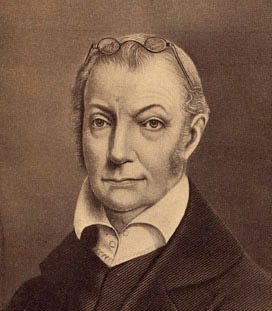
Shrouded in mystery, the Aaron Burr ‘Conspiracy’ remains an enigmatic and little-understood episode in American politics. Although found innocent of treason at a trial in 1807, Burr has been convicted in modern American opinion and scholarship of plotting to divide the nation and ‘selling out’ to foreign powers. Historians have not treated Burr kindly.
The accepted interpretation of his so-called conspiracy runs something like this: replaced as Vice-President in Jefferson’s second administration, defeated in a campaign for the governorship of New York, indicted for murder in the duelling death of Alexander Hamilton, and his promising political future destroyed, Burr sought to regain lost status, prestige, and power in the American west.
With General James Wilkinson, the ranking general in the United States Army, and with other unprincipled western leaders, Burr schemed to separate the western states from the eastern at the Appalachian Mountain barrier; seeking financial backing from foreign nations-especially Great Britain and Spain-and gathering a band of rough, lawless frontiersmen, Burr descended the Ohio and Mississippi Rivers intending to establish the centre of his new western empire at New Orleans.
With this power base, Burr and his cohorts might then expand their conquests throughout the Spanish south-west and Mexico; only quick and firm action by President Jefferson, based on disclosures by Wilkinson, ended the conspiracy with Burr’s arrest and prevented internal division. Marred by much distortion and falsehood, this view of the Burr Conspiracy has been deftly asserted by patriotic ‘consensus’ historians and has become part of the mythology of American history.
It is probably true that Burr’s intentions and motivations will never be known in their entirety. Unquestionably, Burr was an aggressive and dynamic man who sought outlet for his talents and ambitions in the west as opportunity closed in the east. It seems almost certain, however, that Burr’s purposes were not treasonable, although they may have been illegal.
Recent evidence suggests that Burr sought not division of the west from the Union, but leadership of western sponsored filibustering expeditions against the Spaniards in the south-west and Mexico, and, failing that, land development in the Louisiana territory, where Burr could build a new political base.
The Burr ‘Conspiracy’, in other words, simply reflected an early expression of the spirit of ManifestDestiny-the expansionist ideas that became dominant in the 1840s with the annexation of Texas, the Mexican War, and the Oregon controversy with Great Britain.
The story of Aaron Burr’s connexions with British officials, diplomats, and secret agents reveals the expansionist side of the ‘conspiracy’. Burr recognized that Britain and the United States had a common interest in promoting the independence of Latin America. For commercially aggressive nations, trade with the Spanish colonies in the western hemisphere offered potentially great profits.
Spain closed commercial system, similar to the navigation laws that England had earlier applied to her American colonies, with few exceptions excluded both British and American merchants. Imaginative men on both sides of the Atlantic proposed, planned and projected revolutionary schemes to secure, among other things, commercial entry to Latin America.
When the early Venezuelan revolutionary Francisco de Miranda visited the United States in 1798, he sought American aid in such a mission of liberation. At that time both Hamilton and Burr supported Miranda and competed for leadership of an American expeditionary force.
Americans in general looked upon the idea of Latin American independence sympathetically. Only two decades after the American Revolution, most could identify themselves with the struggle against arbitrary and autocratic colonial rule. Furthermore, in the 1790s many Americans, particularly westerners, harboured deep hostility against the Spaniards, whose control of New Orleans and the Mississippi piesented a perpetual threat to frontier prosperity, whose western possessions blocked American expansion, and whose colonial officials stirred up the Indian menace and sponsored intrigue and conspiracy.
But despite pressures for intervention and aid to revolutionaries like Miranda, President John Adams officially resisted expansionist adventures. In later years Jefferson and Madison tacitly approved expansionist objectives of impatient frontiersmen in areas like East and West Florida, while holding out against strong forces for direct intervention in Latin American revolutionary struggles.
If Americans strongly favoured Latin American independence, similar sympathies could be found among British policy makers. As early as 1779, the idea of severing weakly defended American colonies from hostile Spain ‘had occurred to various intelligent minds’. Previous to seeking aid in the United States, Miranda lived in London, where, according to one observer, he ‘frequently attended at Mr Pitt’s Office, and was for a considerable time doing business there, though it was so managed as not to be made public’.
Long before Burr’s projects materialized, foreign policy makers in the British Cabinet had considered and encouraged interventionist schemes in Latin America. Lord Melville, the First Lord of the Admiralty, Sir William Windham, Secretary of State for the War Department, Lord Castelreagh, Lord Grenville, and Pitt himself, supported such projects.
Apparent logic buttressed the interventionists: Latin American independence would deprive Spain, often an enemy, of colonial trade and resources; Great Britain, in turn, could develop and advance trading interests in former Spanish colonies; British influence in South America would counterbalance recent loss of power in North America; British aid would frustrate French machinations in the western hemisphere; and finally, as Windham wrote in 1799, ‘the horror of revolution’ might be tempered by British guidance and direction.
Acting from such motivations, British officials developed numerous plans for intervention in Mexico, Chile, Argentina, Peru, Venezuela, Panama, Cuba, and other places. Sir Home Popham’s attack on Buenos Aires in 1806, and his later defeat at La Plata, typified British interventionism at work in the Spanish empire. Burr’s proposals to British officials coincided with the Cabinet’s overall policy toward Spanish America. Within the wider perspective of British interventionism, the Burr conspiracy in general gains a new dimension.
From the outset, Burr hoped for British aid in financing his project, arming his men, even transporting his forces from New Orleans to Mexico. He sought this aid through several channels. Anthony Merry, the British Minister to the United States, served as one of Burr’s intermediaries.
More important was Charles Williamson, a British-born American land-agent for a group of English investors called the Pulteney Associates. Burr used both to secure British support for his expansionist plans.
A diplomatist of long service in European courts, Merry was remarkably unsuited to his American post. He seemed, as a contemporary noted, ‘unequal to trying and delicate emergencies’. Anglo-American diplomacy in the first decade of the nineteenth century was full of such emergency situations. Accustomed to the fashionable cities of continental Europe, Merry disliked the crude and unfinished capital city of Washington; it was hot, muddy, uncultured, generally ‘miserable’.
Even more intense was his distaste for the President. On his first official visit to the White House, the formally attired Merry was greeted by a shabbily clothed Jefferson in ‘slippers without heels’. At a later diplomatic function, the Minister’s wife was insulted and rudely treated.
Jefferson’s newly instituted ‘rule of pell mell’ abolished formal diplomatic etiquette, ended distinctions and ranks of precedence, and encouraged a great rush for chairs near the President at every presidential dinner; on one such occasion, rough and uncouth back-country Congressmen from Kentucky and Tennessee jostled Mrs Merry and knocked her over in the race for seats at the head of the table.
These incidents soon alienated the Minister, contributed to acrimonious diplomacy and a worsening of Anglo-American relations, and, as Henry Adams wrote, made Merry ‘the confidant of all the intriguers in Washington’.
Within a month of the fatal duel with Hamilton, Burr approached the disgruntled Minister with an unusual proposal. Through Williamson, Merry wrote in his August 6th, 1804 dispatch to Lord Harrowby in the Foreign Office, Burr offered ‘to lend his assistance to his Majesty’s Government in any manner they might think fit to employ him, particularly in endeavouring to effect a separation of the western part of the United States from that which lies between the Atlantic and the mountains, in its whole extent’. This letter, discovered in the Public Records Office by the nineteenth-century historian Henry Adams, has often been used to document Burr’s treasonable intentions.
An understanding of Merry’s character, however, and his hatred for President Jefferson, both widely known in Washington, helps make Burr’s approach more understandable. In a later dispatch to Harrowby, dated March 29th, 1805, Merry specifically spelled out Burr’s requirements: ‘In regard to the military aid, he said, two or three frigates and the same number of smaller vessels to be stationed at the mouth of the Mississippi... and in respect to money the loan of about one hundred thousand pounds’.
Given Merry’s notorious dislike of Jefferson and the United States, what better wf.y to gain his ear and his support than to propose intrigue adverse to American interests. Like many successful politicians, Burr had no compulsions against telling people what they wanted to hear.
Except for the idea of disunion, the other arguments Burr used on Merry corresponded with those of Miranda and other supporters of an interventionist policy in Latin America - namely, commercial advantages and the necessity to stem French influence. Clearly, Burr sought British ships and money to advance his schemes; but to get the support of Merry, Burr had to avoid talk of Anglo-American co-operation.
More important than Merry in Burr’s plans, Charles Williamson brought the Vice-President into direct contact with the British Cabinet. The second son of a prominent Scots family, Williamson had served as an officer in the Twenty-Fifth Regiment of Foot in the American Revolution and later did secret service work in Turkey and Egypt.
Because of his American experience, Sir William Pulteney and his associates employed Williamson as agent for their American land speculations - an immense tract of more than one million acres in western New York. Williamson returned to the United States in 1791, became an American citizen, spent large sums advertising and developing the land, and served four years in the State Assembly.
Concerned about excessive expenditures for land development and only trickling returns on their huge investment, the Pulteney Associates in 1801 replaced Williamson, who returned to secret service work. For the next few years, he acted as the director in America of a Cabinet scheme called the ‘Levy’ - a plan to recruit recent British immigrants in Canada and the United States for an attack on the French West Indies. When Spain joined Napoleon in 1804, the Spanish colonies became an additional target of Williamson’s ‘Levy’.
Burr accorded Charles Williamson a key role in the Mexican intervention plan. Also a land speculator in western New York, Burr had become acquainted with Williamson while both served in the New York legislature. When Burr fled New York after the Hamilton duel, he took up residence in Philadelphia, where Williamson also happened to be staying. Because of his background in intrigue and secret service, Williamson seemed a natural choice for the crucial mission of securing British aid for southwestern expansion.
From Williamson’s viewpoint, Burr’s schemes against the Spaniards complemented perfectly the purposes of the ‘Levy’. At the same time, as a promoter of Anglo-American co-operation, Williamson saw a joint expedition to liberate the Spanish colonies as a means of tempering increasingly dangerous diplomacy and solidifying a trans-Atlantic alliance.
Thus, each thought to use the other for special purposes. Williamson carried Burr’s unusual proposals to Anthony Merry, who, as fate would have it, was also in Philadelphia for the summer. And, as Williamson was about to sail for England with a report on the ‘Levy’, the former land agent also became the bearer of Burr’s plans and requisitions to Cabinet members.
Over the next two years, and on different sides of the Atlantic, both Burr and Williamson worked to promote the Mexican invasion scheme. In the United States, Burr made a trip to the Floridas and a second journey through the Ohio and Mississippi valleys, eyeing the territory and rounding up support for his plan among frontiersmen.
He also sought permission to travel in Mexico, but the Spanish Minister in Washington suspected intrigue and twice refused Burr the required passport. Borrowing heavily from friends, he purchased a large tract of land on the south-western frontier, possibly to disguise his planned Mexican expedition or to serve as a convenient point of mobilization against Spanish forces.
With General Wilkinson, who also served as Governor of the Upper Louisiana Territory, Burr pored over maps of Mexico, Texas, the Floridas, and the Caribbean discussing possible invasion routes. Later, Wilkinson sounded out some of his officers on the contemplated invasion and sent Lieutenant Zebulon Pike to explore the best overland route to Sante Fe (Pike’s Peak was discovered on this mission).
Frontier hostility against the Spaniards generated wide support for Burr in the west. As Spanish troops massed on the borders of Louisiana, war with Spain seemed more likely with each passing day. Burr undoubtedly played upon frontier nationalism in gathering backers for his invasion scheme. According to Burr’s memoirs, prepared in the 1830s by his friend Matthew Davis, Burr also ‘induced some to believe that his arrangements for the invasion of Mexico were with the knowledge, if not the approbation of the Government’.
In addition to Wilkinson, those brought into the scheme by Burr’s persuasive arguments included Senator John Smith of Ohio, Senator John Adair of Kentucky, exSenator Jonathan Dayton of New Jersey, Governor William Henry Harrison of Indiana Territory, and rising political figures such as Henry Clay in Kentucky and Andrew Jackson in Tennessee. In New Orleans, Burr was supported by prominent merchants, local clerics, the Mayor of the city, and a group of about three hundred called the Mexican Association.
One member, a merchant named Daniel Clark, made two trips to Mexico, ostensibly for business purposes but actually to survey the territory and make ‘arrangements with many of the principal militia officers who engaged to favour the revolution’. Davis claims that the Catholic Bishop in New Orleans supported the intrigue and sent three Jesuits to Mexico ‘as suitable agents’, while nuns from the Ursuline Convent at New Orleans ‘were also employed in Mexico’.
Thus, between the summer of 1804, when Burr first approached Anthony Merry, and the summer of 1806, when the ‘conspirators’ finally put their plans into operation, Burr had industriously promoted his scheme.
In the absence of official support in the United States, Burr increasingly pinned success to British aid - namely, money, ships, and supplies. During those same two years, 1804-1806, Charles Williamson in England lobbied in Burr’s behalf among Cabinet members and other high government officials.
Williamson began promoting the Burr scheme without delay. In his report on the ‘Levy’ to the Admiralty Board member Sir Evan Nepean, Williamson enclosed two letters from ‘The Vice President of the U. States’. On October 6th, 1804, shortly after his arrival from the United States, he wrote his family friend Lord Melville at the Admiralty that ‘certain circumstances which I feel anxious to communicate to your Lordship makes me wish to be allowed to wait on you -before I present myself at the office of the commander in chief’.
He also begged Melville for ‘the favour of being allowed to write Mr Pitt’. Melville had been one of the early patrons of Miranda and later supported Sir Home Popham’s proposals for an attack on Buenos Aires. The First Lord of the Admiralty was a powerful figure who might be counted on to support the Burr project as well.
Intriguer that he was, Williamson envisaged three forces combining to smite France and Spain in the Americas: his own ‘Levy’ directed against the French West Indies, Burr’s Mexican invasion, and Miranda’s army of liberation in South America.
Not only was Williamson a Burr agent, but he also supported Miranda; indeed, he later wrote that ‘had Government continued to patronize his schemes, I should have at all events gone with him, but as they did not, I declined it’. For British interventionists, both the Burr and Miranda projects would serve similar purposes.
From the beginning of his mission, Williamson presented Burr’s Mexican plan as an opportunity for solidifying Anglo-American friendship. He set forth his ideas in two long letters to his old friend from Dumfries, the Lord Justice Clerk of Scotland (Charles Hope of Grafton), both letters intended also for Melville.
On January 3rd, 1806, Williamson urged a trans-Atlantic alliance as ‘a Counterbalance to Napoleon’; Britain could attract the friendship of the United States by sharing with them the trade of the West Indies and South America, ‘when laid open by the joint Efforts of the two Nations - After to aid them in the Conquest of Mexico, and annexing the Floridas’.
Three days later, after receiving additional ‘intelligence’ from America, Williamson wrote again suggesting that Government use the Burr project as a method of frustrating French machinations in Mexico and the United States:
It will be natural to ask what does the United States require from this Country. In the first place Spirits, persuasion and Encouragement to begin the business - Money to defray the Expense of equipping and moving a sufficient Force from Kentucky to the Natchez - and a Supply of Military Stores to be sent to New Orleans... And besides these a small Fleet cruizing in the Gulph of Mexico to keep the Spaniards quiet...
With even this trifling Arrangement, which would not in Expense exceed £200,000, if that, I would expect before next August to see 50,000 North Americans, with Col. Burr at their head, far on their March to the City of Mexico - but should time be lost and a French Force once get footing in that Country, what is now easy would then be extremely difficult.
Williamson also sent Grafton and Melville materials ‘relative to the typographical [topographical] and geographical situation of Spanish America’, and urged Melville ‘to give his Opinion to the only Man in the Nation that can after all, act on them [Pitt]’. To William Windham, Secretary of State for the War Department, Williamson sent ‘some information relative to Vera Cruz and the Eastern part of Mexico of a military nature’.
But owing to a series of unforeseen circumstances, decisive action on the proposals of Burr and Williamson never came. Early in 1805 the Royal Commission on Naval Expenditures published its tenth report, revealing misuse of Admiralty funds by Lord Melville. Shortly afterwards, Melville was impeached, leading to his resignation under a cloud of suspicion. As a result Williamson had lost his most influential contact, his most powerful supporter, within the Government at the very time that crucial decisions were being made.
Napoleon’s threatened invasion of England during 1804-1805 similarly undercut interventionist schemes in the western hemisphere. Although the invasion never materialized, the very thought of ‘Frenchmen strutting in St James’s Street’ made Government pause before further diluting British military strength. Napoleon’s convincing victories on the Continent emphasized the need for reserving a strong and heavily armed fleet in British waters.
Thus, naval action in Latin America and, more specifically, the dispatch of a naval squadron to aid Burr, faced certain postponement. The death of Pitt in January 1806 further reduced the chances for immediate decisions on Burr’s Mexican project. Without ever committing the Government, Pitt had encouraged interventionist schemes for many years, but his successor Charles James Fox opposed such actions.
When Fox died in the summer of 1806, Lord Grenville took his place as titular head of Government. Williamson resumed his special pleadings, believing his projects had been ‘well received’ by Grenville and ‘heard with much attention’.
‘The subject sufficiently interested his Lordship’, Williamson wrote to Melville in 1807, ‘to induce him to name a very respectable gentleman to correspond with me’. Williamson, therefore, continued to be heard in Government circles, and he ‘inclined to think that the object which appeared of some consequence to the Govt of 1805 and 1806 may not be lessened to the Govt of the present year’.
Under the Grenville administration, Williamson’s arguments for Latin American intervention increasingly emphasized the need for stemming the spread of French influence in the western hemisphere. This point was persuasive. Largely because of conflict over neutral rights, Anglo-American r nations had rapidly deteriorated in the Jeffersonian period. Nor was Anthony Merry’s intemperate diplomacy productive. Jefferson had gradually ‘Frenchified’ American policy.
Williamson elaborated his views early in 1808 in a series of letters to Lord Melville, who had been acquitted of all charges and reinstated in his former post. The French, Williamson wrote, had infiltrated the Floridas and the Spanish south-west and would soon command ‘the Treasures of Mexico’.
Without speedy action by the British, ‘not only all the Western Country but all the Southern States of the U. States will fall under the direction of the Emperor of France’. Americans, particularly people like Burr, could be ‘ready engines in the Hands of the British Govt’. And he sounded a final warning, fearing that ‘while we are talking others are acting’.
Meanwhile, Burr’s project had come to a head in the United States. The expected war with Spain had never materialized. But when Spanish troops crossed the Sabine River into Louisiana in the summer of 1806, President Jefferson ordered General Wilkinson to drive them back. Despite lack of word from Williamson regarding British assistance, the opportunity seemed ripe. Wilkinson could provoke war with Spain, and Burr could move against Mexico with apparent justification.
On several occasions Burr wrote to Wilkinson, urging quick action against the Spanish intruders, disclosing also his intention to rendezvous his forces on the upper Ohio by November 1st in preparation for a rapid descent to New Orleans, there to await aid from Britain or developments against Spain. Burr believed General Wilkinson’s cooperation essential for success.
Yet Wilkinson’s inclusion in the project proved Burr’s undoing. As secret agent number 13, the unprincipled Wilkinson had been drawing $2,000 annually from the Spaniards since 1787; his job -to inform the Spanish of American troop movements on the frontier. To preserve his secret income, Wilkinson failed to move against the Spanish troops in Louisiana, but arranged a truce instead.
And covering himself on the American side, thinking to appear a national saviour, he exposed Burr to President Jefferson as a traitor plotting to divide the union. Responding to Wilkinson’s letter, and to several reports of Burr’s movements on the Ohio, Jefferson denounced the ‘conspiracy’ and ordered Burr’s arrest.
His plans falling apart on all sides, Burr fled into the wilderness to avoid, he later said, the agents Wilkinson sent to assassinate him. Finally arrested in February 1807, Burr was found innocent of all charges; Wilkinson emerged from Burr’s treason trial as the more reprehensible character.
The immediate collapse of the ‘conspiracy’ and Burr’s resulting trial did not mark the end of his active efforts to secure British aid for a Mexican invasion. Shortly after the trial, Burr sent an associate, Samual Swartwout, to England with ‘confidential communications’ for Charles Williamson. As Williamson later wrote Melville, Swartwout informed him of ‘Mr. B s situation and present object’ and assured Burr’s aid ‘in whatever related to the British govt and the interest of G.B.’
Thwarted in his own country, but with ambition undiminished, Burr continued to seek British assistance in the conquest of Mexico. He arrived in London in July 1808 to pursue this end in person.
But, by July 1808 new developments had drastically altered the prospects of British interventionism in the Spanish colonies, or at least imbued the policy with new purposes. After a French army invaded the Iberian Peninsula early in 1808, Charles IV of Spain relinquished the throne to his son Ferdinand VII, who in turn was forced to abdicate by the French.
Napoleon then proclaimed his brother Joseph as King of Spain, provoking a popular uprising and leading eventually to a treaty of alliance between Britain and the Spanish patriots. The new alliance dashed the hopes of many, including Burr and Miranda, who sought British aid in liberating the Spanish colonies.
Obviously, the British Government could no longer encourage plots against its new ally. Indeed, already completed plans to send an army under Sir Arthur Wellesley to aid Miranda in South America were cancelled; Wellesley went to Spain instead.
The Spanish alliance enhanced Williamson’s alarmist views on French infiltration in the western hemisphere. Melville recommended Williamson to Lord Castlereagh at the War Office, who in the summer of 1808 sent the secret agent to the Caribbean to aid in developing joint Anglo-Spanish plans to protect Cuba and other Spanish American colonies from ‘the power of Buonaparte’.
Williamson had already begun his mission by the time that Burr arrived in England. Burr was distressed at the absence of his friend and by the Spanish alliance. Yet he remained optimistic: he wrote to Williamson that ‘though the new state of things defeats, for the present, the speculations we had proposed, yet it opens new views, not less important’.
Although Burr did not elaborate upon these ‘new views’ Williamson may have alluded to them in a simultaneous letter. Writing from aboard ship, Williamson assured Burr that the Government would welcome his advice on how to ‘prevent the French in the present crisis from having the command of the Floridas and Mexico’. Williamson ended by expressing the hope that they might soon meet ‘there’.
The Burr ‘conspiracy’ ended with hardly a whimper. Using Williamson’s name as entrée, Burr called on Melville, Castlereagh, Mulgrave, and Canning, but failed to promote his views with much success. The Spanish alliance had successfully undercut the policy of British intervention.
Embittered by continued British rebuffs and forced to leave England at the insistence of the Spanish Minister, Burr travelled to France, but could not interest Napoleon in the Mexican invasion scheme. Bereft of fame and glory, he eventually returned to the United States, where he died in 1836. Williamson succumbed to yellow fever in Havana in 1808. Thus passed the two intriguers.
From the perspective of British interventionism in Latin America, the Burr ‘conspiracy’ hardly looks like the treason depicted by earlier historians. From the outset, Burr planned an invasion of Mexico, either for personal or national purposes. Williamson was the key to British treasure and military aid. For several decades the British Ministry had patronized similar schemes.
At a time of war with Spain, such a project seemed even more reasonable, especially considering such other secret British activities as Williamson’s ‘Levy’. But a number of unexpected developments hampered the adventurers and forced abandonment of the plan. Melville had been impeached and driven from office. Pitt had died. Napoleon threatened an invasion.
Worsening relations between Britain and the United States made Williamson’s task that much more difficult. And finally, the Spanish alliance ended British plotting in Latin America, at least temporarily. The Burr ‘conspiracy’, then, gathered impetus from British connections, depended for success on British aid, and received its death blow, not from the arrest and trial of Burr, but from the lack of British support.

