The Fall of Tenochtitlan
Was the fall of Tenochtitlan the result of an Aztec civil war or Spanish invasion? The events of 1521 are in desperate need of reappraisal.
Was the fall of Tenochtitlan the result of an Aztec civil war or Spanish invasion? The events of 1521 are in desperate need of reappraisal.
Was the fall of Tenochtitlan the result of an Aztec civil war or Spanish invasion? The events of 1521 are in desperate need of reappraisal.
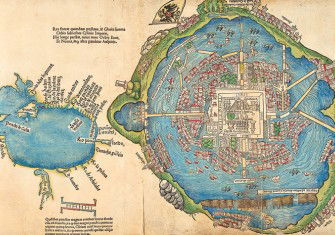
Five hundred years ago, the Aztec city of Tenochtitlan fell. While this anniversary is being commemorated in Spain, Mexico has demanded apologies from the Vatican and from its former colonial master for the atrocities committed during the Conquest against its Indigenous population. Events are taking place in Mexico City to observe this momentous year in its history, but instead of celebrating its founding – as Mexico City – it is a commemoration of 700 years of Mexico-Tenochtitlan and 200 years of Mexican independence. Celebrating the city’s history as the capital of the Mexica-Aztec Empire, the anniversary draws attention away from what the mayor of Mexico City, Claudia Sheinbaum, has referred to as ‘the so-called Conquest’.
One of the ways the city will mark the anniversary is by changing the name of Puente de Alvarado Avenue to Mexico-Tenochtitlan Boulevard. The conquistador Pedro de Alvarado was notorious for having ordered the massacre of thousands of unarmed celebrants during the Toxcatl festival on 22 May 1520. Sheinbaum has explained that changing the name of the road will help to ‘rescue our origins and open the discussion’ in the historical reconstruction of the city, a process in which original peoples will be participating. ‘If indeed the destruction of Mexico-Tenochtitlan occurred 500 years ago, what is also certain was the resistance of the original people and we must not forget the violence of those years.’ Yet this commemoration of 700 years is in itself a false anniversary; a best guess from the sources tells us that the date of founding was probably 1325. We must, therefore, ask how this attempt to change history for political purposes – to allow Mexico to distance itself from Spain – serves the original people, the supposed focus of this reframing and reclaiming of Mexico City’s origin story.

Further questions can be asked about the idea of a conquest. Perhaps ‘invasion’ would be a more appropriate term? That, too, is up for debate. According to the ‘official’ Spanish portrayal, on 13 August 1521, after a siege lasting several months, the conquistadors, led by Hernán Cortés, completed their conquest of Tenochtitlan with the aid of thousands of Native auxiliaries. Despite the help of the Indigenous allies being recorded from the outset (in the letters of Cortés to Charles V) and in the post-Conquest Aztec account in the Florentine Codex (created by the Spanish Franciscan friar Bernardino de Sahagún, with the help of Native informants), their role was downplayed, even ignored, in later official ‘histories’. Almost 30 years ago, Ross Hassig described the Conquest of Mexico as an Indigenous civil war in which the Spaniards took part: scholars have been writing about Native involvement by groups other than the Tlaxcalans – the sworn enemies of the Aztecs – for decades. Nevertheless, the popular narrative continues to be one of a small band of Spaniards who, against all odds, defeated the fearsome and mighty Aztec army.
Even when the Indigenous allies of the Spaniards are included in the discussion, they are usually presented as having joined forces with the conquistadors thanks to Cortés’ powers of persuasion. This not only takes away the autonomy of Native groups, but also sweeps aside the imperial role of the Aztecs, who were not always popular with those they had subjugated. Moreover, despite stretching from the Pacific to the Atlantic coasts and reaching as far south as Guatemala, the Aztec empire was not a single structure. Large areas within its territory remained unconquered, either because those regions were poor in resources and not worth the effort, or because a people were strong militarily and therefore too difficult to conquer. The historian Inga Clendinnen describes the ‘monolithic Aztec empire’ as a ‘European hallucination’ as ‘the units were held together by the tension of mutual repulsion’, which helps to explain why the Indigenous allies joined Cortés and the conquistadors. As regions were conquered by Cortés, more Native people joined the anti-Aztec army, which gradually decreased the Spanish element until they were by far the minority. María Castañeda de la Paz tells us that these so-called ‘allies’ referred to themselves as conquerors and letters from different Indigenous groups (Xochimilca, Tlacopaneca, Tenocha, Azcapotzalca) affirm their active participation in the Conquest.

This agency does not end there. Clear evidence exists of Indigenous adaptation to the new reality of colonialism, as they strove to keep their way of life and status intact as far as possible. Towns and elites familiarised themselves with Spanish legal formats, sending a steady flow of petitions to the king and his council. Like the conquistadors, Indigenous allies wrote petitions to receive coats of arms, among other privileges, and would argue about the amount of tribute they had to pay if they believed it was excessive. In order to support their cause, they would highlight their participation in the Conquest, their role in the pacification and settling of New Spain and their status as Christians who facilitated the spread of the true faith. Letters were sometimes written in Latin, demonstrating biblical knowledge. It seems as though many Indigenous groups actively embraced their new status as citizens of the Spanish crown in order to emphasise the king’s responsibility to them, using their status as Spanish subjects to their advantage. As historian Maria Castañeda de la Paz explains, the Tlaxcalan city shield is represented in the Lienzo de Tlaxcala, an illustrated codex depicting the history of Tlaxcala, created in the 1580s by Diego Camargo Muñoz, a mestizo chronicler. The blazon depicted in the lienzo, however, is that of the kingdom of Spain, not that of the altepetl (community) of Tlaxcala. It seems that the Tlaxcalteca incorporated it into their document in order to show they were part of the Spanish kingdom, collaborating loyally with the king.
The portrayal of the Indigenous allies being persuaded – or manipulated – by Cortés into participating in the Conquest relies on the image of him as a political genius, with the ability to size up every situation and react just as was needed, rather than the more realistic notion of Cortés the gambler; a man who had nothing to lose, thanks to his status as a fugitive. Cortés’ campaign was an illegal one. He had no idea how the king would respond to his actions and it was not until September 1523 (two years after the fall of Tenochtitlan) that he found out he had been appointed captain general of New Spain. Cortés’ risky strategies are seen in a different light when we realise that he had no other option if he wanted to avoid being tried for treason. The purpose of Cortés’ first letter to Charles V was to exonerate and exalt himself, while simultaneously attacking the credibility of his immediate superior, the governor of Cuba, Diego Velázquez, as Cortés had wilfully ignored his orders to abandon the campaign.
What is infamous about the Conquest of Mexico is the idea that the Aztecs believed that the Spaniards were gods. Hernán Cortés’ chaplain and secretary, Francisco López de Gómara – a man who had never set foot in the New World – was one of the first people to suggest this when he published his account of the Conquest in 1552, exclaiming that ‘Many came to gape at the strange men … at their attire, arms and horses, and they said, “These men are gods!”’ This was repeated in other accounts and a myth arose that the Aztecs believed that Cortés was a particular deity, Quetzalcoatl, who had disappeared long ago and was expected to return at exactly the time when Cortés and his men arrived. Susan Gillespie demonstrated in 1989 that this myth was created in the 1560s by Bernardino de Sahagún in Book 12 of his Florentine Codex. Almost 20 years ago, the historian Camilla Townsend explained the likelihood this fallacy originated from a linguistic misunderstanding of how the Spaniards were addressed by the Aztecs. It seems that the Nahua referred to the conquistadors by a number of names, but the word teotl or teutl (plural teteo’ or teteu’) was most commonly used in the Florentine Codex. This could mean a number of things, including ‘devils’, or ‘deity impersonators’ (it is possible to infer from this that the Spaniards were potential victims for sacrifice), but the translation of the account from Nahuatl to Spanish rendered it simply as ‘gods’. This myth has persisted in the popular imagination thanks to a modern edition of Indigenous accounts of the Conquest being published in the 1960s without the necessary context explaining this mistranslation.

Why is it such a problem that people continue to believe that the Aztecs mistook the conquistadors for gods? It is for the same reason that the commonly held belief that the Maya were aliens is problematic. At the heart of these ideas is a Eurocentric view of Indigenous Mesoamericans as superstitious and less intelligent. Moreover, this is a superiority complex dictating that they would mistake the white people who came to conquer them as gods. Clendinnen noted 30 years ago that not only is the idea that 400 men were able to do the ‘impossible’ and conquer a huge empire inaccurate, but actually rooted in ideas of racial superiority. In the 1540s, the narrative of heavily outnumbered Spaniards conquering the Aztec empire was used as evidence by Juan Ginés de Sepúlveda, chaplain and chronicler to Charles V, to prove that the Spaniards were of a higher level of intelligence than the Mesoamericans, thereby justifying the Conquest for their own good, as the Native people did not have the capacity to govern themselves. This idea that Europeans would triumph over Indigenous people however formidable the odds was perpetuated by William H. Prescott’s History of the Conquest of Mexico in 1843 and largely repeated by the philosopher and historian Tzvetan Todorov in the 1980s, by which time the reputation of the conquistadors as having achieved the impossible was sealed.
There is a huge disparity between the portrayals of Cortés and Moctezuma. In the narrative of the Conquest in Book 12 of the Florentine Codex, the Aztec tlatoani (king/emperor) is presented as overly cautious, hesitant, even terrified of the impending arrival of the Spanish invaders. All of his actions, especially his decision to allow the conquistadors into Tenochtitlan, have been treated as reckless and his reaction to being captured is portrayed as cowardly. Negative comparisons have, therefore, been readily made between Moctezuma and the ‘heroic’ and ‘decisive’ Cortés. However, if we compare descriptions of what makes a ‘good commanding general’ according to the Aztecs, as described in Book 10 of the Florentine Codex, we can see that Moctezuma fulfils the criteria: ‘He lays out, he searches the roads; he tracks [the foe] … He places the sentries, posts the chosen ones. He interrogates them; he discovers the places where the enemy will approach.’ Moctezuma’s decision to allow the Spaniards into Tenochtitlan can be seen as calculated and justified based on his observances. He was aware that, with the Spaniards’ vastly superior weaponry, the Aztecs were unlikely to be victorious on an open battlefield, but within the confines of their city, where Cortés and his men would be reliant upon the Aztecs’ hospitality for their survival, they would have more of a chance.

In his second letter to the king, Cortés’ description of Moctezuma’s acceptance of Charles V as his lord helped to legitimise the Conquest, especially when coupled with his portrayal in the same letter of the tlatoani’s death at the hands of his own people (an account refuted by the Aztecs, who claimed that Moctezuma was killed by the Spaniards). This meant that the Aztecs could legally be attacked, as they effectively became traitors to the Spanish crown. So pervasive was this narrative that imperial Spain re-wrote its history in the 16th century to incorporate the Aztec empire into its domain, presenting a seamless transition between Moctezuma II and Charles V, as Holy Roman Emperor. Thanks to this narrative of Moctezuma’s apparent submission of his empire to Charles, later Aztec tlatoanis have been portrayed as illegitimate or invalid. This representation has continued to the present day. The exhibition Moctezuma: Aztec Emperor, hosted by the British Museum in 2009-10, framed Moctezuma as the last ‘elected’ Aztec ruler, clearly following the Spanish narrative. However, in Mexico this version of events is not adhered to, as monuments celebrate Cuauhtemoc – who ruled after the death of Moctezuma’s successor, Cuitlahuac – as the last tlatoani.
The events of the Conquest are traditionally split into two distinct phases. Clendinnen identifies the first as beginning with the landfall of Cortés and his men on the Gulf coast in April 1519, and ending with the death of Moctezuma in July 1520. This is the part that most tend to focus on and, from a Spanish perspective, is seen as the more heroic episode. The second phase encompasses the retreat from Tenochtitlan, the Noche Triste (‘Night of Tears’) after Moctezuma’s death, the lengthy stay in Tlaxcala and the final siege. It is difficult to create a glorious narrative about a siege, and the suffering detailed in the Florentine Codex about this episode is not easy to read. It would be hard to examine the details of a people being starved into submission without describing it as a war crime. So horrible was it that Clendinnen believes Cortés himself was changed by the final stages of the siege; that his glorious conquest of the marvellous city that had so entranced him had been spoiled by the devastation that was wrought; and that the ruins and the pathetic end that had befallen the Aztecs saddened him greatly.
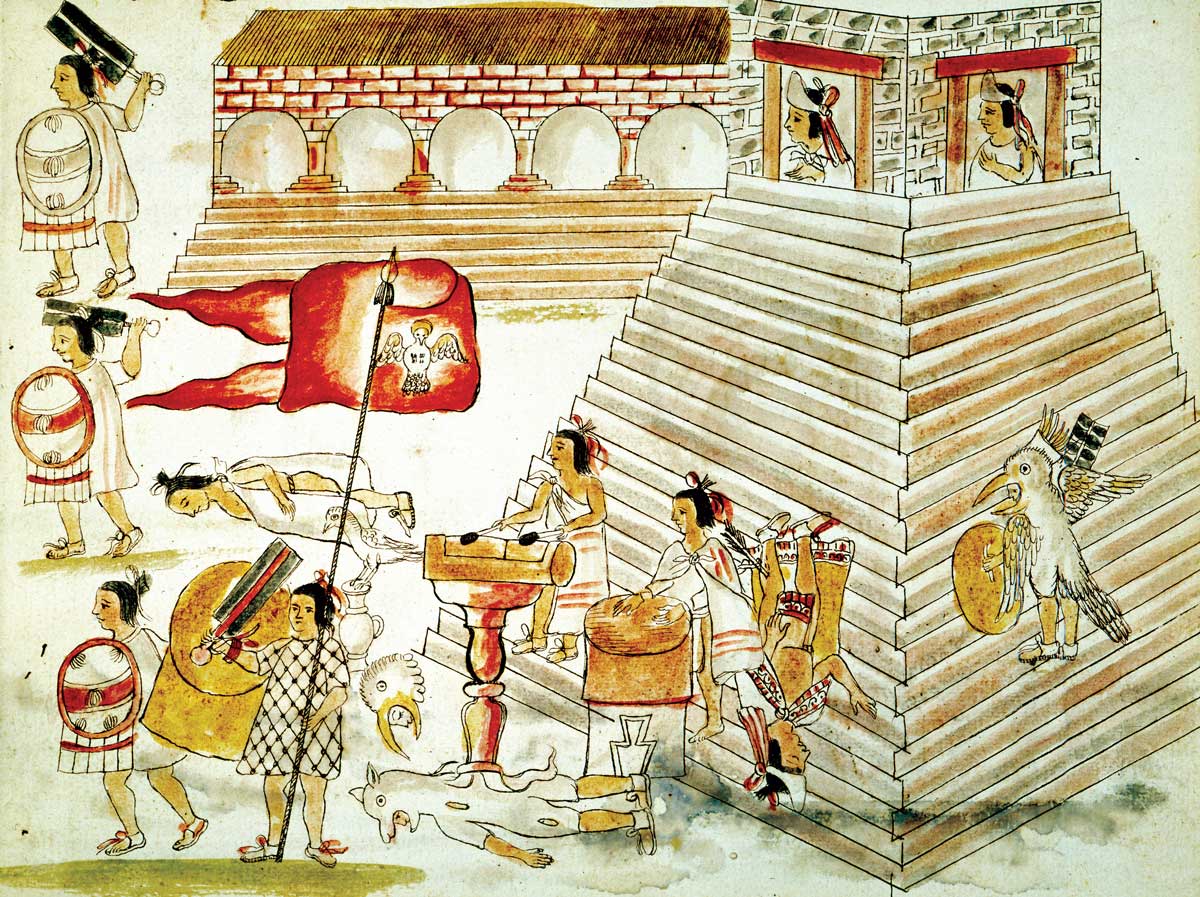
The popular view of the Spaniards as a heroic group of adventurers would have baffled the Aztecs, as their take on the conquistadors recorded in the Florentine Codex, especially during the siege of Tenochtitlan, was one of dishonourable cowards. On occasion, for example, Aztec warriors killed Spanish soldiers by striking them in the back of the head, the method by which criminals were routinely executed in Tenochtitlan. According to the Aztec belief system, the manner of death determined where the deceased went in the afterlife. It is possible, therefore, that they may have believed that dying in this way would have a negative effect upon the Spaniards not only in this life, but also in the next. Equally, the Florentine Codex records the conquistadors being described by their Aztec opponents as like ‘drunken men’, a disparaging comment with regards to their fighting technique, made more so because drunkenness was prohibited in Aztec society, except on certain ritual occasions. There are also references to the Spaniards as ‘barbarians’ – subverting the traditional narrative of the savage Natives and the sophisticated Europeans.

Key to the idea of the Aztecs thinking that the conquistadors were gods was the notion that they were dumbfounded by the Spaniards’ foreign weaponry, especially their firepower. It is possible that the technology of the conquistadors may have provided them with a certain shock value at the start of the Conquest, but by the time of the siege, it would seem that the Aztecs viewed the Spaniards’ use of long-distance weapons – such as the catapult – as treacherous. In their eyes, there was no honour in killing this way, especially as the account in the Florentine Codex also mentions that they pointed the catapult ‘at the common folk’. Challenging the notion of the Aztecs being scared, or giving up in the face of superior technology, is the fact that they had ways of turning the Spaniards’ weapons against them. They pushed cannons into the lake; zig-zagged to avoid gunfire and crossbow bolts; and fixed stakes in the lake bed in order to damage the Spanish brigantines. They were nothing if not resourceful.
Having aligned themselves with the Spaniards, the Indigenous allies, or ‘conquerors’, are also presented by the Aztecs in Book 12 of the Florentine Codex as traitors who acted like petty criminals. The Xochimilcans, for example, who had been conquered by Tenochtitlan in 1430, are described as robbing women and children. This status as traitors is interesting, as it assumes that those subjugated by the Aztecs should be loyal to their conquerors. Similarly, Cortés’ translator and later concubine, Malintzin (also known as La Malinche, or Doña Marina), has also been presented as a traitor to the Aztecs, despite being from a different Indigenous group. Malintzin was from Coatzacoalcos, on the Gulf coast, but was probably kidnapped and sold by the Aztecs into slavery with the Maya, who gave her to the conquistadors. As such, she would not have seen the Aztecs as ‘her people’; yet she has long been presented as a Mexican Eve, responsible for the fall of the Aztec empire. According to writer Octavio Paz, the Mexican people ‘will never forgive her’ for what she did. Her union with Cortés, and their son, have come to symbolise the birth of Mexico itself – a nation of forcibly mixed-race people. She has been presented as a woman who lacked agency, but this view has been reassessed by Claudia Rogers, who discusses her portrayal in the Lienzo de Tlaxcala as a warrior woman, ‘not only negotiating between European and Indigenous leaders but in battles in the Aztec capital of Tenochtitlan, sometimes even wielding a European-style shield and sword’. This makes sense when we consider how fundamental her role was. As Clendinnen explains: ‘Spanish dependence on Indigenous informants and translators was total.’

The popular narrative of the ‘so-called Conquest’ should be re-evaluated in order to upend its Eurocentric triumphalist focus, but it is also necessary to confront Mexico’s own uncomfortable relationship with these events. The view presented in Mexican popular culture is one of Aztecs versus Spanish conquistadors, aided by a treacherous woman. The victory of tens of thousands of Indigenous ‘conquerors’, long unhappy with Aztec rule, is conveniently ignored. Similarly, within modern popular culture in Mexico prominent members of the creole class during the colonial period, such as Sor Juana Inés de la Cruz, have been simplistically presented as aligning themselves with the Indigenous population and rebelling against the Spanish. Appropriation of Indigenous voices and imagery has occurred on every level since the Spanish invasion: by conquistadors to claim a legitimate Conquest; by friars to justify the conversion process; by the creole class in claiming ‘Mexican’ status, distinguishing themselves from the Spanish elite; even by the mestizo class in the 20th century to define a united Mexican identity after the revolution. In fact, this is arguably still happening as the Mexican government attempts to downplay the quincentenary of the Conquest in favour of a manufactured 700th anniversary of the founding of Tenochtitlan.
Amy Fuller is Senior Lecturer in the History of the Americas at Nottingham Trent University.