

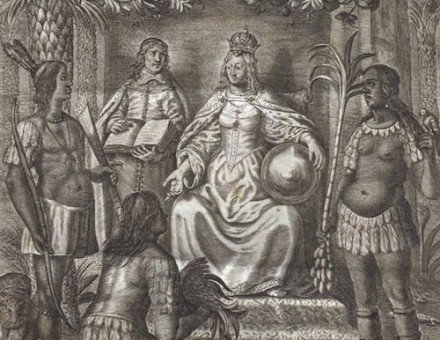
The Lost Kingdom of Apalache
In the 17th century a French writer claimed to have discovered a vast indigenous realm in the Appalachian Mountains of the American southeast. Could it be true?
In the 17th century a French writer claimed to have discovered a vast indigenous realm in the Appalachian Mountains of the American southeast. Could it be true?

Shakespeare at Thirty by Rory Loughnane pieces together the crucial three decades in which the bard was born.

Why did Chilean history take such a wrong turn? For Isabel Allende the question is best asked with fiction.

Philip Hensher’s A History of the Novel in Britain is certainly novel but how does it fare as history?

Before the Spanish conquest, the history of the Aztec Empire was recorded orally and with hieroglyphs. In danger of being lost or forgotten, Indigenous historians began to write it down.

The Bayeux Tapestry may be back in England, but it is a Norman artwork. For Anglo-Saxon voices, we need to look elsewhere.

The Bookshop: A History of Bookselling From the Dawn of Print to the 21st Century by Andrew Pettegree reveals the hard graft and innovation behind the book trade.

In 1943 letters reporting starvation and death in Bengal began to reach Indian soldiers serving the British overseas. Despite colonial censorship, their testimonies revealed the devastating reality of famine.

The Victorian reading public had access to a vast array of classical literature from Asia in multiple translations by experts and amateurs. What did they read, and why?

Often dismissed as a myth, was there a real man behind the legend of King Arthur?