

Civil War in Siberia: The End of Kolchak 1919-1920
David Footman assesses the death and legacy of a White Russian leader.
David Footman assesses the death and legacy of a White Russian leader.
The impact of the Soviet Revolution in October 1917 has been so overwhelming that we seldom look back to the February days when the Tsar was compelled to abdicate forty-eight hours after the outbreak of disturbances, and even more seldom to the First Revolution of 1905. Yet, A.J. Halpern writes, October came as a culmination of the February crisis, and 1905 was the necessary prologue to the 1917 drama.
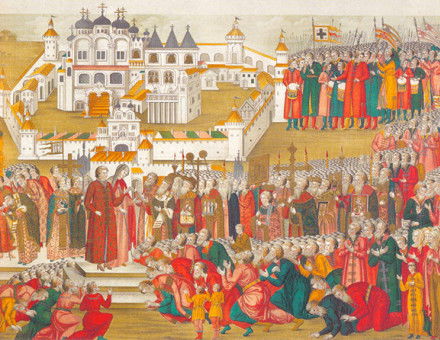
The great Russian dynasty was founded on July 22nd, 1613.
Gerald Morgan recounts how, towards the mid-nineteenth century, Russian expansion in Central Asia prompted the authorities in India to send British Missions in reply.
In 1897 The Gadfly was published in English by Ethel Lilian Voynich - ‘E.L.V.’ to her friends. Anne Fremantle introduces this revolutionary novel, set in nineteenth-century Italy, which has sold 5 million copies in Russia.
W. Bruce Lincoln explains how Russian terrorists decided that ‘by the will of the people’ the Tsar Alexander II must be assassinated.
W. Bruce Lincoln finds that, though at first extremely against the visits, Queen Victoria was much impressed by the Russian Emperor’s dignity, civility and grace.
Sir Robert Hodgson recounts his experience of interaction with Bolshevik diplomats.
On March 16, 1921 the first Anglo-Soviet Trade Agreement was signed; Sir Robert Hodgson headed Britain’s Commercial Mission to Moscow.
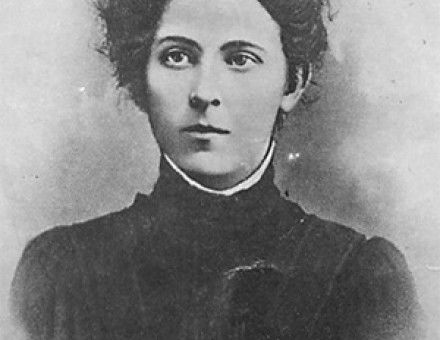
Hugh Fraser looks at one of Russia's more memorable female protestors, Maria Spiridonova.