

Voltaire and Peter the Great
‘The story of Charles XII,’ wrote Voltaire, ‘was entertaining; that of Peter instructive.’ A. Lentin describes a unique example of early modern Franco-Russian relations.
‘The story of Charles XII,’ wrote Voltaire, ‘was entertaining; that of Peter instructive.’ A. Lentin describes a unique example of early modern Franco-Russian relations.
Ian Grey profiles General Patrick Gordon, Scotsman of such standing in Imperial Russia that he received a state funeral upon his death, in which the Tsar himself marched on foot.
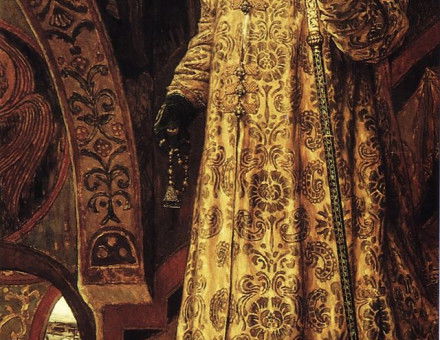
Many events in Ivan's reign, writes Ian Grey, seem merely the first stages of developments that have been continued in the twentieth century. Today his greatness is generally recognized by historians.
J.H. Shennan offers a study of the relationship between Russian Orthodoxy and the secular power in the time of the Tsars.
In 1748 Sweden embarked on the construction of an elaborate island fortress. This was her last attempt, writes Anthony Wood, to check the Russian thrust westwards.

During the Cold War, 224 nuclear weapons were denotated at Novaya Zemlya in the Soviet Union’s remote Arctic north. Only with the collapse of the USSR in 1989 did the true scale become known.
Far more interesting than Byron's romantic hero, who also inspired a celebrated circus act, is the real Mazeppa, as described in this article by L.R. Lewitter.
J.W. Newmarch Holmes transports the reader to Novgorod, the hub of a mercantile empire in medieval Russia.
Christopher Lloyd asserts that the first contacts between Elizabethan England and the Russia of Ivan the Terrible mark the true birth of the British Empire.