Alfred, Lord Tennyson died a poet’s death. His son Hallam wrote that, after listening to a prayer taken from his own verses, he lay in bed, a ‘figure of breathing marble, flooded and bathed in the light of the full moon streaming through his oriel window’, clasping a volume of Shakespeare as he expired. If this sounds too picturesque to be true, then it probably was. Victorians liked to memorialise their relatives – especially when they were public figures – in ways that emphasised their calm readiness for the life to come and suppressed the delirious indignities that so often attend death. Rites of Passage is a capacious and jaunty survey of the scripts they followed when they mourned, which Judith Flanders identifies as one of their chief preoccupations. In terming theirs ‘the age of death, dying and mourning’, Flanders echoes historians who have identified – and exaggerated – a ‘Victorian cult of the dead’. But what sets her book apart is its persistent attention to people who disputed or quietly dodged its costly obligations.
Death has always been our biological fate. It seems no more helpful to call the Victorian period a distinctive ‘age of death’ than it would be to call it the ‘age of sleep’ or the ‘century of digestion’. It is true that, as Flanders points out, early Victorian cities were unusually unhealthy places, reservoirs of contagion occasionally ravaged by epidemics. Child mortality remained a grim problem – many had cause to echo the Reverend Sydney Smith’s saying that ‘the life of a parent is the life of a gambler’. Yet it would be difficult to claim that death loomed larger for Victorians than their predecessors. From mid-century there were impressive falls in general and particularly in infant mortality, which reflected investments in sanitation infrastructure as well as rising standards of nutrition and housing. As Flanders argues, it was not death that changed, but the Victorians: elaborate mourning was a cultural phenomenon which reflected changes in society.
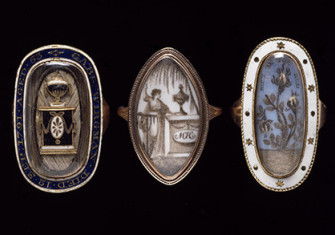
The most important was rampant commercialisation. Flanders, the author of an excellent book on the business of Victorian leisure, understands that the pressure to establish one’s identity through conspicuous consumption did not spare mourners. Undertakers pressured the middle classes to stage increasingly elaborate funerals which underlined their respectability, as well as the virtues of the deceased. Haberdashers opened mourning warehouses (or, more grandly, ‘maisons de deuil’) where women could stock up on black crape garments for a year of mourning. Advances in technology and manufacturing meant there was always choice in grief. Why settle for black velvet as a coffin cover, when you might now have holly green? Locks of hair might be fashioned into elaborate jewellery or used to decorate photographs, which bestowed a kind of grainy immortality on the dead.
The bucolic cemeteries such as Highgate or Nunhead which soon ringed London and other cities were expressions of a slow burning romanticism. But they were also the creations of joint stock companies and supposed to turn a profit through the sale of plots. Here the interests of godly businessmen mingled with the concerns of reformers, who pushed the state to regulate away what they saw – perhaps with undue alarm – as the gravely unsanitary practice of traditional interments in urban churchyards.
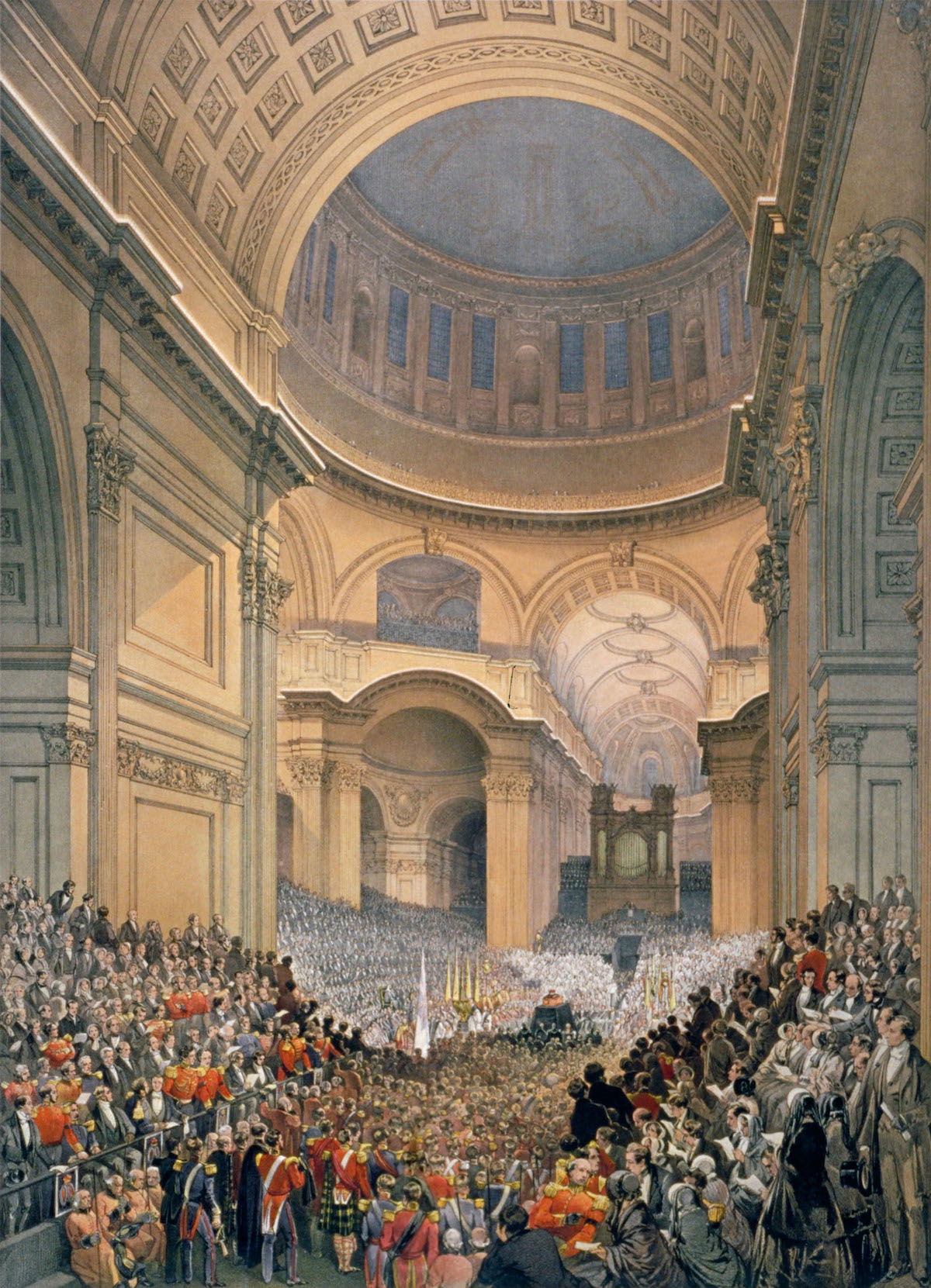
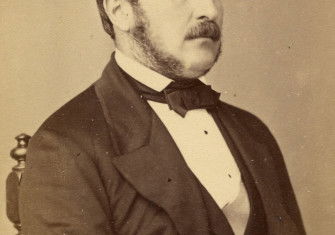
Complaints about the commercialisation of death were testament to its success. When the Duke of Wellington died in 1852 the Illustrated London News criticised the trinkets produced to mark the event – but its own special issue on the funeral ran advertisements for them. It later gloated over the ‘extreme and unprecedented’ number of copies it sold. A decade later the same paper noted that the sudden death of Queen Victoria’s husband had a silver lining: the ‘incalculable demand’ for mourning clothes promised to rescue textile merchants who had overstocked in recent months.
The commercialisation of mourning is so eye-catching that it is easy to overlook its limits. By the end of the century fashionable folk followed high-minded writers such as Charles Dickens and Thomas Carlyle who had long mocked ‘undertakerism’. In 1892 the Princess of Wales refused to wear black crape to mourn her son. This was a buyer’s strike, but most Victorians had never been able to afford the stuff of mourning to begin with. Labouring people struggled to avoid giving their loved ones a pauper funeral – which stingy Poor Law authorities made as mean and anonymous as possible – and might at best buy the odd crape ribbon. Conduct manuals supply Flanders with much of her evidence for the social norms of mourning, but she sagely observes that their fussy prescriptions do not reflect how people actually behaved.
Rich on the materiality of mourning, Rites of Passage is surprisingly thin on its spirituality. Flanders devotes a whole page to the type of biscuits you might expect to eat at a Victorian funeral, but has little to say on the debates about the afterlife which engaged so many clerical intellectuals. This skew in the discussion admittedly reflects the waning power of the Church over funerals, which had always coincided uneasily with folk practices of which Flanders gives an absorbing account. By the end of the century, parliamentary legislation had taken away control of churchyards from the Church of England and there was growing public tolerance for cremation.
Yet Christianity continued to matter, not least because its theodicy could temper the dangerous power of mourning. Many of Victoria’s subjects reproved the fetishistic intensity of her grief for Albert because it neglected the Christian’s trust in heaven or their duties to the living. The continuity of Christianity’s concern with the afterlife, which predated and survived the black hatbands and postmortem photographs of Victorian Britain, makes it overly neat to suggest, as this book’s conclusion does, that public discussion of death and mourning died on the ‘killing fields of World War I’.
Michael Ledger-Lomas is the author of Queen Victoria: This Thorny Crown (Oxford University Press, 2021).