

Priessnitz: Keep Taking the Liquids
Ian Bradley looks at the life of Vincent Priessnitz, pioneer of hydrotherapy, whose water cures gained advocates throughout 19th-century Europe and beyond and are still popular today.
 The recession seems to have made little impact on the booming market in alternative and holistic medicine. It may well be that these straitened times are encouraging more people to abandon expensive drug-based therapies and return to older, simpler remedies and more ‘natural’ ways of keeping fit.
A similar movement developed in the mid-18th century under the twin influences of evangelical religion and Romanticism. Among the first advocates of what would now be called holistic medicine was John Wesley (1703-91), the founder of Methodism, whose Primitive Physic, published in 1747, extolled the benefits of a healthy life based on the simple gifts that God had provided, avoiding excesses of every kind.
Abstain from all mixed, all high seasoned food. Use plain diet, easy of digestion; and this as sparingly as you can, consistent with ease and strength. Drink only water, if it agrees with our stomach; if not, good, clear small beer. Use as much exercise daily in the open air, as you can without weariness. Sup at six or seven on the lightest food; go to bed early, and rise betimes. To persevere with steadiness in this course, is often more than half the cure.
At the heart of the natural approach to health preached and practised by Wesley and others was an emphasis on the use of copious amounts of water both internally and externally. He recommended that everyone should have a cold bath on rising in the morning:
Cold bathing is of great advantage to health: it prevents abundance of diseases. It promotes perspiration, helps the circulation of the blood, and prevents the danger of catching cold. Tender people should pour water upon the head before they go in, and walk in swiftly.
By the late 18th century a growing number of doctors across Europe were practising water cures and affusions and throwing pails of water over their patients. The early 19th century saw the emergence of hydrotherapy, also known as hydropathy, based on the repeated action of water as an agent, both applied externally to the body and taken internally. Enthusiastically taken up in Britain and the United States, it became the most popular form of alternative medicine in the later 19th century, eclipsing both homeo-pathy and hypnosis. Less frightening than most of the commonly practised conventional medical techniques such as purging, applying leeches, blood-letting, induced vomiting and the use of largely untested drugs, hydrotherapy also had a more positive spiritual appeal in terms of getting back to nature in the face of industrialisation and urbanisation.
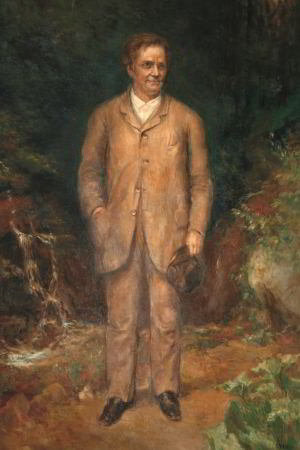
The pioneer of the ‘water cure’ and inventor of modern hydrotherapy, who perhaps has as much claim as anyone to be regarded as the founding father of natural medicine, was Vincent Priessnitz (1799-1851), the son of a peasant farmer in Silesia. Having successfully treated first himself and then others by the external application of cold water to diseased or injured parts of the body, he went on to practise more extensive and sophisticated therapies for a wide range of ailments with apparently spectacular results. The cures that he pioneered involved patients taking an active part in treating their own diseases and by-passed doctors and conventional medical opinion.
Priessnitz grew up in the tiny hamlet of Graefenberg in a remote mountainous region on the northern edge of the Habsburg Empire. The village, now known as Jesenik, is in the north-east of the Czech Republic near the Polish border. He was first alerted to the therapeutic properties of water as a boy while resting beneath the shade of a tree close to a spring. He watched a young roe deer, which had been shot in the thigh, drag itself to the spring and submerge its wounded limb in flowing water. Over a period of several days he observed the animal returning again and again to the spring and gradually regaining its strength. Priessnitz found himself drawn often to the spring, not just to quench his thirst with a draught of its pure cold water but also to rest by it and listen to its sound which, in the words of his English biographer, Richard Metcalfe, ‘spoke to him in a language at once familiar and yet mysterious’.
Priessnitz’s experience at the spring left him with a strong sense of both the spiritual power and the healing properties of water. By the age of 15 he had become the unofficial medical adviser to his village, recommending people to use cold water to treat their bruises and injuries. He applied his theories to himself after a horrendous accident when he was run over by a wagon laden with oats. He managed to cure himself with cold bandages strapped across his chest and by drinking copious quantities of cold water to prevent fever. He continued to wear the wet compresses for a year.
The application of cold compresses, in the form of wet sheet packs known as ‘dripping sheets’, was at the heart of the hydrotherapy that Priessnitz started to practise professionally in 1819. He extended his water cure from treating sprains and surface injuries by developing what he called the ‘sweat cure’ for chronic illnesses. This involved allowing patients to sweat in bed before immersing them in tubs full of cold water, pouring buckets of water over their heads and rubbing their skin. His treatments were so successful that people began coming to Graefenberg from far and wide and in 1822 he rebuilt his home to be the first dedicated hydropathic establishment in the world.
 Priessnitz received powerful official endorsement in 1838 when an Imperial Commission appointed to investigate his hydropathic establishment gave it a glowing report and recommended that he be granted similar privileges to members of the medical profession and given a licence to practice. Among his many well-connected patients were the Archduke Franz Karl and the Prince Bishop of Breslau. The number of visitors coming to Graefenberg to take the water cure rose from 54 in 1830 to 1700 in 1839, of whom 120 were themselves doctors. Alongside the cold baths, showers and wet sheet packs, Priessnitz’s cure involved drinking large quantities of cold water – he recommended taking ten to 12 glasses a day – abstinence from alcohol, a simple diet and lots of fresh air and exercise. He made his patients undergo what he called ‘intensive marches’ every morning to visit some of the hundred or so natural springs in the hills around Graefenberg, encouraged them to engage in hard manual work like chopping logs and clearing snow and forbade them from talking about their illnesses to one another. Although many in the medical profession were initially distrustful of his unorthodox methods, he acquired a growing band of disciples among doctors. Within 40 years of his death over 400 books had been written about him and numerous other hydropathic establishments set up in the neighbourhood.
Priessnitz’s pioneering methods were adopted and extended by Sebastian Kneipp (1821-97), who served from 1881 until his death as the parish priest of Bad Wörishofen in Bavaria where, in his own words, he combined the cure of souls and bodies. He, too, came to espouse hydrotherapy through direct personal experience, having cured himself of a complete breakdown in health probably caused by tuberculosis at the age of 28 by means of short immersions two or three times a week in the freezing cold river Danube. The cure enabled him to pursue his ambition of entering the priesthood. He went on to treat thousands of patients with a combination of wet sheets, foot baths, sitting and part baths, a strict vegetarian diet and regular exercise, including early morning barefoot walks through the dewy grass.
As pioneered and practised by Priessnitz, Kneipp and their many disciples, hydrotherapy took on some of the characteristics of a religious movement. The simple faith, or credulity, of its devotees struck
J.D. Macpherson, a London doctor who wrote about the proliferation of hydropathic establishments across continental Europe in 1867. He found it strange that the greatest enthusiasm for hydrotherapy should have arisen ‘amidst the scepticism of Germany and that many who are most critical in matters of religion accept readily the latest novelties in the way of wonderful remedies’. In several respects hydrotherapy took on the role of a new post-Enlightenment faith for the romantic age, embracing both the primal mystery of water and a desire to return to nature and simpler living at a time when belief in conventional creeds and churches was waning. In more practical terms its mixture of water drinking, abstension from alcohol and other stimulants, plentiful exercise and fresh air provided an effective remedy for the effects of over-indulgence in an age of increasing affluence and more leisured lifestyles.
Several of Priessnitz’s British patients became fervent devotees of his alternative medical treatments and resolved to introduce them into Britain. Richard Claridge, an asphalt contractor and a captain in the Middlesex Militia, returned home after a three month stay at Graefenberg in 1841 completely cured of his chronic rheumatism, having taken, on his careful calculation, 800 baths, drunk 1,500 tumblers of water, walked 1,000 miles and perspired for 200 hours. He devoted much of the rest of his life to touring the British Isles attempting to persuade his fellow countrymen of the benefits of the water cure. Another of Priessnitz’s patients, James Wilson, who was himself a doctor, was instrumental in setting up the first hydropathic establishment in England. Disillusioned with drug-based treatments, which he felt did more harm than good, he came away from his stay at Graefenberg a convert to the water cure. In 1842 he bought the lease of the old Crown Hotel in Malvern, Worcestershire, which he had settled on for its exceptionally pure water and air and steep hills, and turned it into Graefenberg House with room for up to 12 patients. Later he established a larger hydropathic establishment in Malvern called Priessnitz House able to cater for as many as 60 patients at a time.
The hydropathic movement was taken up with particular alacrity in Scotland during the second half of the 19th century. The first Scottish hydro was set up in 1843 in Rothesay on the Isle of Bute and another 20 were established in the following 40 years. The austere, clean-living, self-disciplined, muscular Christian ethos that they embodied appealed to the Presbyterian psyche. It is only in recent decades that Crieff Hydro in Perthshire has shed its commitment to temperance and introduced a bar.
Back in Silesia Priessnitz was hailed as ‘the water doctor’ and worker of miracles. The wooded hills around the sanatoria that he and his followers established are dotted with elaborate marble monuments and fountains dedicated to him by his grateful patients, often erected on a national basis. There are Prussian, Romanian, Polish, English, French and Hungarian memorials. A huge memorial, crowned by the Greek goddess Hygeia with a laurel wreath in her hand, marks the entrance to the Promenade, a level gravel walk which leads round a hillside outside Jesenik, where a mausoleum chapel contains the remains of Priessnitz and his wife. The solemn religious atmosphere is mirrored in the text on the side of a Hungarian monument erected in 1840 and surmounted by a lion:
People and the mute creation once drank a common beverage,
But humanity rashly renounced water,
Falling into the sickness of old age.
Priessnitz then resurrected the power of healing water
And miraculously the human race will rise once more in its former power and youth.
Perhaps the most striking monument is a group statue of Priessnitz and his disciples erected in Smetana Park in Jesenik in 1909. The towering figure of the water doctor, twice human size, looks down like a god from an elevated plinth, a spring flowing perpetually from beneath his feet into a bowl below. On one side of him are statues of the wounded deer that first alerted him to the therapeutic powers of water, a grief-stricken young girl, an old lady bent over with care and a naked man whose emaciated body is entwined with serpents. On the other side stand the robust erect figures of a man, woman and child in the full bloom of health.
Also dating from 1909 is the 141-room Priessnitz Sanatorium in Jesenik, built as a living memorial to provide the treatments that he had pioneered. Today it is packed with Czechs taking therapeutic baths and massages and a range of other holistic treatments, practising Nordic walking in the surrounding hills and sipping herbal tea and nibbling spa wafers in the ornate pillared drawing room watched over by busts and portraits of Priessnitz. In common with other Eastern Europeans, the Czechs still have great faith in the water cure and other natural-based and holistic remedies. They also have no doubt at all that their own ‘water doctor’ is the true founding father of natural medicine.

