

The Russians in Hungary, 1849
The circumstances in which the Emperor Nicholas decided to send troops into Hungary in 1849, writes Ian Young, were remarkably similar to those which brought Soviet tanks swarming over the Carpathians in November 1956.
The circumstances in which the Emperor Nicholas decided to send troops into Hungary in 1849, writes Ian Young, were remarkably similar to those which brought Soviet tanks swarming over the Carpathians in November 1956.
Christopher Lloyd describes how Hawke’s victory over the Brest Fleet, on November 20th 1759, destroyed the last possibility of the French gaining the supremacy at sea necessary for their projected invasion of Britain.
Historians should adhere to a rigorous code of professional practice if they are to avoid the kinds of careless mistakes that bring their professional integrity into question, says Suzannah Lipscomb.
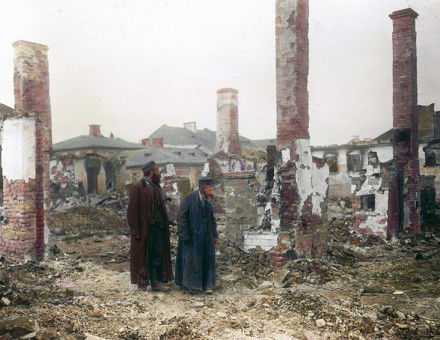
Roger Hudson gives context to a photograph highlighting the plight of Galician Jews after the Russian army's invasion in the Great War.

For mixed motives, writes C.E. Hamshere, the construction of the British East African railway was begun in 1892, to which the development of modern Kenya and Uganda is greatly indebted.
In 1808, writes H.J. Barnes, a Scottish Benedictine played an important part in securing the return of Spanish troops from Denmark for service in the Peninsular War against Napoleon.
Noel Blakiston describes the actions of an ebullient British Consul in the Papal State during the final stages of Italian unification.
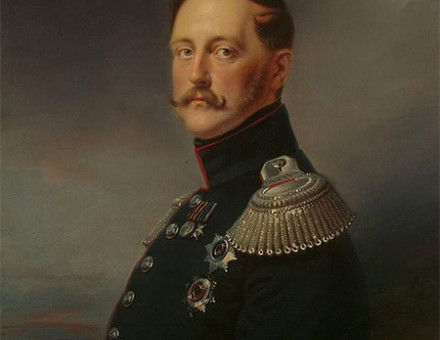
W. Bruce Lincoln describes how Nicholas exercised a more personal control in state affairs than any other ruler since Peter the Great.
Catherine’s cordial relations with the greatest thinkers of her day were no mistake, writes A. Lentin, but an integral part of her statecraft.
It was Russia’s tragedy, writes Leonard Schapiro, that a greater man than Stalin supplied Stalin with the means to put his nightmare Utopia into practice.