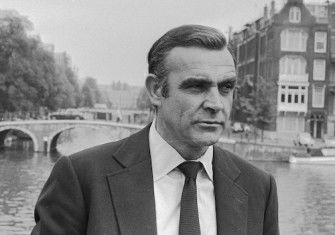
The Search for the Real 007
Andrew Cook relates the story of Sidney Reilly - the inspiration behind James Bond.
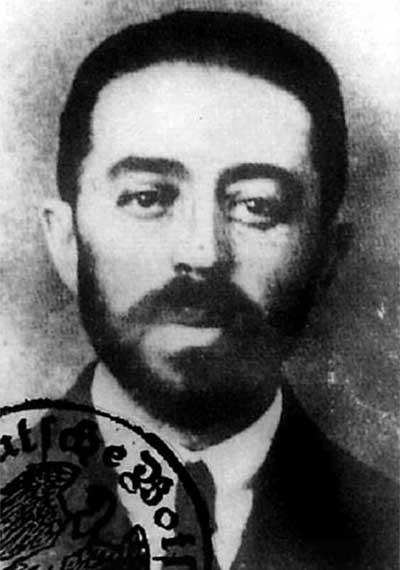
Sidney Reilly, the man said to have been the inspiration for James Bond, was one of the most complex and remarkable characters in the twentieth-century history of espionage and the creator of a personal myth that still exerts a powerful grip on the imagination today. A rich and flamboyant adventurer, Reilly blazed a trail from the gentlemen’s clubs of Edwardian England to the walls of the Kremlin, leaving his unique mark on world events along the way.
Reilly himself told numerous stories about his supposed origins before moving to Britain in his early twenties. He claimed at different times to be the son of an Irish sea captain, an Irish clergyman, a Russian aristocrat, and a Polish landowner. Among the places he claimed to have been born were Clonmel, Dublin, Odessa and St Petersburg. He was instrumental in enabling the Japanese to launch their surprise attack on Port Arthur in 1904, to securing the Persian oil concession for the benefit of Britain (and what would ultimately become the BP Oil Company), but Reilly is perhaps best remembered today for his role in the thwarted attempt to overthrow Lenin in the summer of 1918.
When I set out, nearly a decade ago, to research a definitive account of his life, I was conscious of the fact that many of the keys that would ultimately unlock the mystery surrounding his life and death were beyond my grasp. Locked away in the seemingly impenetrable archives of British Intelligence were undoubtedly files that would help expose the truth about Reilly.
In spite of a number of books that had already been written about him, many offering contradictory claims, major questions still remained unanswered: about his true identity, place of birth and the precise facts surrounding his disappearance and death in Russia in 1925. During his lifetime Reilly laid a fog of mystery and deception around his origins as he adopted and shed one identity after another.
Over a century of falsehood and fantasy had undoubtedly obscured the real Sidney Reilly. On top of this, the water was muddied further by Reilly’s tendency to manufacture ‘Walter Mitty’ tales of espionage ‘derring do’ for his friends and colleagues. A persuasive liar, these tales were often swallowed hook, line and sinker by Reilly’s audience, who later recited them, chapter and verse, to eager journalists and writers. Several decades later these uncorroborated fantasies were resurrected in books and biographies as reality.
To piece together an accurate picture of his extraordinary life, some way had to be found to access the long buried intelligence files on Reilly. Being acutely aware of the unfavourable comparisons that were routinely made between Britain and the United States in terms of freedom of information, and the supposed impossibility of obtaining classified material, I was not exactly filled with optimism at the prospect. However, events were afoot, not just in Britain but in Eastern Europe, that would ultimately transform the landscape of intelligence history more than anyone could ever have imagined even a few years previously.
As Communist regimes fell in the likes of Poland, Hungary and East Germany, access to those countries and their archives became a reality for Western researchers. In Russia itself, Gorbachev’s policy of openness with regard to historical records allowed a number of Western historians access to Soviet archives, a process that continued apace after the fall of Communism in 1991. That same year, British Prime Minister John Major initiated his own policy of glasnost when he announced to the House of Commons that he had asked William Waldegrave, the Chancellor of the Duchy of Lancaster, to identify areas of ‘excessive secrecy in government’ and to ‘propose ways of increasing openness’. The conclusions of Waldegrave’s review were presented in the 1992 White Paper ‘Open Government’.
Often referred to as the ‘Waldegrave Initiative’, its wide-ranging conclusions contained a short but significant paragraph, which essentially invited historians and researchers to identify specific closed government records to which they sought access. Bearing in mind that successive governments have made clear that SIS records are not releasable to the Public Record Office (the most recent declaration being made by Foreign Secretary Robin Cook in a House of Commons Written Answer on February 12th, 1998), this was a significant step.
Waldegrave’s invitation was to provide the means by which Gordon Brook-Shepherd was able to access Secret Intelligence Service (MI6) records on early anti-Bolshevik operations for his book Iron Maze: The Western Secret Services and the Bolsheviks, and Alan Judd accessed former SIS Chief Sir Mansfield Cumming’s diaries for his book The Quest for C: Mansfield Cumming and the Founding of the Secret Service.
By invoking the Waldegrave Initiative, I, too, was able to approach the Cabinet Office to seek their assistance. Through special Cabinet Office briefings, a wealth of detail on Reilly’s service with SIS was obtained, which was to prove a watershed in my research. As a result of the briefings, I was now able to cross-reference new leads with other intelligence material I had already discovered in America, Russia and Germany. Equally, new lines of enquiry were now suggested, that would ultimately lead to further discoveries elsewhere. These included Reilly’s true identity, parentage and place of birth, detailed accounts of his life and career before he joined SIS and the identities of those in both the Russian secret police (the OGPU) and SIS who enticed him to his death in 1925.
Further asssitance came from MI5 records. Following a review by the Lord Chancellor's Advisory Council on Public Records in 1997, MI5's policy towards files of historical interest no longer needed by the services was clarified. With the defniniton of sensitivity in mind, as set out in Schedule III of the Intelligence Services Act 1994, the first tranche of such files was released in November 1997. To date, some 1,332 files on individuals such as Mata Hari, Rudolph Hess, 'Lord Haw-Haw', P.G. Wodehouse and Eamon de Valera have been deposited with the PRO. The most recent release in May of this year included those of Sidney Reilly and Josef Stalin. MI5's full criteria for release is set out in an Operational Selection Policy which can be found on the PRO's website.
While access to such classified and previously unpublished material in Britain and around the world was obviously invaluable, some of the most revealing pieces of evidence about Reilly’s life were not hidden away in government vaults, but in the attics and cupboards containing photo albums, letters and documents to which most of the families who owned them attached nothing but sentimental value. Tracking down the descendants of those who played key roles in Reilly’s story was a great deal harder and indeed more time-consuming than penetrating the Official Secrets Acts.