The Free Frenchman
A proud, pious aristocrat, loyal to General de Gaulle, Philippe Leclerc found a kindred soul among Britain’s wartime elite.
The 40th anniversary of Admiral Lord Mountbatten’s assassination by the Provisional IRA in County Sligo, Ireland falls on 7 August 2019. There was a cruel irony in militant Irish republicans labelling Mountbatten a ‘legitimate target’. As the Allies’ supreme commander in South-East Asia, 1943-46, Mountbatten’s preference was for negotiation rather than confrontation when dealing with anti-colonialist movements.
As India’s last viceroy, he accelerated both independence and Partition in the summer of 1947, albeit at massive human cost. In 1956, by then First Sea Lord, he warned of lasting damage to a fledgling Commonwealth if Britain, along with France and Israel, invaded Egypt in order to seize back the Suez Canal.
For all his faults, not least vaunting ambition and exceptional vanity, here was a grandson of Queen Victoria who acknowledged, even embraced, the forces of modernity. Mountbatten assumed Europe’s colonial powers could accommodate new nations without an absolute surrender of power. Decolonisation need by no means be a zero sum game: although humbled by the speed and scale of the Axis powers’ military aggression, Britain – unlike France and the Netherlands – had never suffered defeat and occupation. Following Japan’s abrupt surrender, the priority for Mountbatten and his staff was rebalancing the power structure in the Empire’s liberated territories, above all, Burma. The unanticipated arrival of peace left South East Asia Command (SEAC) with a vast, multifaceted mission to fulfil: the Potsdam conference had seen SEAC assigned responsibility for the Dutch East Indies and French Indochina. A further complication was the occupation of northern Vietnam by Chinese troops and their US advisers.
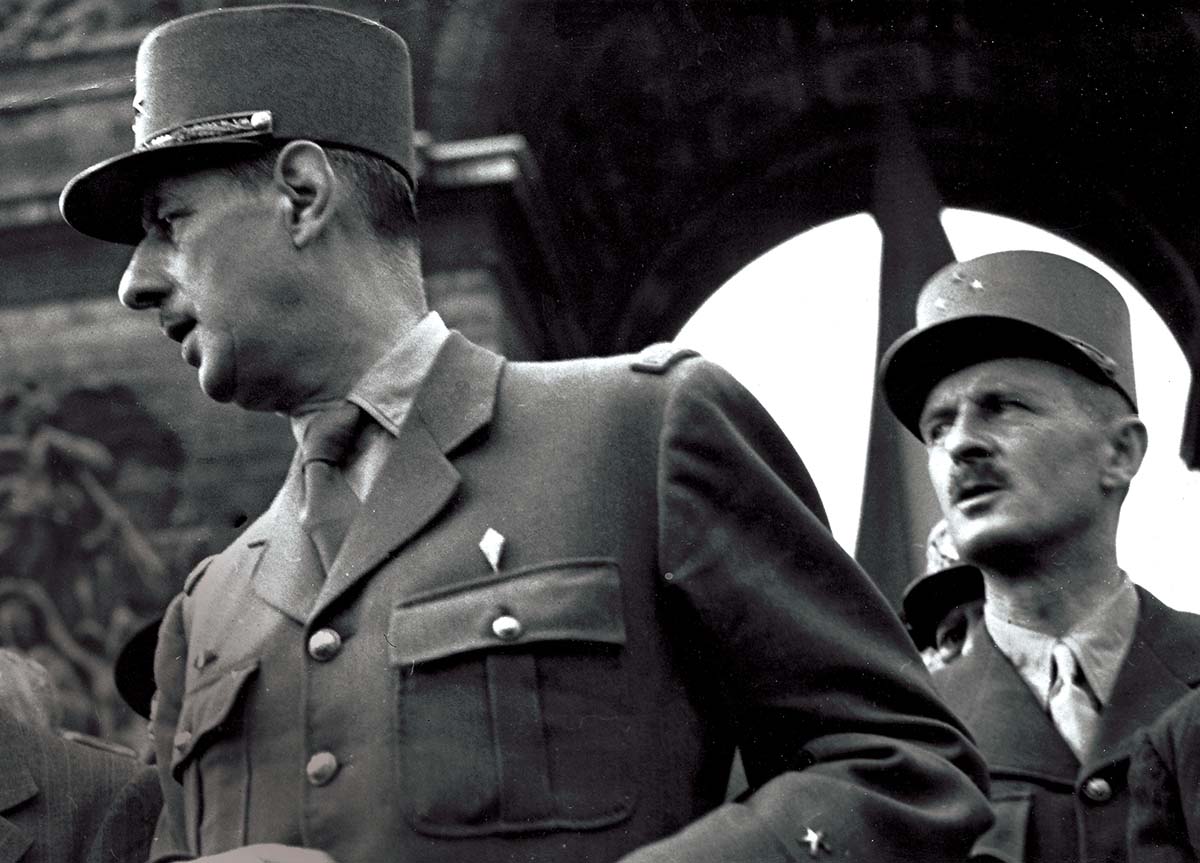
Rarely did Mountbatten – born Prince Louis Battenberg – encounter another aristocrat whose advancement was not solely attributable to title and status. But on 22 August 1945, SEAC’s supreme commander came face to face with just such a person. Welcomed to Kandy, Mountbatten’s Ceylon headquarters, was the newly appointed Commander-in-Chief of French Forces in the Far East.
Jacques Philippe de Hauteclocque was a Catholic chevalier, proud, pious and patriotic. Five years before, this minor nobleman had been a cavalry captain, hardened by years of quelling rebellion in remote regions of Morocco. Only following the fall of France had General de Gaulle’s most trusted field commander earned rapid promotion. De Hauteclocque became ‘Leclerc’, a name still revered in France when recalling les gaullistes de la première heure, who, in the summer of 1940 scorned Marshal Pétain’s order to surrender. Despatched by de Gaulle to seize Cameroon from Vichy control, Leclerc’s five-year atonement for the humiliation of la chute began in Brazzaville in French Equatorial Africa and ended, appropriately, in Berchtesgaden. Across those five years Leclerc’s fledgling Free French force of colonial veterans and Spanish republicans had formed the core of Deuxième Division Blindée (2DB – 2nd Armoured Division), famed for its role in the liberation of Paris and Strasbourg.
Powerful enemies
Leclerc’s bond with de Gaulle was unbreakable, but he had powerful enemies. Fellow generals resented the much younger officer’s scarcely disguised antipathy towards anyone who had accepted the armistice in 1940 and only belatedly joined the Allied cause. Leclerc was admired by the likes of Patton and Montgomery, both of whom shared his capacity to ignore inconvenient orders. However, the Supreme Allied Commander in North-West Europe dismissed him as a man of questionable temperament, incapable of appreciating the bigger picture. Eisenhower was infuriated by Leclerc’s insistence on fulfilling de Gaulle’s vision of France as a full partner in final victory, seen most visibly in 2DB’s vanguard assault on the capital and its refusal later to surrender Strasbourg. At SEAC, Leclerc would find himself dealing with another, very different, supreme commander. He now had two political masters: Mountbatten and de Gaulle. In reality, he only ever had one.
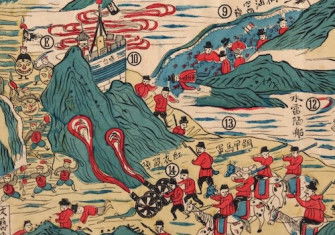
Leclerc’s initial task was to facilitate France’s role in a future invasion of Indochina. Japanese forces had occupied the region for three years, but only in March 1945 did they seize control from the Vichy-appointed colonial administration. Japan’s sudden surrender forced Leclerc to focus on the re-establishment of French authority in Vietnam, including north of the 16th parallel, where China and its US ally now held sway. After representing France at the surrender signings in Tokyo Bay and Singapore, Leclerc had to liaise with released internees hostile to de Gaulle, the Free French operatives already in Saigon and the newly appointed High Commissioner, Thierry d’Argenlieu. Remarkably, both a sailor and a priest, d’Argenlieu’s wartime promotion to admiral highlighted the absence of senior staff within the Free French naval establishment. If d’Argenlieu and Leclerc needed to liaise with the Chinese and the Americans, this could only take place via the established civil and military command in liberated Indochina, namely SEAC.

Remaining in Singapore at Mountbatten’s relocated headquarters until early October, Leclerc maintained an uneasy relationship with d’Argenlieu, similarly absent from Saigon. A happier partnership was with fellow general Douglas Gracey, whose 20th Indian Division was deployed to maintain order in the southern provinces of Cochin and Annam. The presence of Gracey’s Burma veterans, the controversial decision to maintain a Japanese military presence and the absence of d’Argenlieu and Leclerc created a power vacuum inside Vietnam. This was critical in enabling the Viet Minh, headed by Ho Chi Minh, to consolidate its position as the predominant nationalist force across the northern province of Tonkin and much further south, in Saigon and the Mekong Delta.
French agents pursuing tentative negotiations with the Viet Minh warned of war if Paris ignored Ho’s declaration of independence. Their advice fell on deaf ears as an imperative of de Gaulle’s envoys was to re-establish a permanent presence in Saigon; and in Hanoi, once the Chinese agreed to withdraw. Ironically, Ho Chi Minh and Vo Nguyen Giap, the Viet Minh’s military leader, eagerly anticipated meeting Leclerc, seen as a stalwart anti-fascist and wrongly assumed to be a man of the left. Leclerc was in no mood to negotiate, underestimating Giap and insisting to a sceptical d’Argenlieu that a remorseless application of military force was the only option. Within six months their respective positions would be reversed.
Instinctive suspicions
With the situation on the ground worsening and order giving way to increasingly brutal counter-insurgency operations, the British were eager for French troops to take over. Relations between Gracey’s Indian and Gurkha troops and the indigenous population deteriorated rapidly, as did their dealings with the deeply racist colons and the former Vichy forces freed after VJ Day. For someone instinctively suspicious of troops once loyal to Pétain, Leclerc fretted over the delayed arrival of an expeditionary force formed from veteran units of the 2DB. Transit from France of Jacques Massu’s battle-hardened Gaullists, their comrades hastily replaced by ill-trained ex-maquisards, was the responsibility of SEAC; its shipping roster prioritised the transport home of POWs, internees and the British 14th Army. A further headache for Leclerc was his dependence on US equipment at a time when Washington was still hostile to a restoration of French power. Chiang Kai-shek’s US chief-of staff, General Wedemeyer, did all in his power to disrupt French operations, vetoing flights over Tonkin, for example, to facilitate parachute drops of special forces and supplies into northern Laos.
News of the cancelled drops and of delays in transporting Massu’s men infuriated Leclerc. He sent Mountbatten an intemperate and ill-judged letter of protest. The long list of complaints would never have been sent had Leclerc brought his English speaking ADC, Christian Girard, east with him. Fiercely patriotic, not least when wearing the Cross of Lorraine, Leclerc lacked finesse in his pursuit of French interests. For five years Girard was a moderating influence, but in August 1945 the consummate diplomat returned to civilian life.
Senior staff at SEAC were incandescent when they read Leclerc’s letter. A pompous – and revealing – memo from ‘Boy’ Browning, Mountbatten’s chief-of-staff, urged him to make Leclerc aware that he was no longer a divisional commander and should act in a manner befitting his newly elevated status. As the architect of Arnhem, Browning knew his own record as a divisional commander in the autumn of 1944 contrasted starkly with that of Leclerc. Few officers in Singapore knew anything of the French general’s standing at home. Mountbatten, however, recently returned from Europe, had a clear picture of post-liberation politics in Paris and why Leclerc – and indeed d’Argenlieu – could claim a direct line to de Gaulle. He took the heat out of the situation and sent the gallant general a suitably emollient reply, tempering the harsher elements of his staff’s draft response. This detailed explanation of SEAC’s logistic problems, with its hint of impatience over the Americans’ unhelpfulness, served to calm Leclerc.

Harmony was fully restored with the news that Massu’s expeditionary force would arrive in mid-October. Plans were put in place to destroy Viet Minh power in the Mekong Delta, after which a second operation would see elite forces shipped north to regain control of Hanoi and its hinterland. Both operations in due course proved successful, but not at the expense of the Viet Minh as a formidable fighting force resolute in its pursuit of an uncompromised political goal. The French military was in nominal control of all three Vietnamese provinces by March 1946, with SEAC finally relinquishing its responsibility for the whole of Indochina. Leclerc had a historic meeting with Ho Chi Minh in Hanoi. For all the fine words and mutual compliments, in reality the first Vietnam war had already begun; for France it would end in disaster eight years later, at Dien Bien Phu.
Techniques of repression
Names synonymous with postwar France’s harshest methods of retaining power – in Indochina and later Algeria – were already perfecting their techniques of repression. The expeditionary force’s rawest recruits were ill-disciplined, committing multiple outrages. Leclerc was happy criticising ex-Vichy troops, but was damningly reticent when Massu’s men resorted to torture and collective retribution. Blind loyalty to former Free French units demanded a response from the supreme commander. Historians differ as to how forcefully Mountbatten condemned excessive force – by French and by British and Indian soldiers. Nevertheless, both Gracey and Leclerc ordered restraint.
Philippe Leclerc was notably suspicious of sailors, even the ultra-Gaullist d’Argenlieu. After the fall of France he saw Admiral Darlan’s navy – La Royale – as an anglophobe instrument of Vichy collaboration. Leclerc was surprisingly sanguine about the Royal Navy crippling the Mediterranean fleet at Mers-el-Kebir on 3 July 1940. He treated 2DB’s naval gunners appallingly; as he did any personnel who previously took their orders from Vichy. Yet one admiral confounded Leclerc’s prejudices. Critical to Mountbatten’s charm offensive was his fluency in French. Leclerc spoke little English and Christian Girard’s absence was deeply damaging to his dealings with the British. Conversations with the supreme commander not only eased day-to-day tension, but brought about a radical rethink on Leclerc’s part.
By the time Leclerc met Mountbatten for the last time in March 1946, he had talked frankly with the Viet Minh leadership. He was already coming around to the view that France, while presently in a position of strength, should negotiate. This was very much a Mountbatten approach, as seen later during the Suez crisis: oversee military operations to the best of one’s ability, while at the same time pressing hard for a political solution. For Leclerc, restoring control of both sides of the 16th parallel justified talks, even if the opposition appeared intractable. This view strengthened in the final four months of Leclerc’s posting, deepening his differences with d’Argenlieu. The High Commissioner saw successful counter-insurgency operations as justifying the use of overwhelming force in order to wipe out the Viet Minh.
Welcome departure
D’Argenlieu’s resolution, at odds with Mountbatten’s insistence on negotiation, saw him welcome Leclerc’s departure in July 1946. The respective positions of both men were reinforced when Leclerc made a fleeting return five months later: once home, he advised ministers to ignore d’Argenlieu’s dismissal of Ho Chi Minh’s peace initiative and to contemplate compromise. Invited to take over as High Commissioner, Leclerc said no. A year later, with India in chaos, Mountbatten was offered his own poisoned chalice: he said yes.
Adrian Smith is Emeritus Professor of Modern History at the University of Southampton.