

The Ears of William Prynne
Richard Hughes shows there is more of historical interest to William Prynne than his famous auditory organs.
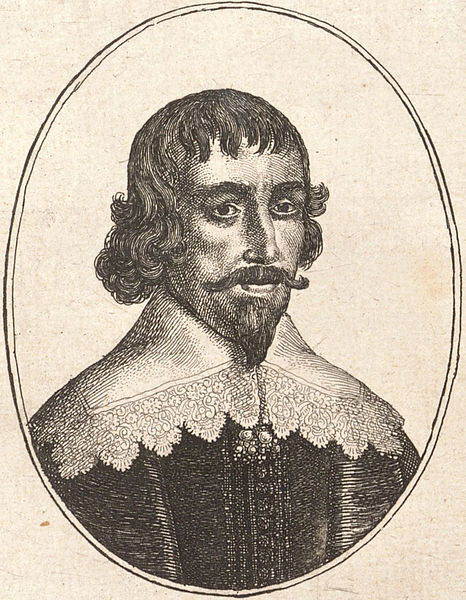
William Prynne's ears are a topic of fascination. As a teacher and examiner of the period of Charles I's Personal Rule I know that it is rare for an essay on this period not to dwell, often for some time, on the unfortunate fate which befell Prynne's appendages. There seems to be an almost gruesome delight in detailing the mutilation of the ears, particularly with the knowledge that the atrocity was committed on two separate occasions. In addition there is some perverse humour when noting that William Prynne, vociferous opponent of long hair ('the unloveliness of love-locks' as he wrote) ended his days growing his own hair long in order to hide the unsightly scarrings that were once his ears.
Yet then, with the gruesome proceedings described and their consequences for the Personal Rule highlighted, Prynne is allowed to slip away into obscurity. In fact he lived for another 32 years and was deeply involved in the complicated events surrounding the Interregnum and Restoration. In addition, when considering the trial and punishment of William Prynne – and his fellow Puritan pamphleteers, Henry Burton and John Bastwicke – there is the presumption that here were three worthy men who became victims of the harsh and intolerant regime of the loathsome Archbishop William Laud. While it is unfitting to suggest that anyone might deserve mutilation it is true that many opportunities were provided for Prynne and his colleagues to recant and the gruesome punishment was only undertaken with the greatest reluctance.
The First Trial
William Prynne had always been a thorn in the flesh of the Laudian establishment which dominated the Church during the Personal Rule. The Laudians - the term used to describe the High Church followers of Archbishop William Laud - sought to emphasise 'the beauty of holiness' in church services, followed the teachings of the anti-Calvinist Dutch theologian Arminius, and sought to promote the position and authority of bishops. They were inevitably going to upset a Puritan and Presbyterian like William Prynne who saw them as nothing more than agents of Roman Catholicism and authoritarianism.
Prynne, the son of a Somerset yeoman, was a lawyer of Lincoln’s Inn who had developed a reputation as a fiery exponent of Puritanism through a series of provocative and inflammatory pamphlets. He wrote these pamphlets evidently while consuming very generous quantities of ale and he filled them with learned and often obscures reference to Biblical and classical texts. Many of these references were scrawled along the margins of the main body of the text – hence his nickname ‘Marginal Prynne’. The first pamphlet to really make an impact appeared in 1627 and was an early attack on the Arminian group within the church. A succession of pamphlets followed until 1632 when he published the work which was to provoke the government to violence against him for the first time. Histriomastix: a Scourge of Stage-players was a luridly-worded, intemperate attack on the loose morals of the time, highlighting in particular the court masques which were so favoured by the Queen, Henrietta Maria. Prynne wrote of ‘women actors ... Notorious whores … lascivious, effeminate musicke, excessive laughter … accompanied with an immoderate applause of the scurrilous plays and actors which Christians should abominate rather than admire.’
The response of the government was harsh. The pamphlet was seen as an attack on the Queen. It was also seen as an indication of the feebleness of the beleaguered and fading Archbishop of Canterbury, George Abbot, who had licensed the pamphlet. In 1632 William Laud, then Bishop of London, was just a year away from succeeding Abbot but was already assuming control of the Church and answering directly to the King. Prynne was thrown into prison where he languished for a year before being brought before the court of Star Chamber. He was sentenced to a term of indefinite imprisonment, fined £5,000, expelled from Lincoln’s Inn and deprived of his Oxford degree.
Finally, and infamously, he was condemned to have his ears cropped – this mutilation to occur on two separate occasions and at two different places. On 7 May 1634 one ear was cropped in Palace Yard, Westminster, and on 10 May the other ear was cropped at Cheapside. There can be no dispute that this was a severe punishment and yet there seems to have been little support for Prynne. Indeed, to emphasise where its sympathies lay, Lincoln’s Inn, from where Prynne had just been expelled, staged a masque in honour of the King and Queen; there could have been no greater insult to Prynne. In the early years of the 1630s widespread hostility to the Personal Rule was yet to be manifested; there seems to have been a general contentment; the Earl of Dorset had pondered in 1632 ‘When were our days more halcyon?’ In the climate of the time Prynne was an irritating trouble-maker who had got what he deserved.
The Second Trial
The historian Dr William Lamont has commented on the Personal Rule that it provided 'the maximum of odium with the minimum of effectiveness'. If the 'odium' was not yet apparent in the early 1630s, the 'minimum of effectiveness' seems to have been - for, despite his draconian punishment, Prynne, the unrepentant pamphleteer, carried on regardless. From prison, pamphlets flowed from his pen; and it was one of these pamphlets, News from Ipswich, which was to bring Prynne before the authorities once more. The theme was an attack before the increasing authority of the bishops - so this was clearly aimed at the Archbishop of Canterbury himself. The authorities were provoked into coming down harshly on this pamphlet, as on a series of others which had been appearing throughout the middle years of the 1630s: 'seditious, schismatical and offensive books' which made a mockery of the system of government known as 'Thorough' - the mockery all the more apparent when the most prolific pamphleteer was locked up in custody.
On this second occasion that Prynne came before Star Chamber he was accompanied by two other prominent Puritans, the minister, Henry Burton, and the doctor, John Bastwick. There now seems to have been more sympathy for the plight of Prynne. The ‘odium’ of the Personal Rule was more potent and Prynne’s two allies were more sympathetic characters. Nevertheless the historian Dr Kevin Sharpe has pointed out that even at this stage ‘many, and even those of godly sympathies, were appalled at the vitriol of these pamphlets.’ The judges before whom Prynne, Bastwicke and Burton stood were not initially after their blood and did everything in their power to provide opportunities for the trio to recant. Dr Sharpe writes that ‘throughout the trial the judges’ concern to be just, even their preparedness to be patient in the hope of obtaining a formal answer appears in marked contrast to the defendants’ stonewalling and insolent behaviour.’ Even Justice Bramston, a judge soon to support John Hampden in the Ship Money trial, was exasperated by the behaviour of the three defendants. When all attempts at compromise had been rejected the verdict was pronounced. All three were to have their ears cropped, be fined £5,000, imprisoned, and to spend two hours in the pillory.
In Prynne’s case the ‘executioners’ faced the difficult undertaking of cropping what remained of his already cropped ears. Prynne, in addition, was to have the letters ‘S’ and ‘L’ branded on his cheeks – ‘Seditious Libeller’. The sentences did, at last, provoke a hostile response. But this centred less on their ferocity than on the fact that such physical abuse had been inflicted upon people who were ‘gentlemen’. Of the many reasons the gentry had for detesting William Laud a potent one was the social contempt felt for the son of a Reading draper. How dare someone of his social origin perpetrate physical harm upon those of a higher social order.
It is also clear that the three men used the opportunity of the trial to promote their cause and set themselves up as martyrs. The astute Strafford, faraway in Ireland, understood this and was aghast at the foolishness of the authorities in offering such a platform. Henry Burton claimed as he stared at the three pillars erected for the carrying out of the punishment that they were the equivalent of the crosses on Calvary. Prynne boasted that the ‘S’ and ‘L’ branded on his cheeks stood not for ‘Seditious Libeller’ but for ‘Stigmata Laudis’. Both men were thus comparing their fate with that of Christ.
As the three men journeyed to different parts of the kingdom to serve their sentences supporters held ceremonies in their honour. As Prynne progressed from London to Carnarvon Castle feasts were held along the route – at Barnet, St Albans and Chester. So concerned were the authorities about the sympathy which Prynne was provoking that he was soon transferred from Wales to remotest Jersey. The contrast with the response to his first incarceration was marked.
At Liberty Again
The three men were to serve just three years of their sentences for in 1640, with the collapse of the Personal Rule and on the instruction of the Long Parliament, they were released amidst widespread rejoicing. It might be thought that following so many ordeals William Prynne would have settled for a quite life. But not a bit of it. He was soon fully and controversially embroiled in the complicated events of the build-up to the Civil War and beyond. He served on the committee preparing the case of impeachment against William Laud. Understandably he took to his task with relish - the tormented became the tormentor. He personally conducted searches of Laud's cell and went through his belongings. It was Prynne who discovered Laud's private diaries and was able to make much of very selective extracts, including references to the fact that the Archbishop had found James I's favourite, the Duke of Buckingham, physically attractive. Prynne started pamphleteering again - the theme of most of these later pamphlets was a defence of Presbyterianism, of a single state church funded by the tithe tax, and the Common Law. The consequence of this was that he was now confronted with a new set of powerful enemies centred on the independent religious groupings and their supporters in the triumphant Army.
In 1648 Prynne became an MP but was soon swept away as a consequence of Pride’s Purge when the Army seized the initiative and removed from the Commons those MPs it regarded as unsympathetic. Prynne, unsurprisingly, took exception to this attempt to silence him and was one of the first to use the term ‘Rump’ to contemptuously describe those servile MPs who remained. He became a vehement opponent of the trial and execution of the King and soon the figure of Oliver Cromwell had replaced that of Laud in his gallery of infamy. In 1650 Prynne was arrested again – for refusing to pay taxes to a government he deemed illegal. He spurned the offer of release on the promise of good behaviour. He was released in 1653 but maintained his virulent attack on the Cromwellian government.
The unsettled political situation which developed following Cromwell’s death in 1658 led to the recall of the Rump Parliament. Eventually Prynne was able to return to the Commons and was directly involved in the events leading to the Restoration in 1660. Prynne at was at Dover on 25 May 1660 to welcome Charles II and – particularly pleasing for him – witness the new monarch kiss a Presbyterian bible. Prynne was an enthusiastic supporter of the new King and quickly associated with those who demanded the harshest treatment for those regicides – they who had signed Charles I’s death warrant – who were unwisely still around. He was happy to view the spectacle of the remains of Oliver Cromwell being dug up and hanged at Tyburn. Prynne’s enthusiasm, though, was short-lived. The new religious settlement did not develop to his liking and he was shocked to witness the reestablishment of a conservative episcopal church with the hated bishops returned in power and splendour. But Prynne was now old and the fight had left him. When faced with imprisonment once more he, uncharacteristically, capitulated. He retracted, made his submission and spent his final days in tranquillity as Keeper of the Public Records in the Tower of London. He set about the task of writing a definitive history of England.
When he died in 1669 he had produced three volumes totalling two million words and had only reached the reign of Edward 1. The end of a life full of events was an anti-climax, but the belligerent, opinionated, insufferable, courageous old campaigner surely deserved a few final years of untypical tranquilly.
Further Reading
- William Lamont, Marginal Prynne (Routledge & Kegan Paul, 1963) and Godly Rule (Macmillan, 1969)
- Jasper Ridley, The Roundheads (Constable, 1976)
- Kevin Sharpe, The Personal Rule of Charles I (Yale, 1992)

