

The Duel
Robert Halsband describes how, in 1731, the Leader of the Opposition and a supporter of Sir Robert Walpole fought a celebrated duel in Green Park, London.
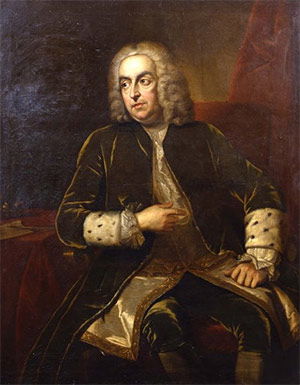
On the afternoon of January 25th, 1731 - a frosty day, with light snow on the ground - two men, stripped down to their shirts and with swords in their hands, stood facing each other in Upper St James’s Park, as Green Park was then called. The elder of the two, burly and pugnacious, was William Pulteney, M.P., leader of the Opposition to Sir Robert Walpole, whose jealous colleague he had once been.
Facing him stood the slight and delicately handsome John, Lord Hervey, also a Member, a staunch supporter of Walpole and an accomplished pamphleteer. He, too, had been a friend of Pulteney’s, a frequent and informal guest in his house. Who could have foreseen that these two men would one day be prepared for death by the other’s hand?
Lord Hervey’s great claim to importance today is his Memoirs of the Reign of George II, a brilliant account of that court, first published a century later. Yet he is as well known to readers of English poetry as English history - not because he scribbled flaccid, inept couplets, but because Alexander Pope used him as the model for Sporus in the Epistle to Dr Arbuthnot, the most vitriolic portrait in the whole of English satirical literature. That scintillating portrait, vibrant with loathing, is merely a caricature, an ‘image’ of Hervey and not the real man.
Born in 1696, son of the future Earl of Bristol, John Hervey was educated at the Newmarket races, where his father maintained a stable, and Westminster School, before entering Clare Hall, Cambridge; he took his M.A. in 1715. His first published verse (in Latin) paid homage to the monarch who had come to the throne as George I; and for the rest of his life he remained a staunch Whig and supporter of the Hanoverian line.
By the time he was elected to Parliament in 1725 for his family-controlled seat of Bury St Edmunds, he had married the beautiful Molly Lepell, Maid of Honour to the Princess of Wales, and begun to father a numerous progeny (eight children in all); he had inherited his half-brother’s courtesy title of Lord Hervey; and he had become a familiar and popular figure at the court of the future George II.
He took very little interest in Parliament during his first years there, hardly attending its sessions. Of his close friends, Henry and Stephen Fox won his warmest feelings; and Stephen - the future Lord Uchester - aroused a romantic passion of unusual and unconventional intensity.
Poor health and Stephen’s companionship persuaded him to embark on a visit to Holland, France, and Italy. (As a young man he had been forced to cut short his own Grand Tour because of his mother’s nervous fears.) When he returned, in 1729, the political scene had undergone a change; and he unexpectedly found himself embroiled in the political contest that had broken out during his absence.
The rivalry between Walpole and Pulteney had sharpened into irremediable enmity; and, as leader of His Majesty’s Opposition, Pulteney wished to enroll as many members as he could. To persuade Hervey to join him, he was assisted by Hervey’s wife and father and the dowager Duchess of Marlborough - all of whom hated Walpole. But Hervey resisted their persuasion.
He was rewarded in 1730 with the appointment of Vice Chamberlain to the Royal Household, with emoluments that came to about £1,000 a year, and with an advantage even greater - access to the Royal family. This enabled him to win the affectionate and maternal friendship of the Queen, a great boon to Walpole, who relied on her as a lever to move the King as he wished.
In return for Walpole’s patronage, Hervey continued to support him in the Commons and, even more important, in the pamphlet war with the Opposition. For Pulteney had been joined by Lord Bolingbroke, who though permitted to return from exile, was forbidden to take his seat in the House of Lords. Their newspaper, The Craftsman, begun in 1725, kept up a constant bombardment against the administration.
Shortly before the opening of Parliament in January 1731, Hervey had been pressed into service by Walpole - this time to provide only the preface to a pamphlet by another. ‘The enclosed I believe you will like; I do’, he tells Stephen Fox on January 7th. ‘If I could be as sure when I write of writing only to your Eyes as I am when I speak of speaking only to Your Ears I could tell you some things you would be curious to know, but thinking upon paper is so unsafe that these Subjects must not be discuss’d till we meet. I have chid the pamphlet Man and he promises Amendment and punctuality for the future.’
What he enclosed in his letter was probably his own Dedication to a pamphlet by William Yonge, M.P., about to be published. Sedition and Defamation Display’d: In a Letter to the Author of the Craftsman was published anonymously by J. Roberts. Its mock-dedication, also unsigned, is an eight-page piece, elegant and polished compared to the essay it introduces. Addressing the Patrons of the Craftsman, its author begins:
‘Gentlemen, as I am a Member of the Community which you are endeavouring to disturb, a Friend to the Constitution which you are labouring to overturn, and a faithful Subject to the King whom you daily insult, you have no Right to expect a Panegyrick from me.’
He then sketches a character-portrait of one of the patrons (Pulteney, though not by name) as a young gentleman endowed with many advantages, yet a slave to his passions; irresolute, jealous, vain, self-centred, ‘determined to hold the highest Offices in the State, or to censure and confound all the Measures of the Government, under any other Administration; he at length renounced at once all former Friendships and Principles, vowing the Destruction of those who had distinguished him by a peculiar Regard, betraying private Correspondencies, and endeavouring to distress that Prince and that Family to which he owed the highest Obligations’.
The dedicator then turns to the other Craftsman patron, Bolingbroke, describing him with sharper acerbity as an infamous traitor. The British must decide whether it is worth distressing or embroiling their country for the sake of such men; ‘But if no such Persons are in Being, this Dedication is thrown away, and it would be in vain to subscribe myself, Gentlemen, your Humble Servant, &c’. Neither the Dedication in the form of a letter (by Hervey) nor the essay, which is not a letter (by Yonge), gives any hint that they were written by different men.
In the essay, Sedition and Defamation Display’d, the author castigates the Craftsman and Fog’s Journal, calling them ‘infamous Retailers of Lies, Scandal, Sedition, and Treason’, whose Billingsgate language proves they were not written by gentlemen. He gives examples of their exaggerations, fabrications, and outright falsehoods; spurns their hypocritical protestations of patriotism and love of liberty; and finally recommends that, since they slander the King and incite the people, their authors should be punished.
Yonge, who wrote this long attack, had been a supporter of Walpole’s since the previous reign. He was a Lord of the Treasury, and, later in the year, succeeded to his father’s baronetcy. In Hervey’s private opinion he was ‘a ductile courtier and a parliamentary tool’ of Walpole’s; ‘a great liar, but rather a mean than a vicious one... good-natured and good humoured, never offensive in company, nobody’s friend, nobody’s enemy’. It was Walpole, probably, who asked Hervey to write the preface to Yonge’s attack.
Hervey was under a severe strain from his work, as well as from some malaise connected with politics which he does not identify, except that it made him ‘burn all inward’ and ‘feel really very uneasy’. The day after he wrote to Stephen, while attending the Queen’s Drawing-Room and talking to the Prince of Wales, without any warning he suddenly lost consciousness and dropped to the floor as though he had been shot.
Three men, including Walpole, carried him into the Queen’s bedchamber to revive him, after which he was brought down to his own apartment, and blooded and cupped. By the next morning, when he was given medicine, he was completely recovered. It was probably an epileptic seizure, called by one courtier ‘falling sickness’.
Two weeks later, with no apparent after-effects of his seizure, he attended the opening of Parliament on January 21st, 1731. The King having made his customary opening speech and the House of Commons having moved for an Address of Thanks, Pulteney introduced an amendment that the King be advised not to wage any war in Flanders or upon the Rhine. This was strenuously opposed by speakers for the Ministry, among them Walpole, his brother, Yonge, and Hervey.
The amendment was defeated, and the Address passed - a handsome victory for the administration Whigs. ‘Whether the enemy had nothing to say, or were not prepared, I know not,’ one of the victors wrote, ‘but a more pitiful figure they never made, nor greater joy and triumph ever appeared among our friends.’
On the day before he attacked the ministry in the House of Commons, Pulteney had delivered to Richard Francklin, printer of the Craftsman and other Opposition papers, a lengthy discourse in the form of a letter, dated January 20th and signed Caleb D’Anvers (the nom de plume of the Craftsman’s writer).
As one of the ‘patrons’ who had been chastised in the pamphlet by Yonge, with Hervey’s preface, Pulteney now fought back with A Proper Reply to a Late Scurrilous Libel, Intitled Sedition and Defamation Display’d. Mistakenly assuming that Hervey had written Yonge’s pamphlet, Pulteney here launched the first attack on him, one that would provide fuel for his long satirical career.
‘Dear Sir,’ Mr D’Anvers opens civilly enough, ‘I have hitherto declined taking any Notice of those pretty Declamations, with which you have been lately pleased to oblige the Publick; and look’d upon them only as little Flights or Exercitations of a Genius, which had a Mind to try its Strength in Politicks.’
He speculates on their authorship - a public school boy or a boarding school miss - until he is informed they are the productions of ‘pretty Mr Fainlove’. When he promises not to hurt Mr Fainlove because of what the ladies would say, his informant replies, ‘Nay, you know that He is a Lady himself; or at least such a nice Composition of the two Sexes, that it is difficult to distinguish which is most praedominant’.
Quotations from Horace and Ausonius reinforce his point before he spells it out explicitly: ‘But though it would be barbarous to handle such a delicate Hermaphrodite, such a pretty, little, Master Miss, in too rough a Manner; yet you must give me Leave, my Dear, to give you a little, gentle Correction,for your own good’.
Mr Fainlove has carried the jest too far, Pulteney continues, by fouling his mouth with ‘such paw Words as Traytor and Villain. The Dialect of Billingsgate is very unbecoming a Court-Education, and will destroy all Pretensions to the Character of a fine Gentleman, which you have taken so much Pains to acquire, and which you would, I dare say, be almost as loth to lose as your Place, or even another Tooth’. Here Pulteney could not have been more specific; for only a few weeks earlier, after suffering pain from a loose tooth, Hervey had been forced to have it pulled.
‘You should never talk, my Dear, of Baseness, Ingratitude and Treachery’ - which Hervey had charged Bolingbroke with - ‘because People will be apt to call some Things to Mind, which you ought to wish forgotten’. Then, before levelling his attack on Walpole, Pulteney pays tribute to his advocate as a ‘Circulator of Tittle-Tattle, a Bearer of Tales, a Teller of Fibs, a station’d Spy’.
Yet Pulteney seems genuinely puzzled as to Hervey’s exact share in the two parts of the pamphlet: ‘And now, my Dear... whether you compiled, or only dedicated the piece’; whether Walpole contributed to it, or ‘whether you discompos’d the Lillies and Roses of your Cheeks by a painful Collection of all Common-place Reflections’ he will continue to address him. He later returns to that question:
‘Whether you'wrote the Whole of this abusive Libel, or not, your Observations and Sequel deserve this Treatment...’ Thus Hervey is being punished not only for his possible share in the pamphlet and its dedication but for his authorship of the attacks on the Craftsman published a few months earlier.
Hervey’s accusation in the Dedication that Pulteney had been disloyal to Walpole stung Pulteney into turning the accusation against him: that he had ‘particular and very great Obligations to a certain Person [Pulteney]’, who took him into his house as one of his own family and defended his character; ‘This former Patron of yours was, at least, the remote Cause of your obtaining the very Employment you now enjoy; and your present Patron, as destitute as He is of Friends, would have thought you too insignificant an Acquisition to have been purchas’d at so high a Price, if it had not been for the Additional Satisfaction of having purloin’d you from his next Door Neighbour'. (Both Walpole and Pulteney lived on Arlington Street.)
This is a puzzling accusation: Hervey, although a personal friend of Pulteney’s, had never been politically connected with him; his allegiance had always been to Walpole. Perhaps, as a forensic trick, Pulteney is turning the tables. Since Hervey has accused him of ingratitude to his patron, then how neat to accuse his accuser of the same sin toward himself! If Pulteney thus lied - a pamphleteer does not write under oath - his lie has been repeated by later satirists and historians.
The most shocking of Pulteney’s insults was still to come. In the Observations on the Writings of the Craftsman Hervey had argued that despite that paper’s accusation of corruption in the administration no proof had been offered. ‘But you seem, pretty Sir,' Pulteney now writes, ‘to take the Word Corruption in a limited Sense and confine it to the Corrupter - Give me Leave to illustrate This by a parallel Case - There is a certain, unnatural, reigning Vice (indecent and almost shocking to mention)... It is well known that there must be two Parties in this Crime; the Pathick and the Agent; both equally guilty. I need not explain These any farther.’ In other words, having called Hervey a hermaphrodite - the eighteenth-century term for homosexual - Pulteney now, by innuendo, accuses him of homosexual practices.
A charge of homosexuality, should it involve the ‘abominable crime’ of sodomy, was a serious felony, punishable by death. Since Pulteney’s accusation was oblique and intended only for ridicule, it did not have any legal consequences. But socially its implications were grave, for any friend of a flagrant homosexual could be regarded as guilty by association. The Prince of Wales was one of Hervey’s close friends: and Stephen Fox was conspicuously his most intimate friend and most frequent companion. (Yet Stephen was never, either then or later, ever accused of sharing Hervey’s alleged sexual deviation.)
If Pulteney’s accusation was to some extent true, in that Hervey’s passion for Stephen was at least homoerotic, one essential objection to his lampoon remains: in a political fracas he used as a weapon a personal insult completely unrelated to politics. Lord Chesterfield, when he read the pamphlet, thought that Hervey would be ‘excessively hurt with it’, and that it was ‘too personal and scurrilous to do any honour to the supposed authors, so that upon all accounts it had better have been let alone’.
The moment of publication for this pamphlet with its outrageous innuendo was singularly ironic: in Parliament, Hervey had just - with triumph and joy - helped defeat the Opposition led by Pulteney. Soon after he left the House, his pamphlet-man put into his hands the latest publication of Francklin’s printing shop. As Lady Hervey later related the episode to an intimate friend, ‘When that monstrous paper came out, which I think a very improper reply, my Lord, who reads all papers, saw it, and soon resolved and determined what to do’. What he resolved to do surprised his friends, his enemies, and perhaps himself.
After Hervey had read the pamphlet, he told Stephen and Henry Fox that he intended to challenge Pulteney to a duel. They ‘beg’d him to defer it, not that they wou’d advise him one way or other but that they wou’d have him quite cool before he made any fix’d resolution’. (This, the most authoritative account of Hervey’s retaliation, is his wife’s full explanation, which she sent only a week later to their friend Lady Murray, then in Bath.)
He waited three days; and on the morning of January 25th, 1731, he sent Henry Fox to Pulteney with a letter, at the end of which he asked him to answer ‘some questions, two of which he puts thus: Did you ever lend me any money? (because you know that seemed to be hinted at in the paper); Did you or did you not write the Paper intitled a Proper reply etc.?’ Fox was also to ask Pulteney to name the time and place for them to meet.
To the first question Pulteney replied that he had never lent Hervey anything, and that it was absurd to take one paragraph as hinting at any such thing. As to the other question, before he answered it he wanted to know whether Hervey had written Sedition and Defamation. (The Dedication was not mentioned.) Although Fox was sure that Hervey had not written it, since he had no orders to say anything he offered to go back to Hervey for an answer. He was evidently at Pulteney’s house in Arlington Street, only a few minutes’ walk from Hervey’s apartment in St James’s Palace.
He soon returned with Hervey’s answer: that he ‘had not writ it, but that was nothing to the business in hand, & desired his answer to my Lord’s question. P----y seem’d shocked when he heard the Sedition & Defamation was not his’. Pulteney then said that whether or not he had written A Proper Reply did not matter, ‘for he was so leagued with people that he must justifie it’, and therefore his answer was yes; and he left it to Fox to choose a place and time. Fox named the New Walk in St James’s Park (the northern end) at four o’clock that afternoon.
That same morning Lady Hervey, who as yet knew nothing of these happenings, observed that Hervey was so cheerful that she thought he would simply write a reply to Pulteney’s ‘monstrous’ attack. He drank his chocolate with her, gave her ‘a ridiculous paper of verses’ to copy, and then, as he left for the House of Commons, said he would dine that afternoon with some members.
There he met Henry Fox, and they strolled in the park, as they usually did. In a little while Pulteney and his second, Sir John Rushout, walked out into his garden, which opened to the park. (By an odd coincidence Rushout, an M.P., had recently married Fox’s niece, daughter of Lady Northampton.) They came out to meet Hervey and Fox. As the two men were drawing their swords, Hervey told Pulteney that in his pocket he had a paper stating that the duel was at his instigation and asking the King to protect Pulteney from the consequences of killing him if that should happen.
They then crossed swords. Hervey was lightly wounded in the side and nicked in four or five places on his hand, while Pulteney suffered only a cut in his hand. Then, Lady Hervey continues, ‘they closed in, which in all probability wou’d have been fatal to one if not both of them but the seconds by consent rushed in upon them and seized their swords, upon which Air Pulteney said “Let us contend no more my Lord”, and embraced him. (Hervey simply bowed without saying anything, another report adds.) Fox then led Hervey off to Stephen’s house, where his wound was dressed’.
In effect, Lady Hervey continues, the duel ended a friendship of twelve years; and, even though Mrs Pulteney had called on her a few days later, she refused to return the call. She had since heard that Pulteney was trying as much as possible to suppress the pamphlet, and had forbidden the printer to sell any more copies.
Although much of Lady Hervey’s account of the episode is hearsay, it deserves credence because she was closer to two of the principals (her husband and Henry Fox) than any others who gossiped about it. In telling her correspondent, Lady Murray, that Hervey did not write Sedition and Defamation Display’d (which was true) or its Dedication (which was not), she was perhaps being cautious, lest her friend, in such a gossip-centre as Bath, should reveal what Hervey wished to deny. Since he had not been asked by Pulteney whether he had written the Dedication, he had not needed to admit being its author.
Hervey’s wounds were so slight that Lady Hervey was not even aware of them when she saw him that evening; and only the next morning was she told about the duel. Two days later he was well enough to attend the annual meeting of Westminster scholars (which Pulteney also attended), and the following day the Drawing Room at St James’s, where he could receive his friends’ congratulations. His favour at Court was considered to be so high that newspapers carried erroneous reports of his elevation to the House of Lords.
At St James’s the duel ‘made a great noise’. Lady Irwin told her father, Lord Carlisle, ‘and I fancy upon the whole will turn to Lord Hervey’s service, he knowing well how to make a merit of this at Court; and besides, most people had the same opinion of Lord Hervey before Mr Polteney drew his character with so much wit; but nobody before this adventure thought he had the courage to send a challenge’.
Lord Bristol, however much politics made him sympathize with Pulteney, did not waver in his loyalty to his son, who (he thought) had ‘upon justest provocations sent a challenge to his till then suppos’d friend’ for publishing ‘so false and odious a character’. Even less partial judges would have agreed with him. In a pamphlet defending Pulteney some years later an anonymous champion writes that both men acquitted themselves with honour.
‘The Reflections thrown out in Mr **’s Proper Reply, &c which gave Occasion to the Duel, were intirely personal to the noble Lord, and all dispassionate Readers thought them foreign to the Merits of the Question betwixt them. On the other hand, the noble Lord, by sending the Challenge to Mr **... was a Deviation from the strict Principles of Decorum; since it was never understood, that a Quarrel, begun with the Pen, should be decided by the Sword’.
The fact that Hervey had attempted to settle the quarrel with his sword did not rule out his using a pen. Would he retaliate with a personal attack on Pulteney? Lord Chesterfield, still at this time a member of Walpole’s party, thought that since the Opposition press attacked with invective, they ‘should be answered in the same manner, and we should not content ourselves with reasoning with enemies that fight with poisoned arrows’. But such was not ministerial policy, nor Hervey’s.
A reply, perhaps by Hervey, took the form of a pamphlet: A letter to Caleb D’Anvers Esq., published soon after its provocation. ‘Worthy Sir’, it opens, ‘You have been pleased to divert the Town lately with a very humerous Performance, called A Proper Reply, &c’. Then, after ridiculing Caleb for his puerile humour, the author confronts him with the more serious charge: ‘But as you are pleased to intersperse among these trifling Witicisms, several Aspersions as scandalous and malicious as they are false... to defame and asperse with your usual Sincerity, Truth and Good-Manners, it is not so proper to be silent’.
He does not intend, he states, ‘to take any Notice of those Personal Reflections which you have thrown on the Author, or supposed Author, of Sedition Display’d; these have been already answer’d in a proper Manner’. In other words, the personal insult had been answered by a duel; the pamphlet would now answer the political arguments: and it does so with a light tone and leavening of anecdotes.
At about the same time as this reply was published, William Arnall, another ministerial writer, issued Observations on a Pamphlet Intitled an Answer... defending the administration in a straightforward manner. He digresses to criticize Pulteney’s tactics, mildly asking, ‘Are unmannerly ribald Jests, upon the Loss of a Tooth belonging to one Gentleman, or a Button belonging to another, a national Inquiry?’ (The missing button was Horatio Walpole’s, whose slovenliness was notorious.)
Neither the duel nor the paper battle surrounding it altered the political picture to any extent, except to sharpen the animosity between the two men most directly involved. Earlier periods of Parliamentary warfare had led to violence; the duel between Hervey and Pulteney was the only celebrated one of its time. In its personal effects, it killed whatever remained of the friendship between the two men.
The literary consequences of Hervey’s duel were far more enduring than the wounds inflicted. Pulteney’s prose lampoon put into circulation vivid material for satirists from Grub Street to Twickenham, and initiated Hervey’s career as an object of satire, a career that would outlast his life. His existence as a person at Court, at home, and in the world at large went on as before; but a new Lord Hervey had been born.
Disregarding or ridiculing his brave challenge, satirists lifted from Pulteney’s pamphlet the caricature of an effeminate courtier and the scandalous innuendo of homosexuality to create a persona. Alexander Pope, in turn, was to expand, refine and polish it to create one of the greatest satirical portraits in English poetry.
In the poems, ballads, lampoons, and caricature prints that followed in the wake of the duel, politics remained the dominant satirical theme. A London printer issued a crude, smudged print of Hervey and Pulteney crossing swords in a park-like setting; and in the foreground, like a mephistophelian mentor, stands Walpole (the Order of the Garter prominent on his chest) pointing his finger at Hervey as though directing him.
Another print, also engraved at this time, puts the same scene inside a windowed room into which peers a burly figure (Walpole again) from whose mouth issue the words, ‘Let them cut one another’s Throats!’ Hervey was clearly depicted as Walpole’s minion and victim.
The anonymous author of some verse entitled The Duel, inscribed to Pulteney, coupled a charitable view of Hervey with a hopeful forecast.
A Flight of Temper and unguarded Youth,
Perhaps seduc’d him from the Paths of Truth:
Warn’d by th’Event, he may again return,
Repent his Errors, and his Follies mourn;
At least his Wounds the Marks of Honour are,
And all its Marks he, in that Cause, can wear.
But it was not characteristic of political satire to be so benign. From the same publisher (A. Moore) came An Epistle from Little Captain Brazen, to the Worthy Captain Plume. Its title continues: ‘To which is added, An Answer to the said Epistle. In which The Character of Iago is set forth so as to be understood by the meanest Capacity’. The reader of any capacity could recognize Hervey as little Captain Brazen, scolding the admirable Captain Plume (who has beaten him in the duel):
Compelled I was,’tis true, to yield,
And leave you Master of the Field;
You have my Life within your Pow’r,
Oh! curse, ye Gods, th’unlucky Hour.
In spite of this, Captain Brazen continues, he will defend his friend Walpole, whom he calls the saviour of Europe.
Opposition writers often attacked Walpole by using historical or literary parallels to make their points, and also to evade prosecution for libel or breach of privilege. The duel found a place in the Authentic Memoirs of Cardinal Wolsey, a prose pamphlet that accuses Walpole of conniving for the ‘young Nobleman’to challenge the Gentleman to a duel only to serve his own ends.
With Othello as a literary analogue, another pamphlet casts Walpole as Iago, Pulteney as Cassio, and Hervey as Roderigo, whom Iago spirits up to challenge Cassio to a duel. The Shakespearean play-cast was then borrowed in a derisive pamphlet of doggerel verse whose title reveals its plot: ‘The Countess’s Speech To her Son Roderigo, upon Her first seeing him, after he was wounded in his late Duel...’
The notoriety of the duel persisted: the following year a ballad opera (never staged), called The Intriguing Courtiers, enlists a Lord Whistler, whose duel is forbidden much to his cowardly satisfaction. And even two years later, a pamphleteer, in dissecting John Gay’s ballad-opera Achilles, asked (rhetorically): ‘Is not the Duel fought between that Hero Ajax and a Great Lord, a plain Representation of what lately happened between a Little Lord and a Great Commoner’. The duel was remembered by another satirist who, in a ballad opera that dealt with Walpole’s bribery and defeated Excise Bill, calls Hervey by the name of Lord Challenge.
At least one satiric attack, issued soon after the duel, used as its material Pulteney’s ridicule of Hervey’s effeminate manner. The broadside ballad, called simply The Duel, combined political and personal satire, as it sang in mock-heroic accents of the fierce combat between ‘a Youth that is In, and a Man that is Out’:
It matters not how this Quarrel did rise,
With Miss and - with Master, and Master and Miss;
Or whether a Coward he should not be stil’d,
Sets his Sword to a Woman, and Wit to a Child.
But the political bias dominated the attacks; anti-ministerial writers used the duel as a weapon against Walpole.
If Hervey was perturbed by seeing his name and reputation stigmatized, he gave no sign of it. But if he was the author of a ballad published a few weeks after the duel (and ascribed to him on insufficient proof), then he was in excellent humour and spirits. Journalists Displayed is a good-natured, rollicking exposure of the Opposition’s vociferous patriotism:
I’ll tell you the Way these Complainants to quell,
Ribbledum, Scribbledum, Fribbledum, Flash,
Give all of them Places, and all will be well,
Satyrum, Traytorum, Treasondum, Trash...
The full circumstances of Hervey’s famous duel, particularly as revealed in Lady Hervey’s account of it, casts a fresh light on his character. That he was ridiculed for cowardice is proof only that writers for the political Opposition manipulated facts to suit their propaganda. Although Hervey’s duel stands out, it is by no means unique for its time.
Addison and Steele, in their periodical essays, had preached in vain to discourage its practice. It has even been estimated that in the sixty years following 1767 there were at least 172 duels waged in England, almost one third resulting in death. This, fortunately, was not the outcome of the duel between Pulteney and Hervey.

