Jump to Navigation

The Empire Strikes Back

Print this article   Email this article

Bernard Porter argues that the 'End of Empire' unravelled British domestic politics as well as her international outlook.
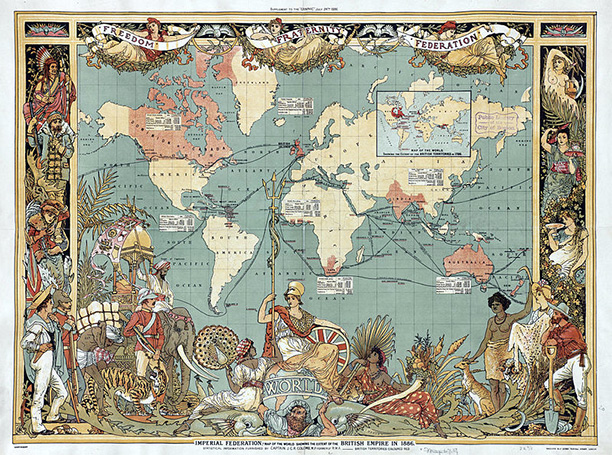
The British Empire is now no more. Most of it went more than twenty years ago. Memories of it, together with strong feelings about it either way, are fast disappearing.

We are far enough away from it, therefore, to begin to assess it objectively. The new Oxford History of the British Empire looks like bringing together the first of these judgements. (What nonsense it is to anticipate - as some have done - that because its editor is an American it will be less fair to the Empire's memory than if it had been an entirely British project!) Most of these assessments will be concerned with the effects of the Empire on its colonial subjects and their successor states. But what of its impact on Britain, both when it was a going concern and - more relevantly - today?
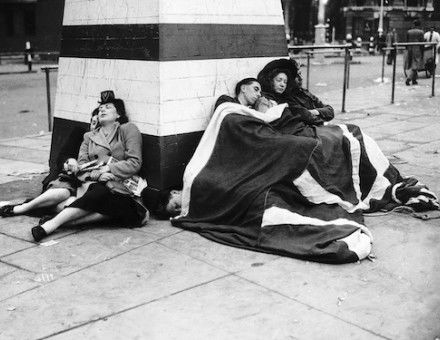
On one level the impact looks minimal. Britain relinquished her empire relatively smoothly, in a way that left few obvious scars. The men who ruled and policed it returned home and soon melted into other jobs. The process had little effect on British politics, Suez excepted, and that only ruined a politician, not a government.

Britain's trade patterns shifted away from the ex-empire and towards Europe, but more as a result of her positive decision to join the EEC. Life in the metropolis went on much as before. The only domestic casualties appeared to be dreams of British power by one kind of unreformed imperialist, and of peaceful international cc-operation - the commonwealths - by another. The rest of us lived through it all hardly noticing it; entirely unhinged - it seems - by the Gotterdammerung that was going on all around.

There must, however, be more to it than that. Nations do not suddenly lose empires without their leaving a mark. Some of the marks left on this occasion have been noticed. ‘Britain has lost an empire', said American Secretary of State Dean Acheson in 1962, famously (and perhaps a little obviously), ‘and not yet found a role'. That may account in part for her ambivalence towards Europe right up to the present day. Margaret Thatcher perceived a ‘Suez syndrome' in post-1956 Britain, similar to the one that later afflicted Americans after Vietnam, which she managed to exorcise (she claimed) with her Falklands adventure in 1982. Others blame the disappointment brought on by the end of empire for Britons' less than generous treatment of immigrants from the old colonies in the 1960s and after. Now that we no longer ruled them we resented them more. The common factor in all these supposed connections is that they show Britain unable to adjust to her lowlier position in the world. But the main impact may have come where she did adapt.

To discover the effect of the loss of something, it is necessary to know what it did when it was still there. One thing the empire did was distort Britain's national development, divert it from the path it might have taken otherwise. Before the great age of assertive imperialism in the later nineteenth century Britain seemed to be heading towards a kind of liberal free market millennium. It had not reached it yet: which is why accounts of ‘Victorian values' which ignore the essential hybridism of nineteenth-century British society are so unhistorical.

Traces of an older culture were still strong: an unproductive aristocracy and monarchy, paternalism, patronage, snobbish prejudices against the commercial middle classes, hundreds of restrictions on individual freedom, and so on. But they seemed to be unprogressive, on the defensive, and probably doomed. Bit by bit they were being whittled away. Eventually the new way of life would pervade the whole of British society, as people realized its benefits. Then, with luck, the rest of the world would join in, bringing - according to Richard Cobden, the great contemporary apostle of free trade - lasting universal peace.

But in the last years of the nineteenth century, this scenario started going badly wrong. There can be several views of why this was so. One is that people remained blind to the benefits of unfettered market forces; another could be that unfettered market forces are not so beneficial, in fact, as Cobden and his ilk assumed. A reaction set in, on two main fronts. Workers, tired of waiting for the gains of free market capitalism to ‘trickle down' to them, demanded protection - restrictions on employment practices, a social safety-net, the right to combine - against what they saw as its deleterious effects.

The wider world proved just as obstinate. Customers broke the free trade rules; competitors threatened to abrogate them entirely, by restoring protectionism.

Governments were forced to intervene in both areas, more than free market purists could possibly feel comfortable with: giving workers their safeguards, for example, and securing overseas markets by making them into colonies. Seen from the viewpoint of the earlier nineteenth century, these were seriously retrograde steps.

They also gave rise to others. Social reform created the need for a bureaucracy - state servants - which ran right against the ethos of that previous time. Colonialism exacerbated this. Colonies had to be administered. They could not be administered by the free market capitalists in whose interests they had been taken originally. An empire is not best governed by people who do not hold with government. Capitalists had much more profitable and - in their eyes - worthwhile things to do. So they turned elsewhere for their officer and governor classes: to the vestiges of the gentry, and others who shared their paternalistic values, who at this time were still being churned out by the public (private) schools. Hence the latter's great growth in this period: not, as certain historians like Martin Wiener will have us believe, out of sheer old-fashioned snobbery, but because there was a need - a market, if you like - for their products.

It was this, more than anything else, that interrupted and diverted Britain's domestic development. For the influence of the materialists was not confined to colonial affairs alone. If you were a paternalist abroad, you were almost bound to be one at home also: sometimes for imperialist reasons, to nurture Britons - against the enervating effects of the market - so that they were fit enough to defend the Empire in the future. This clutch of beliefs was called ‘social imperialism' in the early 1900s, and it pervaded the Conservative party – the natural party of the Empire - for more than half the present century. It was largely responsible for the main rift that is visible in that party from then until Thatcher's time, between the 'wets', as she disparagingly called them, or old-fashioned materialists; and the free market individualists on the other wing. This may well have been the most important of all the British political divisions of the twentieth century, much more so than that between Conservatives and Labour, simply because of the common interest that the ‘wets' found they had with the dominant, ‘statist' element in the Labour Party.

It was the alliance between these two that largely upheld, for example, Britain's Welfare State. Labour could not have done it on its own. There were simply too few Labour governments - just eleven years of them, only five with comfortable majorities - after 1951. It needed a consensus. The Conservative side of that consensus was made up by and large of people whose notions of public 'service' derived from their imperial governing role. (The same might even be said of some of the socialists. Attlee himself was educated at Haileybury College, which had been explicitly founded to train up colonial governors.) In this sense - although this can be no more than a hypothesis at this stage: more research needs to be done to establish the precise correlation - the survival of social democracy in post-war Britain may have depended more than might at first seem likely on the existence of the Empire which nourished these sympathetic feelings on the political Right. From which it also follows - does it not? - that the end of that empire was bound to bring portentous domestic repercussions in its train.

It seems unlikely to have been merely a coincidence that decolonization in the 1950s and 1960s was followed as rapidly as it was by the revolution (or counter-revolution) associated with Margaret Thatcher at home, and particularly the dismantling of the Welfare State. At first sight they appear unrelated. The revival of the creed of the individual and the market had other origins too. Thatcher's own famed ‘conviction’ was one; together with Labour's incompetence, fading memories of pre-war unemployment, and possibly an underlying economic imperative.

The loss of Empire, however, also contributed. It weakened one important centre of resistance to that trend. Conservative welfarism had been nourished up to now by the Empire; once the latter was uprooted, the former was almost bound to wither on the vine. One could see it happening in the composition of the party in Parliament, with old-style caring Conservatives replaced at successive elections by brash new individualists, who remembered little of the Empire save that it had once made Britain ‘great'. Thatcher herself personified the new fashion: an individualist, of course, to her fingertips ('there is no such thing as society...'), who also incidentally - but very tellingly - heartily despised the values, derived from the warmest of the old imperial qualities, which now underpinned the 'commonwealth'. Hence her isolation at nearly every Commonwealth Prime Ministers' Conference she was forced to attend.

The Conservative Party followed its leader, ignoring the Commonwea1th, and at home zealously hacking away at the paternalism deadwood in order to return Britain to somewhere near the path of development she had been following in the days before the Empire, as well as the socialists, had led her astray. The Tory cheese, deprived of their imperial sustenance, mounted ever more feeble fights back. It was hopeless. As the Empire fell, it dragged (after a short interval) social democracy down with it. That may be the real significance of decolonization, so far as British domestic society is concerned.

Social democracy may not turn out to be the last casualty. The Empire, while it was going, had artificially sustained other institutions too. The obvious one is the monarchy, or at least the monarchy in its present state of bloated magnificence, which was virtually re-created after a period of unpopularity to serve the Empire in the later nineteenth century, but now looks increasingly anomalous in a rational, meritocratic, free enterprise state. That is presently under renewed threat.

Could the Union of Great Britain be another target? That was bound together - as Linda Colley has suggested - largely by the sense that Scots and Welsh and Northern Irish had of sharing with the English in a common imperial venture: which now, of course, has gone. If the Union disintegrates, which also seems conceivable, the loss of the Empire will be partly to blame.

So there we have three great possible domestic repercussions of decolonization: the end of the welfare socialism, the discrediting of the monarchy, and the break-up of the British state. There could be more. Superficially we in Britain appear to have come out of the process relatively unaffected. But that may only be because the most serious effects are as yet too deep to see.

  • Bernard Porter is Professor of Modern History at the University of Newcastle upon Tyne. The third edition of his The lion's Share: A Short History of British Imperialism 1850-1995 was published by Addison Wesley Longman in July this year.
 

We hope you enjoyed this free article from the History Today archive. For access to over 11,000 essays, take a look at our subscription options.

About Us | Contact Us | Advertising | Subscriptions | Newsletter | RSS Feeds | Ebooks | Podcast | Student Page
Copyright 2012 History Today Ltd. All rights reserved.