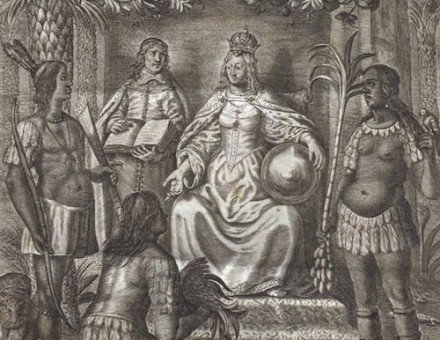
Yellow Fever in the Americas
Simon Harcourt-Smith describes how the Americas were plagued by Yellow Fever, borne by mosquitoes from the seventeenth century until the early twentieth.
The imaginative European, hearing fabulous reports of the new-found world, without braving the hazards of the Atlantic, might well have been excused for fancying that in their search for Cathay the conquistadores had stumbled into a Garden of Eden with hardly a serpent to trouble it.
Here, surely, was a continent teeming not only with gold, silver and emeralds, but also with luscious fruits that went in no need of tending, behind shores littered with ambergris, and cleansed by the gentlest of zephyrs. As for disease, was there not here a new untainted world?
As late as the mid-seventeenth century, Andrew Marvell, hymning the ‘remote Bermudas’, could only envisage a brand-new Paradise that offered mankind a brand-new Elysium.
Of course, in those days knowledge travelled at a snail’s pace.
Only a few knew how the Mayan records abounded in accounts of the ‘xexok’ or ‘blood vomit’ that periodically ravaged the coast of Yucatan, or how of the 1,500 Europeans who had landed with Columbus on the island of Hispaniola in 1493, only some 300 remained alive nine years later.
It must be remembered, however, that Spain at the time abounded in adventurers who had been toughened in the Moorish and Italian campaigns. The Spanish Government felt little inclination to discourage with tales of plague such trouble-makers from seeking their fortunes across the ocean.
So, not too much stress was laid upon the hazards of mortality that inexorably thinned the ranks of those who sailed into the New World.
At a distance of several centuries, and in the absence of precise records, it is not easy to define with any certainty the whole gamut of diseases that plagued the conquistadores and the colonists during the early centuries after Columbus’ landfall - particularly in the Caribbean.
Malaria, dysentery and scurvy were certainly at work. We also know that the Europeans made the mistake of planting their settlements on the unhealthy lee-shores of the islands. But all the medical jargon of our ancestors - the talk of ‘bloody fluxes’, calentures and agues - leads us into unprofitable morasses of vagueness.
On the other hand, there is no gainsaying that during the first half of the seventeenth century a plague struck the Americas, unlike any disease hitherto known, and far more lethal. In dread,the Spaniards named its principal symptom the ‘vomito negro’, and the disease itself the ‘fiebre amarillo’ or yellow fever.
In popular parlance this would in time come to be known as ‘Yellow Jack’. Before the disease was dramatically mastered - in its western form, at least, during the early decades of the twentieth century, it was to carry off hundreds of thousands, if not millions of human beings, and to alter in an important degree the history of the Western World.
From the earliest recorded times, plagues had periodically ravaged Asia and Europe.
Apart from the Athenian misfortunes, we need only call to mind the plague that the legions of Marcus Aurelius brought back from Mesopotamia to Rome in AD 165-6, the pestilence that decimated Byzantium in Justinian’s time, the Black Death of eight centuries later and the Great Plague of 1665.
All these would seem to have been bubonic, probably carried by the black rat; and when by a mysterious invasion the brown rat ousted the black one in the mid-eighteenth century, plague of this sort naturally disappeared from Western Europe.
But already, a generation before the Great Plague of London, this new kind of pestilence -later to be known as Yellow Fever - had burst upon the New World. It despoiled Guadalupe in 1648, and Cuba the next year.
By 1668 it was in New York, and soon afterwards in Charleston, South Carolina. Before the century was out, it had reached as far north as Boston, Mass.
It defied all habitual methods of attack, such as quarantine and segregation. Its symptoms were numerous and horrible - violent pains in head and stomach, sometimes also in loins, arms and legs.
Then the agony would spread to the stomach, and after a few hours would come the vomit, black and greasy. Next occurred, almost inevitably, an eruption of red and purple spots all over the body.
The fever seems rarely to have taken more than four or five days to reach its climax. During the last stages the victim would decline into a coma, with a rapid pulse that increased in shallowness, till death mercifully ensued.
Flight, fumigation, cremation of corpses -nothing proved of the slightest avail against this new pestilence. It spread down to Brazil, across to the Cape of Good Hope, up to Gibraltar, and even to the Isle of Wight.
In 1741, during the so-called ‘War of Captain Jenkins’ Ear’, it killed off two-thirds of the British force of 12,000 men besieging Cartagena la Nueva. Between 1795 and 1799 more than 31,000 troops and sailors were to die of the fever in the Caribbean.
Worst of all, its lethal intensity steadily waxed in the course of the eighteenth and nineteenth centuries. During the epidemic of 1878, for instance, it seems to have killed no less than 25,000 people.
When, in the years after 1879, Charles de Lesseps attempted to repeat his Suez triumph by cutting a canal through the Central American isthmus from the Caribbean to the Pacific, ‘Yellow Jack’ wiped out nearly three-quarters of his white labour force and brought him to disaster.
One of ‘Yellow Jack’s’ least happy consequences was to breed among the British and French sugar-planters of the West Indies a ‘Yellow Fever Phobia’ - particularly in Martinique and Jamaica. In the latter island, during the late decades of the seventeenth century, plantation-owners such as Colonel Coalbeck had made the Antilles their homes, and regarded themselves as transplanted squires.
They and their cronies might die of over-eating and over-drinking; yet the West Indian countryside still seemed for them to be a luxuriant ally. But within a couple of generations ‘Yellow Jack’ had turned the smiling Caribbean into a treacherous foe, from whom exile seemed the only sane remedy.
The eighteenth century saw many rich West Indian families - the Beckfords, for instance, and ‘Monk’ Lewis’ parents - retire to the comparatively healthy airs of England, and leave their sugar-plantations to the care of overseers, often mulattoes, and often abominably harsh to the slaves in their care.
The apparent impossibility of staying, still less of curbing, the pestilence provoked in the West Indian islands an absentee-landlordism almost more disastrous than the Irish kind.
As the century wore on, the ravages of the disease steadily spread - not only by land but on sea. On the short voyage between Belize, British Honduras, and Port Royal, Jamaica, for instance, the crew of a frigate would, as like as not, be decimated.
And as the mercantile traffic increased across the Atlantic, mortality among the crews rose dangerously high - particularly among the ‘slavers’ who plied the usual triangular course of England - West Africa - the Americas.
But it was the white men as much on the high seas as on the plantations who died by the drove; persons of African descent were hardly touched by the infection.
Looking back across two centuries, we may at first feel surprised at the inability of our ancestors to grasp the significance of this obvious clue -that ‘Yellow Fever’ was African in origin, as was its killer; that over the ages, African humanity had become immunized to it; and that the disease was non-contagious, since neither quarantine nor isolation could master it. But the medical profession is slow to digest new ideas.
It took them centuries to admit the importance of citrus fruits (Vitamin C) as a remedy against scurvy, although the truth of this was already known by the early seventeenth century. Equally, it was hardly until the Crimean War that the medical profession reluctantly began to accept the proposition that filth, particularly in clothes and sheets, no less than open drains, could breed and propagate a variety of diseases.
Indeed, once the principle of contagion was generally admitted, and once insanitary conditions were recognized as perhaps the most sinister ally of disease, doctors and scientists were loath to concede that pestilence could spring from any other causes.
In the year 1853, for instance, the city of New Orleans was afflicted by a savage epidemic of Yellow Fever. The usual talk arose of a ‘diffusable miasma’ as one of the main culprits. The city’s Board of Health immediately set up a special commission of investigation.
This in due course reported that the epidemic had originated in New Orleans itself, and had been aggravated by the filthy conditions of the place. At that time it was generally assumed (indeed, in some eccentric circles it is still assumed) that Yellow Fever was a curse of entirely American origin - like syphilis, phylloxera, and the grey squirrel.
But five years before, in 1848, a Dr Josiah Clark Nott of Mobile, Alabama, seems to have perceived the first glimmering of the truth. Scoffing at notions of ‘diffusable miasmas’ (an excuse for many Victorians to sleep with tight-closed windows), he tentatively suggested that the mosquito might be the criminal. Nobody gave him much credence.
Exactly thirty years later, in 1878, as we have seen, a fearsome pestilence of‘Yellow Jack’ struck the south-east of the United States, causing some 25,000 deaths and, it was estimated, $200,000 worth of damage.
In the last decade or so of the nineteenth century, in Habana, Cuba, alone, it accounted for an average of 500 deaths a year, while so prone to catch it were the prosperous tourists from the north who had begun to flock to Florida by the late ’80s, that in Jacksonville it was dubbed ‘society fever’.
The whole world in those last decades of the last century continued to agree that the origin and the cure for Yellow Jack remained twin and terrible mysteries.
Hardly anyone seemed aware that the solution had already been found and proclaimed, a generation before, by a Cuban of Anglo-French parentage, Dr Carlos J. Finlay, in a paper he had read before a somnolent Royal Academy of Habana on August 14th, 1881.
The vector or carrier of Yellow Fever was, he declared, the mosquito, Aedes (Stegomyia) aegypti, almost certainly native to West Africa. In tropical regions, water-cisterns were a luxuriant breeding-ground for its larvae, as were the many water-casks that sailing-ships on their long slow voyages were obliged to carry with them.
It was in such water-casks that Aedes aegypti had brought Yellow Fever, with all its resultant chaos and misery, to the eastern coasts of the Americas, from Rio de Janeiro to Boston.
The heat of August in Habana hardly makes for smooth tempers or tolerance of new ideas. Poor Dr Finlay’s theories were contemptuously rejected on the spot; and a few years later, in 1897, a noted Italian bacteriologist, Dr Giuseppe Sanarelli, led the world completely on to a false trail when he announced that the Yellow Fever killer was a bacillus going by the name of ‘icteroides’.
It was a moment when dreams harboured since before the Civil War were reviving in the U.S., of laying hands upon the Caribbean. In preparation for what was deemed to be an inevitable war with Spain over her surviving American colonies (deemed by all red-blooded North Americans to be offences against the Monroe doctrine), the U.S. Public Health Service eagerly embraced the fallacious theories of Sanarelli.
An unrest in the countryside against Spanish rule had dragged on for years, with U.S. aid. To protect American investments in Cuba, the U.S. Navy now appeared off the island. Early one morning, in 1898, mysteriously and conveniently, the U.S. battleship Maine blew up in the harbour of San Cristobal de la Habana.
The Spanish Government tied themselves into knots to avoid war, offering handsome compensation. But the mobs that through the North American cities howled, ‘To hell with Spain! Remember Maine', overawed the reluctant President McKinley. U.S. troops seized Puerto Rico and occupied Cuba after a brave Spanish resistance.
A special Yellow Fever Commission was appointed to Cuba in 1900. Led by such brilliant military doctors as Reed and Major Gorgas, and reinforced by the work of the English Sir Ronald Ross, on the mosquito, they soon came to reject Sanarelli’s notions.
Most important of all they discovered that Dr Carlos Finlay was still alive and ready to help them.
Though by now he seems to have been a relatively old man, his help proved invaluable to Reed and his assistants.
Putting at their disposal specimens of mosquitoes that were already vectors of Yellow Jack, he assisted the Americans to prove that (a) the disease depended for its propagation upon Aedes aegypti, (b) that to become infected - and that for life - the mosquito must bite a Yellow Fever patient within three nights from the beginning of illness, (c) that to pass on the infection, the mosquito must bite an uninfected person within the next twelve days, and (d) that if the mosquito’s larvae could be eliminated from water-tanks and other stagnant cisterns, Aedes aegypti and the infection with it would virtually disappear from Habana.
In February 1901, under the leadership of Major Gorgas, now chief sanitary officer of the capital, the onslaught against Aedes aegypti was launched on Habana. There were formidable difficulties.
At that time, Habana possessed little running water; it largely depended upon static supplies, and the Habaneros, particularly of the poor quarters, stubbornly resisted any tampering with them.
But gradually the fears of the mob were allayed, and the larvae were eliminated from virtually all static water in the capital. The tiresome process of purification was in time assisted by the most natural of devices.
Into many of the static water-tanks were slipped schools of small fish which fell hungrily upon any traces of larvae that might have survived disinfectants.
Yet another frightful menace lurked in the cigar warehouses. They buzzed with the criminal Aedes aegypti. Gorgas’ teams began systematically to fumigate them. Alas! At that period - the turn of the century - the favourite fumigants were sulphur and pyrethrum.
The fumes of both these disinfectants proved far more noxious to cigars than to poisonous mosquitoes. For a time the scientists were at a loss. Yet at last they hit upon a solution of beautiful simplicity: smoke from burning tobacco hurt cigars not one whit, but proved fatal to Aedes aegypti.
By the autumn of 1901, ‘Yellow Jack’ had disappeared from Habana. Soon the whole island was cleared of it -perhaps the only manifest benefit, if a far from an inconsiderable one - to emerge from an entirely unnecessary war.
The outside world was hardly quick to evaluate the achievement of Gorgas and Reed in Habana. In New Orleans, where the municipal Board of Health enjoyed a long tradition of conservative inefficiency, no heed had apparently been taken of Aedes aegypti, when once more - for perhaps the twentieth time - ‘Yellow Jack’ raised its ghastly head along the Gulf of Mexico during the summer of 1905.
Indeed, the harassed officials everywhere behaved as if all remedy against the fever was still an elusive mystery; according to the ‘New Orleans Harlequin' for August 3rd, 1905, in neighbouring Galveston, Texas, the scare of ‘Yellow Jack’ provoked the disinfection even of cargoes of carbolic acid and of pig-iron -surely the ultimate and anachronistic absurdity in the perennial misunderstanding of the disease’s nature!
From the mainland of the United States, the fever returned for a moment to Cuba, in that year. But Gorgas, now moving with a speed born of confidence, quickly annihilated the invader.
His rapid success seems to have converted the authorities of the mainland. Using Gorgas’ methods, New Orleans had brought ‘Yellow Jack’ under control within a few weeks. The last death from the plague was to occur there in November 1905.
By 1909, the fever had been triumphantly eradicated from the mainland. For the last sixty years no case of the disease, it is believed, has occurred in any city or township of either Cuba or the United States.
In 1902 Reed and his assistants in Habana turned from the suppression of Yellow Fever to a search for its origins. In due course they traced the virus to a micro-organism so infinitesimal that at first they could find no filter - not even a porcelain one - to arrest and isolate it.
But eventually they and their followers triumphed, although success was delayed by the error of a Japanese scientist, Hideyo Noguchi, who for a time led the learned world into confusing Yellow Fever with spinochetal jaundice.
Eventually, however, an anti-toxin called 17D was evolved. By inoculation with it, thousands of allied troops, called to service in the Tropics, achieved complete immunity from Yellow Fever in World War II.
But here we fly too far forward. The preliminary efforts of Gorgas and his disciples had cleared Yellow Fever out of Cuba and the Mississippi delta; but in the first years of this century it still was raging in Brazil, particularly in Rio de Janeiro, where the mortality among infected cases was as high as 95 per cent, and where the fever carried off over 28,000 souls between 1894 and 1906.
By the application of Gorgas’ methods the disease was now quickly eradicated. No deaths from Yellow Fever have been reported in Rio since 1909.
Perhaps more important still, Gorgas’ victory over the scourge now enabled the dream of a Panama Canal to be revived. Yellow Fever in the Central American isthmus was at this time as virulent as ever.
It was, as we have seen, Yellow Fever that had frustrated Lesseps’ attempts to cut a Central American canal through from the Caribbean to the Pacific and, as much as any factor, had brought disgrace and a penurious death upon him in 1894.
The U.S. Government now bought out the French shares in the venture and after toying with Lesseps’ original project to cut the canal through Nicaraguan territory, plumped, despite difficulties of terrain, for a canal through the isthmus of Panama from Panama City to Colon.
Unfortunately, two uncomfortable obstacles loomed in the course of U.S. policy: the Panamanian isthmus lay within the borders of the Colombian Republic which was inspired by little enthusiasm for the project of a canal or American semi-annexation: and the isthmus itself was still a paradise for ‘Yellow Jack’ and the Aedes aegypti.
With the methods used by Washington to foster an entirely artificial Panamanian Republic, and then immediately to extract from it the present Canal Zone concession - methods that anticipated Hitlerian techniques of thirty or so years later - we are not here concerned.
The menace of Yellow Fever is another matter. A U.S. cartoon of those days encapsulates the problem. It shows Uncle Sam indicating to a typical Central American a towering mountain shaped like a human skull and labelled ‘Yellow Jack’. That, says Uncle Sam, is the first mountain to be climbed...
Gorgas’ eradication of the disease from the future Canal Zone (over which the U.S.A. to this day exercises virtual colonial rights) so stirred the imagination of the world that on his London death-bed in 1914 he was expressly decorated with a knighthood by King George V.
Thereafter, Yellow Fever of the ‘urban’ type practically disappeared, only occasionally to be encountered in mild form here and there along the Caribbean shores of South Mexico.
Strangely enough, another ‘rural’ version of the disease has come to light among logging communities in dense tropical forests - particularly in the Republic of Colombia and in the Southern States of the U.S.A.
This version, ‘Jungle Yellow Fever’, transmitted not by Aedes aegypti but by another kind of mosquito, Aedes stegomyia calopus, has not yet caused any widespread pestilence, and could, it is said, be easily eliminated by a minimum of vigilance from local authorities.
Meanwhile Aedes aegypti has reappeared - this time, in Ceylon, of all places. Who knows if one day it will not bring thither its deadly associate virus?