

The Political Apprenticeship of Bernard de Saintes
Richard Ballard looks at how events in the opening years of the French Revolution took shape in a town three days’ journey from Paris.
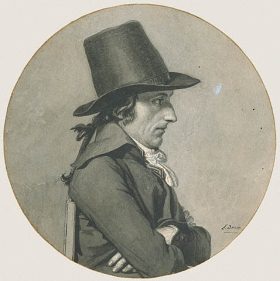 During the official Terror of 1793-94, when the National Convention’s representatives on mission carried out the most brutal acts on the internal enemies of the new Republic, Jean-Baptiste Carrier was infamous for drowning hundreds of Vendéans in the river Loire, and Joseph Fouché for having royalists shot into open graves in Lyon. Equally vindictive, but not so well known, were the actions of Bernard de Saintes, representative in eastern and central France, shown in his reports to the Committee of Public Safety. He was from the department in south-western France then called the Charente-Inférieure and his apprenticeship as a politician from 1789 until 1791, when he left Saintes for the Legislative Assembly, is a clear indication of the way he would act in Besançon, Montbéliard and Dijon when his power was unrestrained.
André-Antoine Bernard came from a village called Corme-Royal. His legal training was received in nearby Saintes, and he hoped to make an impression by calling himself Bernard de Jeuzines before the Revolution. Jeuzines was an orchard on some land his family owned in another village called Les Essards. There is a hamlet nearby called La Pommeraye, where his wife came from. Her family, from the lesser nobility, did not want Louise Frère de La Pommeraye to marry André-Antoine, since he was not noble at all, but in 1778 she did. Seething about his in-laws might explain his hyperactive antagonism towards nobles by the time they were being called aristocrats and regarded by the newly powerful as pariahs to be exterminated 15 years later. Louise had died by then, leaving him with the care of two young daughters.
The ‘Proconsul’ of Montbéliard
Once he had been elected as a deputy for Saintes in the Legislative Assembly and then in the Convention, an orchard was no longer conspicuous enough to give him a surname, so he became Bernard de Saintes and, since that sounded rather religious (he hated priests as much as nobles), he changed it to Xantes because that looked classical and the new republic liked to think it was modelled on the ancient Roman one.
Bernard emerged into something like notoriety. He ran about in the Haute-Saône and then the Côte d’Or in 1793 and 1794, arresting those whom he suspected as enemies of the people and making full use of the revolutionary tribunal and the guillotine. It was due to him that the Duchy of Montbéliard was taken over from Württemburg and assumed into France: he had sole direction of the uncompromising process of its integration as the all-powerful personal representative of the National Convention and its Committees. His name-day had been changed in the revolutionary Calendar to the Festival of the Iron Pick-axe, and he accordingly altered his first name to Pioche-fer.
He was a member of the Jacobin group that made Terror an instrument of government while they were in power. He would not let anything alone for a moment, struck fear into the hearts of the ordinary people who wanted ordinary lives in the new Republic, and defended his actions afterwards with effective, self-preserving skill. All this began in Saintes and his formation as a politician was on the banks of the Charente where he emerged as one of the new men of 1789.
Bernard and Local Politics
In the new department of the Charente-Inférieure as elsewhere, this was a lawyers’ revolution, carried out by means of laws passed in the National Assembly and, afterwards, in the Convention. In the new Departments, Districts and Municipalities a lot of lawyers were needed to see that the new laws were obeyed, and they were obligingly thick on the ground in Saintes and the countryside around.
Bernard and his rival Jacques Garnier, another lawyer, intrigued with each other to gain the monopoly of positions of local power and influence that became vacant as they drove the agents of absolute monarchy from office. They preserved an amiable façade between themselves so as to corner enough support among the bourgeois electors to vote them into important offices in the municipality and beyond. The ambition of both of them worked at the outset against Maire Gaudriaud, who had been the deputy of the King’s Intendant for 32 years. They justified themselves by their knowledge that many of the bourgeoisie in Saintes were opposed to him because they considered that he had supported La Rochelle’s interests above their own. When Gaudriaud had expected to preside over the assembly to elect the Third Estate deputies during the run up to the Estates-General in March 1789, he had been jeered out of the meeting. So, on 25th July, Bernard proposed the motion that Gaudriaud be deposed. There is little doubt that he wanted to be Maire himself, but he left the room at a crucial moment and came back to find Garnier had been elected to replace Gaudriaud straightaway by acclamation and without a formal vote.
All this was happening in the little area of streets in Saintes ranged beneath the remains of the ramparts and the right bank of the Charente. The towers of the Cathedral of Saint-Pierre and the church of Saint-Eutrope rose above them. From several streets you could see the Roman double arch of Germanicus which served as the entrance to the old bridge and connected the area around the cathedral with the suburb of Saint-Pallais and the Abbaye aux Dames on the other side of the river. There were lawyers in substantial houses; nobles still had their town houses in streets like the rue de Saint-Maur where the town bank was; clergy were everywhere, and there were monks and nuns shut away in their houses all over the town.
The timber-framed houses in Saintes had recently been faced in white stone and the streets had been widened, developments carried out by the king’s Intendant, the Marquis de Reversaux, which the bourgeois property-owners resented because they involved confiscation of some of their gardens. There were shops at ground level, and older streets without shops led to the river and the impressive Hôtel de Montconseil, soon to be the Departmental Directory’s office. Round the corner was the open space called Place Blair, the name of which is a contraction of Bel-Air.
The second week of July 1789 had been the time when rumours frightening to the bourgeoisie circulated everywhere. On the day that Camille Desmoulins stood on a table in the Palais Royal to make a speech and the crowd went off after him to seize the Bastille, many people in Paris thought that the court at Versailles was planning to starve the capital into submission. In the valley of the Charente it was said that the nobles had organised 40,000 mercenaries in the countryside in order to attack the towns. The bourgeoisie took steps to defend themselves.
A contemporary in Saintes kept a secret diary and reported events as they happened. This article depends largely upon the information he gives about Bernard, but we have to be aware that he detested him. The diarist’s name was François-Guillaume Marillet and he would soon lose his appointment as a church lawyer.
On 26th July, letters from Paris told friends and family at home what had been happening there. King Louis XVI had gone to the Hôtel de Ville in an attempt to calm the population who thought his troops would attack them, and had put the blue, white and red cockade which Maire Bailly gave him on his hat. Bernard took similar action at Saintes and organised visits to the Dean of the Cathedral, to the President of the Nobility, to the Lieutenant-General in command of the Royal Cavalry Regiment in the town garrison, to the Chief Magistrate and the Chief of Police: they were all given a national cockade to sew on their hats. Like their king, they accepted it. Even the priests wore one pinned to the front of their cassocks. It looked for a little while as if there might be sweetness and light all round, if the 40,000 poor devils wandering on the country roads looking for work were no more than that and kept their distance from the property of the urban respectable.
Saintes was like a disturbed ant-hill when it was heard that a nobleman near Cognac had asked for military help in defending his town against this supposed army of brigands. On 30th July the villagers of Baignes-Saint-Radégond in the south of the Saintonge rioted. They burnt the tax inspector’s house, manhandled the landowner, and forced him to abandon his feudal dues. The next day was ruined for the seigneur of Sousmoulins and his family when he and his family were menaced for several hours and all his title deeds were taken from him in his own kitchen.
The ‘Great Fear’ continued and an attack on the town was expected to materialise very soon, so a corps of volunteer troops was raised in Saintes, known at first as the bourgeois militia. Even the schoolboys rushed to be enrolled in the regiment and the principal of the boys’ college was pressured into letting his boarders go out to sign up. Its strength was five to six hundred men. The general officer in charge of it was the Marquis d’Aiguières, who could be relied upon to know what to do if a band of hungry ruffians made an attack. He had three other nobles as his aides. Then came a surprise: if Jacques Garnier could be the new Maire after 32 years of apparent royalist misrule under Gaudriaud, then Bernard de Jeuzines found no difficulty in appointing himself Colonel of this militia and turning it into a unit of the National Guard.
The next Sunday, at the parade on the Gaillarde Meadow, the regiment formed up into companies, elected its officers, and chose its decorous uniform: a red jacket with scarlet revers, sky-blue facings, and a white collar and lining. Most of the officers did not have the money to pay for this extravagance, but Bernard was not embarrassed in the least by taking money from where he knew there was some. 2,400 livres had been raised very recently for charity by the cathedral clergy and the nuns in the Abbaye aux Dames. Of these, 300 livres were given to the six churches in the town for distribution to the poor; Bernard took 900 livres; and the remaining 1,200 were deposited with the banker Faure, and the officers’ uniforms were paid for out of that.
Bernard kept the National Guard’s colours at his own house for as long as he could, instead of at the Hôtel de Ville. He went post-haste to La Rochelle, took some rifles from the armoury there and compelled the director of the ammunition store at Saintes to hand over 150 pounds of powder to him. Bernard had all that, together with the weapons needed to equip the soldiers, taken to his own house as well.
While he was Maire, Gaudriaud used to collect his instructions and official letters from the post office in Saintes. Bernard gave orders to the postmaster not to open the council’s box except when he himself was present. Twice he seized and read letters meant for Gaudriaud. He saw a chance for personal power not open to him before, and even searched in the Hôtel de Ville and Gaudriaud’s own house for papers that would incriminate him. This was a prelude to his future abuse of power when he was a representative of the Convention. The postmaster, however, refused to co-operate with him, and a guard was put on the post each time it arrived to prevent any further breaking of the rules.
As soon as Bernard’s interference was known about, Maire Garnier had some mounted gendarmes trained to rival the National Guard which Bernard controlled, then gave orders that all arms and powder were to be kept at the Hôtel de Ville and that deliveries by postal couriers were not to be tampered with. Bernard refused to obey these orders. Having got rid of one Maire, he said, he was not going to submit to another. Garnier had his orders printed and pasted up. Bernard produced a printed reply in which he swore never to take up arms against his fellow-citizens. The same evening, he went to have a drink in a bar – with Garnier.
In some senses the beginning of the Revolution was a jolly time in Saintes for those who could afford it. The Great Fear passed and the ‘army’ of unemployed labourers was absorbed into the number of the urban poor in several towns or went home to starve in their villages. ‘Patriotic’ banquets were arranged to make liberty and equality more easily observable. The most lively of these was the one given in the garden of the priests’ training college, for which Bernard provided two barrels of wine and his deputy as colonel gave two others. The principal of the seminary gave the coal for the cooking, and an innkeeper, whose estimate for providing the meal of 900 livres had been accepted, served bad, cold and unpalatable meat that had partly gone off. His bill was cut down to 500 livres. But all who were there drank, danced, enjoyed themselves, and paid respects to Bernard.
The background to this new-found enjoyment on the part of a few bourgeois was great misery for most people: the assignat lost its value as currency, white bread cost 4 sols, black cost 3 sols 6 deniers, and the municipality bought up the wheat so no one else could have any.
Our contemporary diarist commented:
We are in mortal sadness. Most right-thinking residents have withdrawn to the country. Messrs Garnier and Bernard seize the moment to do what they like. All we ever hear is talk of committee meetings, of the army, of festivals, of fine suppers, at which these two, appearing to disagree in public sometimes, sit down together to dream up some other project … The National Assembly is destroying everything and puts nothing in its place.
Bernard did his utmost to deprive Garnier of power in the Municipality. He set up an independent military company with a group of young people and some citizens who were his close supporters. He paraded them in the hall at the Town Bank in rue Saint-Maur during the grape-harvest in the first days of October at a time when most of the members of the town council were occupied in the countryside harvesting their own grapes. Astonishingly, he made his new company vote for the dissolution of all the council members and they accepted the decision. This meant that Garnier had to resign from the office of Maire. Next day, the dismissed council regained its mutual courage, reassembled and recalled Garnier, who eventually came back. Garnier negotiated, and in the end reached a compromise with Bernard. The municipality was re-established, expanded and controlled by Colonel Bernard’s military nominees. The town council now found itself with 40 members and Garnier’s power was limited.
One of the most characteristic instances of Bernard’s ability to have his own way and break down all resistance towards himself arose over the intention of the National Guard contingent in Saintes to hold a memorial service in the Cathedral. This was to be for the 21 mutineers executed in early August in reprisals against a regiment at Nancy in Lorraine, perhaps fermented by the Jacobin Club there. Besides the executions another 40 mutineers had been condemned to the galleys for life on the orders of the royalist General Bouillé. Bernard, as a Jacobin sympathiser, put himself at the head of a local committee to organise the commemoration to be held on 27th August 1790. Invitations were issued to the officials from the Department, the District or the Municipality, but none of them agreed to be present. The Dean and Chapter of the Cathedral refused to allow the service in what was, as yet, still their building.
After calling together the commanders of other National Guard contingents in the newly set-up Department of the Charente-Inférieure, Bernard decided to hold the ceremony in the open air and ignore the cathedral authorities. He persuaded a Franciscan priest to celebrate the mass, and had an altar set up on the water meadow called the Palude, across the river from the offices of the Directory, with decorations in the taste of the revolutionary years: poplar and cypress branches, any number of lighted candles carried by young people in white clothing, and a great picture representing the Patrie in tears. The officials of the local Directory intended to boycott the occasion. Bernard, seeing none of them arriving at the time when it was going to start, sent a deputation of his officers to the Hôtel de Montconseil on the other bank of the Charente where they were in session. A long discussion went on about whether to attend or not, so Bernard left the altar and hurried in person to speed up the decision. It was half-past twelve.
The administrators were watching what was happening on the water-meadow through the windows of their first floor meeting room across the Charente and, although they did not agree to come to the provocative ceremony while Bernard was still with them, once he had gone they changed their minds and made their way to it. So Bernard got what he wanted after all.
Bernard was elected as the principal judge of the Municipality on 4th November 1790, and at the end of a dinner to celebrate his appointment, he proposed the creation of a Club of the Friends of the Constitution which would play an important rôle in the course of events. He required that it should be composed of 150 members, under the presidency of one of his friends, and controlled by his supporters. He gave as its mission ‘the denunciation of citizens who maintained contacts with the enemies of the Revolution’. This ‘popular society’ was enlarged to 400 members, as many women as men, much to Marillet’s disgust. This was the Jacobin Club of Paris on the ground in Saintes and became the guiding force in the town under Bernard’s control. It became the model for his control of other areas later on.
Bernard was elected as a deputy in the Legislative Assembly when the original deputies to the Estates-General and then the Constituent Assembly were forbidden to offer themselves again as candidates, and he left Saintes on 5th October 1791. Thereafter, it was his letters that informed the Club about all major events. One described the end of the Monarchy on 10th August 1792 in which he said, ‘the king and his family came to take refuge in the Assembly which was obliged to take in this vermin that they wanted to see crushed’. Another was about the September massacres three weeks later in which the Bishop of Saintes was hacked to death.
Bernard’s appointment as one of the Convention’s representatives on mission followed, and he was responsible for at least one judicial murder and plenty of other vindictive executions. All the methods he adopted in Saintes were used to the full in the areas he came to control with the use and the threat of his guillotine. After that, he protected himself from blame as a member of the Committee of General Security, though he did have to spend a few months in prison, sharing a cell for a time with Jacques-Louis David who drew a pen and ink portrait of him. After his release when all ‘revolutionary acts’ were amnestied at the dismantling of the National Convention, he returned to live quietly as a judge in Saintes.
Jacques Garnier was also a deputy and representative on mission, returning quietly afterwards. Did they still drink together until they were both exiled by Louis XVIII as regicides?
- How important was principle, as against naked ambition, in the career of Bernard de Saintes?
- In what ways was Bernard’s use of terror in 1793-94 prefigured in his earlier career?
- How far did events in Saintes mirror the course of the wider French Revolution?

