King John: Damned by his Peers
Attempts to rehabilitate ‘Bad’ King John always come up against a major stumbling block: the verdicts of his contemporaries.
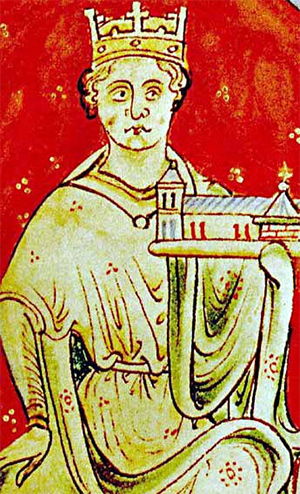
There will be no getting away from King John in 2015, the 800th anniversary of Magna Carta. Huge celebrations are planned, not only in the UK but across the globe as the Great Charter is lauded as the foundation document of liberties and rights. While there are debates about Magna Carta’s importance, these are nothing compared with the historical disputes over the monarch himself: bad King John or misunderstood, unfairly maligned King John?
A revisionist movement to rehabilitate John gained pace in 1949 with the publication in the US of The Reign of King John by Sidney Painter. On this side of the Atlantic, W.L. Warren spearheaded the revisionism, as exemplified in his 1957 History Today article What was wrong with King John? This was no crude attempt to create a stir: Warren was far too consummate an historian for that. Much as I disagree with many of his arguments mitigating the worst criticisms of John, I still urge my students to read his biography of the king as their starting point. The lucid elegance of his prose remains a joy.
Warren’s article was an attempt to get to the truth behind ‘the monarch who has left a reputation for evil second only to Richard III’s’. Warren apportions much blame to John’s contemporary monastic chroniclers and their stories of his ‘disgusting duplicity, merciless inhumanity, paralysing extortion and licentious indulgence’. He attributes John’s shocking reputation to one source in particular: ‘All the really memorable stories of John’s perfidy, ingratitude, bestial cruelty and hysterical recklessness can be traced back to the chronicle of Roger Wendover, a 13th-century monk of St Albans’. Warren built on V.H. Galbraith’s earlier study of Wendover to warn other historians against his inherent unreliability.
Warren cites examples of where Wendover gets things horribly wrong, such as the completely erroneous report of Geoffrey, Archdeacon of Norwich’s death at the hands of John in 1209. In fact, Geoffrey’s career was resurrected and he became Bishop of Ely in 1225. Warren tells us that Wendover is the only chronicler to list the frightful litany of John’s dark side (in fact some French ones did, too, unsurprisingly) and that we should dismiss such stories ‘as the forcible extraction of Jews’ teeth, his threat to slit the noses of Papal servants, his interview with Arthur of Brittany before the latter’s murder, his rejoicing at the death of his Chancellor Hubert Walter, and his fits of depression alternating with periods of hysterical activity’. With the exception of the dental procedure, these descriptions do not seem that fanciful at all. But Warren urges his readers to ‘relegate such tales to the realms of fiction’. His judgment has proven hugely influential in the decades since.
Warren was no apologist for John, roundly condemning the man more than the king. However, in believing that Wendover was ‘an unreliable witness but for the wrong reasons he had the right idea’, he is a little unfair on the chronicler, who was nowhere near as untrustworthy as Warren makes out. Warren, like many medievalists, omits Galbraith’s crucial comment that, if Wendover’s chronicle is somewhat blighted by errata, ‘how could it be otherwise in so large an undertaking? And what large medieval chronicle is not?’ Furthermore, as I have discovered, between his geographical situation and the first-hand knowledge of his patron, William d’Albini, Wendover was superbly positioned to be well informed on John’s reign, especially its later stages. Some of his precise details on the Magna Carta war can be closely corroborated with other sources, such as the History of William Marshal.
Furthermore, Warren joins in with the familiar chorus that, given John’s treatment of the church, Wendover was bound to contribute to monastic condemnation of the king. But he and subsequent historians who seek to offer a less damning verdict of John tend to overlook the comments of lay writers whose masters fought on John’s side: these clearly reinforce the accurate monastic views of John. One writes of John’s ‘disgrace’, ‘arrogance’ and ‘cruelty’; another that he was ‘a very wicked man’, ‘he was cruel to all men’, ‘he was much hated’ and, quite simply, ‘he had too many bad qualities’. John’s contemporaries were better placed than modern historians to pass judgment on him.
Sean McGlynn is author of Blood Cries Afar: The Forgotten Invasion of England 1216 (History Press, 2011).