

Palaeolithic Art, Part I
Jacquetta Hawkes explains how, at an unpromising period in human history, a sudden upsurge of creative power produced the earliest masterpieces of European art.
Jacquetta Hawkes explains how, at an unpromising period in human history, a sudden upsurge of creative power produced the earliest masterpieces of European art.
To most modern readers little more than a resounding name, the Kingmaker is here described by Paul Kendall as an “early exemplar of that Western European energy” which was presently to transform the civilized world.
Far more interesting than Byron's romantic hero, who also inspired a celebrated circus act, is the real Mazeppa, as described in this article by L.R. Lewitter.
For nearly two hundred years Jesuit missionaries held a privileged position at the court of the Chinese Emperors, C.R. Boxer writes, where they laboured not only as fishers of men, but as astronomers, mathematicians, portrait-painters and skilful architects.
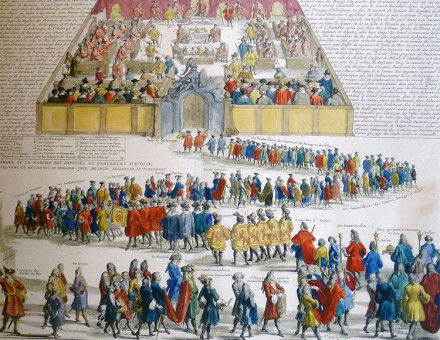
By the Act of Union, the Scots lost their Parliament but gained the freedom of the British Empire.
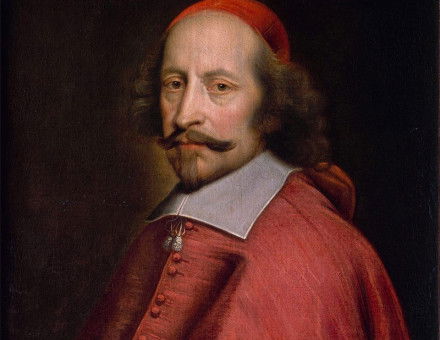
France we know, but French governments perplex us, writes J.H.M. Salmon. Mazarin’s was one of the oddest regimes that France has undergone. This Italian “condottiere in diplomacy” ruled France, despite recalcitrant noblemen and civil war, for nearly twenty years.
Jon Manchip White describes how a garrison of 1,050 Europeans and 712 loyal Indians held the Residency at Lucknow against an army of 30,000 Sepoys.
Among the ruins of ancient Pylos— which, together with all the other major strongholds of Mycenaean power, was destroyed at the end of the Hellenic Bronze Age—a library of clay tablets has come to light, depicting a threatened society “in the throes of total moblization.” By L.R. Palmer.
T.H. McGuffe describes the history of fire-arms, from the fourteenth century onwards, considering their uses and effectiveness in war, in sport, and for display.
Peter Green meets the satirists of the Roman Empire, and is presented with a picture of a world in corruption and decline. Yet the Empire outlasted its bitterest critics by several hundred years.