

History Today

The Great Siege of Malta, 1565

When, on September 8th, 1565, the last Turkish troops had been driven from the island, only six hundred of its original defenders were still capable of bearing arms. But, as T.H. McGuffie writes, the attacking force had lost some twenty-five thousand men; and the Turkish drive westwards was for ever halted.
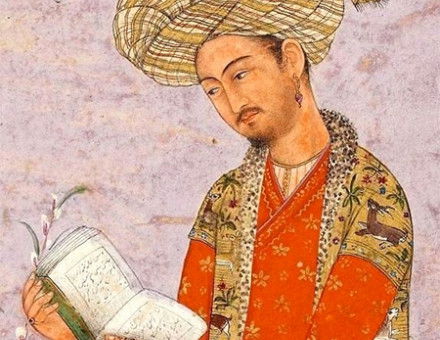
The Emperor Babur and Vasco da Gama

Iris Macfarlane describes how, during the early sixteenth century, two dominant cultures, Mughal and European, first began to spread on Indian soil.

B.C. and A.D.: The Christian Philosophy of History

After the sack of Rome by the Goths in the year 410, the Roman world experienced some of the unease that afflicts Western civilization today; S.G.F. Brandon describes how the late Roman world found assuagement in the writings of Saint Augustine.

The Other Sidney

Overshadowed by the reputation of his brilliant elder brother, Robert Sidney “was not one of the flamboyant Elizabethans,” but a capable soldier and an industrious administrator.

The Great Idea

Anthony Bryer describes how, from 1453 to 1923 the dream of a recaptured Byzantium and a resurrected Byzantine Empire continued to haunt the Greek imagination.

An Episode in Anglo-Hanseatic Relations

J.L. Kirby describes how, early in the fifteenth century, King Henry IV of England ordered three trusted servants to conduct delicate negotiations with the rich cities of the Hanseatic League, whence England imported such precious commodities as dried fish, furs, tar and timber.

The Spice Account

During the Wars of the Barons in the reign of Henry III, writes Margaret Wade Labarge, everyday life and tastes are recorded in the household rolls of Eleanor de Montfort.

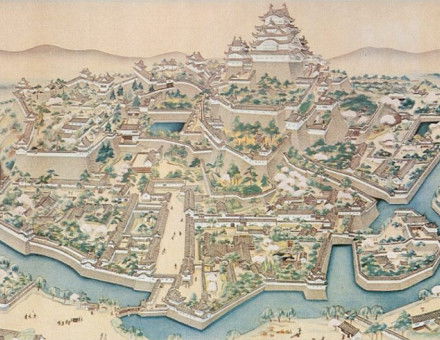
Japanese Castles

From the mid-sixteenth century onwards, Japanese feudal lords competed with one another in the construction of massive and imposing castles. Today many of them have been lovingly restored.