Cromwell and the Conquest of Jamaica
James Robertson investigates the Lord Protector’s ambitious plans for war with Spain in the Caribbean.
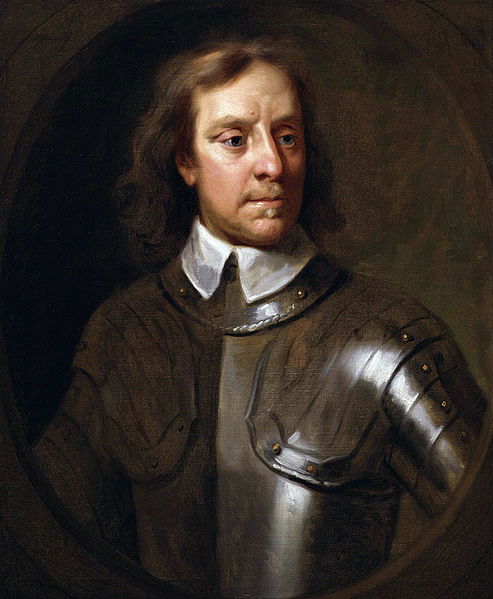 For historians today the only thing worse than an exercise in imperialist aggression is a mishandled exercise in imperialist aggression. May 2005 saw the 350th anniversary of the English conquest of Jamaica, which resulted in Jamaica's transformation by the 'sugar revolution' from a lightly settled pastoral settlement into a slaveoperated imperial profit-centre. These were long-term consequences of Oliver Cromwell's 'Western Design' - his attempt to seize the initiative against Spain in the West Indies; but were they intended?
Cromwell's attempts at a moral foreign policy appeared unpredictable then and have remained opaque since. His choices had already included a war with the Protestant Dutch, apparently over their insufficient zeal for religion as trading issues were hardly contested. In 1654, with the end of that war, peace offered Cromwell opportunites to intervene on one side or the other in the war between France and Spain.
Both sides feared his enmity. Perhaps because the Protectorate had hitherto appeared more hostile towards France, while Spain proved a major English trading partner, France's Cardinal Mazarin dangled tempting terms including Dunkirk. The further prospects of West Indian loot appeared very tempting too. During the summer of 1654 English diplomats requested access to trade in the Spanish West Indies, along with toleration for English merchants' religion, but were refused.
Cromwell also negotiated with the Portuguese, aiming to secure trading privileges for English merchants in Lisbon, permission for Protestant worship, and access to shipping charters between Brazil and Portugal. A treaty was drafted, though it remained unsigned. Cromwell's broader intentions remain uncertain but the development of the image of Britannia within the regime's iconography suggests wide-ranging imperial ambitions.
Cromwell's policy of attacking Spain's trade and treasure routes in the Caribbean and Central America drew on Elizabethan precedents that proved increasingly resonant in the mid-1650s when publishers seeking safe patriotic fare after two civil wars, found it in reprinting the exploits of Francis Drake and Walter Ralegh. When an English fleet sailed from Portsmouth in December, 1654, it was a military expedition, commanded by two generals. It was rumoured that the intention was to sail to Italy and seize Rome; in fact it would aim to seize a Spanish colony in the West Indies. It was not the first English squadron to sail to the Caribbean: in 1642, Parliament had authorised a raid under Captain William Jackson, and in 1652 Sir George Ayscue had seized Dutch and German merchantmen loading at the English island colonies in contravention of the English Navigation Act of 1651 which stipulated imports should be carried in English ships.
French and Dutch fleets had also recently ventured to the West Indies. France had sent a settlers to Cayenne (Guyana) in 1654. Although the Dutch West India Company principally targeted Brazil, the Company also launched expeditions into the Caribbean; most spectacularly, Admiral Piet Heyn had seized a Spanish plate fleet at Matanzas Bay in Cuba in 1628. The Spaniards responded with extensive fortifications, and in 1629 Spanish squadrons had returned to the eastern Caribbean islands, briefly expelling the recently-arrived English and French settlers from St Christopher's (Kitts) and Nevis and the Dutch from St Martin.
The English had held Barbados to the southwest since 1627, and by the 165Os sugar was beginning to make its leading planters wealthy; as well as a scatter of small islands in the Leewards: St Kitts, Antigua, Nevis and Montserrat. A decade earlier, ships had made occasional voyages into the western Caribbean where, between 1630 and 1641, the English colony of Providence off the coast of Nicaragua, had attempted to recover high overheads by combining planting and plunder, until it was ousted by a Spanish attack. Some English captains had also traded with Spanish settlements: even William Goodison, the Vice-Admiral of the outbound fleet, had previously sailed to Cartagena, now in Colombia, the principal Spanish port in the southwest Caribbean. By the early 165Os English mariners from Barbados and Bermuda were establishing new settlements in Surinam and the Bahamas but English sea-captains had retreated from the trans-Atlantic carrying trade. The civil wars in England had reduced demand for the islands' dyes and cotton, while London agents found themselves outpriced by Dutch competitors. Those skippers who did secure a profitable deal in the West Indies found their vessels tempting targets for privateers lurking in the English Channel. So, when the English fleet of the Western Design steered a well-established course into the western Caribbean, these were not routes that many English captains had sailed recently.
Cromwell's correspondence with John Cotton (1585-1652), the Puritan minister, millenarian, and advocate of the Parliamentary cause who had fled England to Boston, Massachusetts, in 1633, helped to shape his ideas. The original letters are lost, but evidence suggests that Cotton urged Cromwell to view a Caribbean venture as an opportunity to dry up 'the Spanish Crown's Euphrates'. The possibility for seizing a shipment of the South American silver, which provided the primary security for the loans sustaining Spain's armies was doubly appealing: pushing the Spanish Crown into bankruptcy would have military repercussions when Spain's credit was stretched to its limits, never mind the further hope that seizing a Spanish plate fleet could clear the Protectorate's own debts. However, as Cotton and Cromwell would both have recognised, the resonances of the Euphrates metaphor extended much further. Revelation 16:12 depicts the drying up of the Euphrates as marking the unsealing of the sixth seal of the Apocalypse. Cromwell's fleet may not have sailed for Rome, but overturning the papacy - and with it the forces of the Antichrist - by cutting off the supplies of silver to the papacy's 'under-propper' (as Cromwell described Spain), elaborated on widely-held millenarian dreams. These hopes were deeply woven into Cromwell's mentality, as can be seen in his parallel discussions of the possibility of readmitting the Jews to England, in which reports of Amerindian tribes in the interior of South America whose bearded white members might speak Hebrew, might be the Lost Tribes of Israel and might lead rebellions against the Spaniards, formed part of the dialogue.
The hopes for extending Britannia's sway also ranged widely because readers of Elizabethan tracts expected English forces to be greeted as liberators by tribes and slaves groaning under Spanish rule. All of which meant that Cromwell's ideologically motivated war against the Protestant Dutch, which may have included commercial aims, would be followed by an idealistic, and popular, attack on England's old Spanish enemy.
Whatever the expedition's goals, its results fell short. The fleet sailed as part of a larger naval deployment: one squadron, jointly commanded by General-at-Sea William Penn and General Robert Venables, was to engage the Spaniards in the West Indies, while a second, under Admiral Blake, sailed for the Mediterranean. Both ventures harked back to earlier English naval triumphs. Blake's squadron had limited goals, but its assault on Tunis was executed effectively and was followed by the Dey of Algiers signing a treaty and releasing English and Irish slaves. The 'Western Design' was far more ambitious, comprising an invasion fleet of around forty ships and 7,000 sailors, and aiming to create a strategic opportunity and undertake a vast land grab. Yet it was poorly organised and unlucky. Inefficient planning left it without equipment; supply ships from London took too long to catch up with the Portsmouth fleet. Venables and Penn bickered.
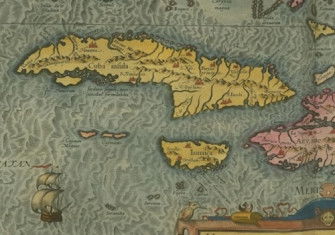
Once they reached Barbados in February 1655, there were several choices to be made. Before setting sail, several would-be advisors had sent memoranda to Cromwell urging possible strategies. If an English fleet arrived in the Caribbean with the largest European army hitherto seen in the New World, then the question was where to attack first and, where to go next. One of the most ambitious submissions had arrived from Thomas Gage, a former Roman Catholic friar and parish priest in Guatemala, now a Protestant minister, whose The English-American his Travail by Sea and Land, or, A New Survey of the West Indies, published in 1648, offered the most current reports of the Spanish territories then available in English. He recommended crossing the Caribbean to seize Guatemala. The invaders would have to climb the coastal mountains, but mule trains loaded with wine made the journey every year. Elaborating on the opportunities, Gage pointed out that Guatemala's garrison was small, its towns unfortified and the civilian population would not resist, while - with shades of Drake's ventures in the 1570s - the Indians, slaves and maroons (communities of escaped slaves) would all seize an opportunity to ally with the English. Then, after securing the territory by shipping in settlers from Barbados, the English army could march north into Mexico. If this proposal appeared too risky, the expedition could seize a West Indian island instead, and Gage recommended Cuba where Dutch landings offered precedents, or else the underpopulated island of Hispaniola.
These ambitious proposals were only some of the options available. Suggestions which Cromwell had considered from the settlers in Barbados looked towards the southern rather than the western Caribbean. One, from the Speaker of the Assembly, proposed sending a fleet south to clear the Spaniards from Trinidad prior to proceeding to the mainland, either to secure the pearl fisheries at Margarita and their coastal hinterlands - or else carrying out Ralegh's plans to proceed up the Orinoco and make an alliance with the indigenous Amerindians. A further letter, probably from the Governor, also recommended a southward course, either aiming again for the Orinoco - though this time bypassing Trinidad - or else undertaking a landing much further west, near Darien, where the expedition could expect to find Amerindian allies to provide guides for a march through the jungle and an assault on Cartagena from its landward side. This letter tacked on an invasion of Cuba as a further option.
Conversations just prior to the fleet sailing, between Cromwell and New Englanders visiting London, urged the capture of Hispaniola and raised hopes for recruiting settlers in North America. The secret could hardly be kept. Royalist observers, always fascinated by the Protector's schemes, noted the efforts to reinforce ships' hulls against the shipworms endemic in tropical waters, guessed that Cromwell was preparing a West Indian venture. Gossip in Madrid speculated he might aim wider still: for Madagascar, perhaps, or the River Plate or Puerto Rico.
In the event, it was left to the expedition's commanders to decide among the babel of alternatives once they reached the Caribbean, perhaps because Cromwell wanted the up-to-date views of the Barbadian members of the council of war to be taken into account.
All the suggested strategies involved invasions, and all the proposals recommending mainland landings took Amerindian support for granted. Even if unclear in its immediate goals, Cromwell's Design certainly intended to transform campaigning in the region by introducing a military force so large that it would overwhelm the existing garrisons. But while warships and crews were available after the conclusion of the Dutch War, soldiers were still needed for garrison duty in Scotland and Ireland. Undertaking an invasion therefore required raising further troops in the West Indies. In the 1650s English commanders could raise regiments in the Eastern Caribbean islands among whites who had completed their indentures in the sugar fields; Gage had estimated that the colony of Barbados might be able to spare 10,000 European men to settle an English Guatemala. This was feasible as the debilitating yellow fever was not yet endemic in the islands. These units might not serve for a battle with a European army, but that was never their mission.
The expedition stayed on Barbados for two months. The decision was now taken to attempt to repeat Drake's 1587 capture of Santo Domingo on Hispaniola, but when the fleet left Barbados the Western Design began its descent from ambitious proposal to a chapter of accidents. The attack on Santo Domingo failed. The ships carrying the troops had no pilot aboard and managed to overshoot Drake's landing spot. When the soldiers finally disembarked, thirty miles from the town, no Indians or slaves guided them. The invaders lost any benefit of surprise and a new Spanish governor gained time for preparations. Meanwhile Penn refused to risk his warships by bombarding the town, as Drake had done. Santo Domingo's walls had been heightened as part of the rebuilding program after the Dutch attacks in the 1620s and '30s, and when the English army finally arrived, they found the walls stretched taller than their ladders. Venables would not attempt a general assault. The retreat proved difficult. Militiamen had ambushed and sniped as the English approached. A charge launched on the English rearguard by a troop of African-Dominican 'cow-catchers' produced a rout. The survivors broke and ran, so did the next regiment. The casualties were substantial. Of the 9,700 men landed, 600 were killed, a further 200 were 'lost in the woods' - a death sentence for stragglers and deserters alike - and 300 more were wounded. Afterwards the army's regular officers tried putting the blame onto the locally-raised troops, but these were not the units that ran. The result was hardly what Cromwell and the armchair strategists had foreseen: a large English army landed in Hispaniola, found no local support, failed to seize its goal and was badly mauled by local forces. This was Cromwell's first defeat for a long time.
The remaining demoralised soldiers on half-rations found themselves victims of a fever picked up ashore. For such a bedraggled force, Jamaica, downwind and accessible from the south coast of Hispaniola, was, perhaps, the only Spanish island that could be attacked with any hope of success. The island had not featured in any of Cromwell's discussions before the fleet left England, and indeed most of the published material in English was 120 years out of date. Despite raids by earlier English attackers, most recently William Jackson in 1642, Jamaica remained the only one of Spain's island colonies not to have erected any new defensive works in the 1630s and '40s. Afterwards, the Columbus family, whose personal domain the island was, claimed that royal laws forbade their building unlicensed fortifications, but as absentee owners they always treated Jamaica as a source for income rather than investment.
When forty English ships entered its harbour on May 10th, and landed thousands of troops, the rickety stockade by the landing place was of little use. Furthermore, the invaders answered the challenge shouted from the shore with the cry 'fresh meat and pieces of eight,' suggesting that they were homeward-bound, coming 'to victual, plunder' and then 'be gone'. Instead, the English stayed. Once the local Spanish settlers realised this was an invasion, some undertook a prolonged resistance. Jamaica might offer a quick conquest but it would not prove an easy place to hold.
The English foothold remained uncertain for six years. Disease, food shortages and inexperience combined to make the possibility of a permanent English victory extremely unlikely. Eight months after the invasion, the few African-Jamaicans remaining with the English forces had to be chained up to prevent their running away. A stream of English and Irish soldiers attempted to desert to the Spaniards. These experiences were miles from the assumption that the Spaniards' oppressed subjects would rally to their English liberators.
Instead, the Spanish colonists' achieved their major success in resisting the English presence by establish an alliance with their former slaves, who were promised freedom and land in the name of Philip IV. Sniping and raids by maroon bands of these African-Jamaicans meant that the English soldiers found hunting and gathering so difficult they 'starved in a cook-shop'. Moreover, once the island's Spanish-born governor had surrendered and left the island for Cartagena, the remaining Spanish-Jamaican colonists rejected his treaty, sent their women and children to Cuba, hanged any fellow-colonists who might be communicating with the English and undertook a hard-fought resistance in co-operation with the maroons. The Spaniards established themselves as stay-behind parties, ready to secure a bridgehead for the Spanish invasion they assumed was imminent.
Philip IV made an active militia officer, the creole Christopher Ysassi, his new governor. Despite English naval patrols, Ysassi received reinforcements and supplies. Soldiers from other Spanish islands and then Mexico managed to land in Jamaica in 1657 and again in 1658. Nevertheless Ysassi's resistance failed. The English had no monopoly on tactical blunders and the governor in southern Cuba, who was supposed to coordinate support for the Spanish resistance, overrode Ysassi's recommendations. The reinforcements landed on the island's north coast -a short dash from Cuba but the wrong side of the island to surprise the English into a battle. Once disembarked, they found themselves facing Jamaica's rugged central mountains, so stayed at the stockades they erected by their landing points. These provided convenient targets for English attacks. Cromwell's officers may not have been prepared for a guerrilla campaign on a tropical island, but faced with a stockade they could mount an effective assault.
The turning point in the campaign for Jamaica did not come until 1660, when English patrols discovered the provision grounds for one of the maroon settlements. Its residents lacked the Spanish settlers' option of fleeing to Cuba, where any African-Jamaican refugees would be re-enslaved. With starvation the alternative, their leader negotiated. Juan de Bullas secured as good a deal as he could for his people. The English found an invaluable ally. Joint patrols took the offensive against the remaining Spanish hold-outs, attacking their base camp and killing a newly-arrived Spanish liaison officer. Afterwards Governor Ysassi sailed to Cuba. The hopes among the Spanish islanders that an outward-bound Spanish fleet would mount an attack as it passed Jamaica were never fulfilled. Here Philip IV overruled his Councillors, not wanting to chance the annual westbound fleet in an assault, risking the return shipments of American silver and, with his wars in Europe with France, with Portugal and with England.
The 'unfortunate enterprise of the Indies' was a long and miserable campaign that somehow resulted in an English conquest of Jamaica. But patrols and skirmishes in that island's mountainous interior had little to do with 'drying up the Spaniards' Euphrates'. Jamaica may have become one of the crown jewels in eighteenth-century Britain's transAtlantic Empire, but this long-term future was hardly obvious, either in 1655 or six years later, when the newly-reinstated Charles II chose not to return the island to Spain. The unexpected, ultimate success of the campaign leaves unaddressed Cromwell's own motives and assumptions in his Western Design.
The wider ambitions framing Cromwell's plans were reaffirmed in 1656 when well-connected projectors sketched schemes to found an English West India Company. The schemes did not get far but they testify to the continuing appeal of the Design's aim to cut off the Spaniards' cash. Ideas included an attack on Spanish silver fleets in the Pacific; alliance with the Portuguese in Brazil; and attacking the Spanish in Florida. But by now all the available English shipping was committed elsewhere and Cromwell resisted these invitations for mission-creep.
The newly captured Jamaica did provide an English naval base in the centre of the Caribbean, a 'dagger pointed at the heart of the Spanish empire'. During the rest of the 1650s, warships based in Jamaica undertook raids against Cartagena and then Stjago de Cuba. Indeed, the most substantial misfortune in 1655 may not have been the débâcle at Hispaniola, but Penn's subsequent failure to encounter the unusually large returning Spanish plate fleet. Mischance dogged this venture, with a ship catching fire and exploding while they cruised off Havana waiting for the plate fleet to sail. Despite Penn's careful husbanding of his ships, the fleet Penn led out from Jamaica never found the Spaniards.
The European component of Cromwell's original two-pronged strategy now became prominent because the Spaniards would not limit this war to American waters. Blake's prolonged cruising off the Spanish coast produced results, posing a threat to the Brazil fleet that pushed the Portugese to ratify their treaty with England in 1656. The following September an English squadron captured several ships, gaining forty-five tons of silver. In April 1657 Blake attacked the rest of the plate fleet as it sheltered at the Canary Islands. The battle secured between £600,000 and £700,000 of silver. This was impressive, but could not pay off the Protectorate's debts.
Naval historians see Blake's endeavours as a precursor of the eighteenth-century naval blockades, but Cromwell did not view the Caribbean as a sideshow and continued sending reinforcements and supplies to Jamaica. Sustaining the forces in the West Indies absorbed the largest share of the ballooning expenses of the continuing war with Spain. The original ambitions must be recalled to explain the proposals that kept arriving on his desk. In 1658 plans for a new expedition of 6,000 men - which never got beyond the drawing board - quoted a budget-bursting estimate of £37,316 9s 7d. More was involved than calculating the cost of throwing good money after bad.
For the Protector, the Design was never just a military adventure. A colony was intended from the start. Venables and some of his fellow officers took their wives with them. In the event the New Englanders who urged Cromwell to seize Hispaniola could not be tempted to abandon their rocky farmsteads for Jamaica. But in 1656 a contingent of planters did arrive from Nevis. However, fevers brought from Hispaniola, along with an unfortunate choice for a settlement site near coastal marshes, meant that most of these families soon died. When the wives of soldiers recruited in Barbados made their way to Jamaica many found themselves widows, and others were desperate enough to commit themselves to new indentures for a passage off this island death-trap. In this pessimistic atmosphere, the senior military officer in Jamaica, Edward D'Oyley, assumed that English diplomats would return the island to Spain whenever a treaty came to be signed, so discouraging further settlement or land distribution. D'Oyley's hunch proved wrong, but it points to the divergence between military evaluations and Cromwell's commitment to the project.
Back in London it was easy to overlook the realities. An entertainment staged at the Cockpit Theatre in 1658 depicting The Cruelty of the Spaniards in Peru ended with prophetic visions of an alliance with the English freeing the Indians:
A Symphony prepares the last change of the Scene, and an Army is discern'd at distance, consisting of English and Peruvians; the Van is led by the English, who are distinguished by the Ensignes of England, and their Red-Coats. The Rear is brought up by the Peruvians, who are known by their feather'd Habits, Glaves, and Spears. There is likewise discern'd a Body of Armed Spaniards, their backs turn'd, and there Rear scatter'd as if put to flight.
Audiences would see New Model Army soldiers allying with the Spaniards' maltreated American subjects. This was miles from the lack of guides that Venables encountered when he stumbled ashore in Hispaniola, never mind the military quagmire of the campaign in Jamaica, but such images remained persuasive.
The Commonwealth's participation in the Treaty of the Pyrenees in November 1659 between Spain and France finally ended Cromwell's war with Spain. But his millenarian dreams promoted appealing views of Protestant England's potential role in America, and these survived the Restoration of the Stuarts. The Western Design's anti-Spanish vision rallied support for Henry Morgan's blood-soaked raids in the 1670s and, in the eighteenth century, sustained popular enthusiasm for Admiral Vernon's and other commanders' assaults on Spain's empire. The uniforms might change; English preconceptions did not.