Family & Freedom: Black Families in the American Civil War
The newly-found voices of the slaves caught up in the American Civil War, and heard through letters to their families, are a testimony to their tenacity and unity in the struggle for emancipation.
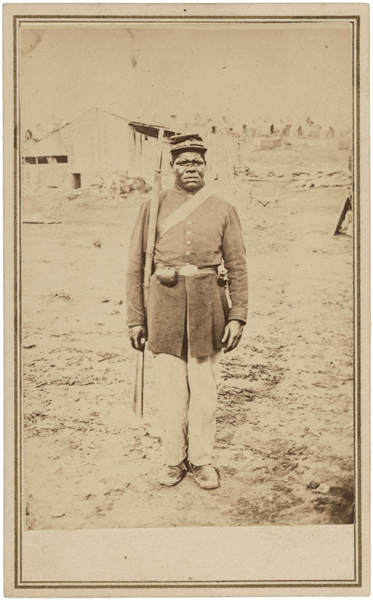
No event in, American history matches the drama of emancipation. More than a century later, it continues to stir the deepest emotions, and properly so. Emancipation accompanied the military defeat of the world's most powerful slaveholding class. It freed some four million slaves, a larger number than were emancipated in all other New World slave societies combined.

This article is available to History Today online subscribers only. If you are a subscriber, please log in.
Please choose one of these options to access this article:
- Purchase a online subscription and receive unlimited access to our archive for one week, one month or a year
- Purchase a print and website subscription, giving you one year's access to all our content and 12 editions of History Today magazine.
- If you are already a print subscriber, purchase the online archive upgrade for a year's worth of access at a reduced price
Call our Subscriptions department on +44 (0)20 3219 7813 for more information.
If you are logged in but still cannot access the article, please contact us
- Home
- Location
- Period
- Themes
- Magazine
- Subscribe
- Archive
- Ebooks
- Students
- Blogs
- Contact
Newsletter
From The Current Issue
|
Tim Stanley
|
|
Penelope J. Corfield
|
|
Jeffrey Richards
|
|
David Coke
|
From The Archive
|
The Hudson's Bay Company was one of the central forces moulding the development of the vast tracts of land that today are Canada - but as Barry Gough explains here, the circumstances of its launch in 1670 also reveal much about the commercial forces, personalities and rivalries of Restoration England. |
On This Day In History
Richard Cavendish recalls the death of the pirate William Kidd, executed on May 23rd, 1701.