
Jump to Navigation

Libya, Land of Myths & Demons

By David Winter | Published in History Today 2008 
Print this article   Email this article

David Winter visits a land beset for millennia by the fantasies of outsiders.

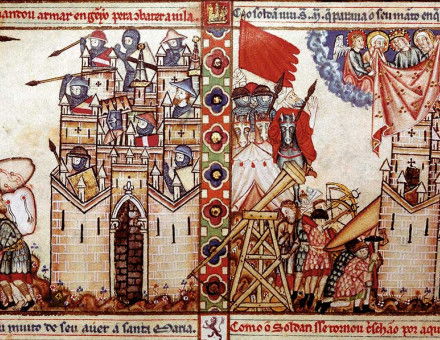
From antiquity to the present day, few countries have been so profoundly mythologized as Libya. According to the ancient Greeks, it was on Libyan soil that the giant Antaeus was cut down to size by Hercules, and it was near the Libyan town of Silene that England’s very own St George is supposed to have slain the dragon and secured the damsel. The fifth-century bc historian Herodotus claimed that ‘dog-faced creatures and creatures without heads, their eyes in their breasts’ stalked the land that we know as Libya.

But this tale-telling, ancient and modern, obscures an equally extravagant reality. Today’s visitor to the southern reaches of Libya can mingle with exotic animals or, a world away on the country’s Mediterranean fringe, tread in the footsteps of the Libyan who secured command of one of history’s most formidable superpowers.

When Lucius Septimius Severus (ad 145-211) wrested control of the Roman empire from Didius Julianus in 193, he became Rome’s first African emperor – and the last native-born Libyan to rule over his homeland until Gaddafi seized power in 1969. Leptis Magna, his birthplace, is alive with his memory.

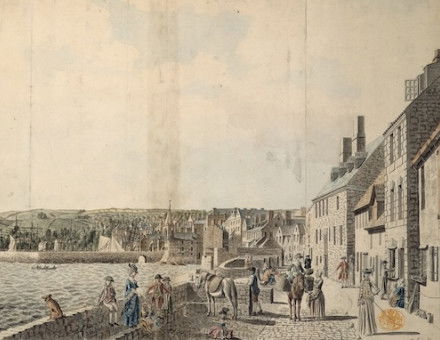
Leptis, or more accurately, Lepcis Magna, lies 130km east of the modern Libyan capital of Tripoli. The settlement probably began in the sixth century bc as a Phoenician trading post, its prosperity derived from the cultivation of olives. Roman expansion into Africa took off after the defeat of Carthage in 146 bc and gained impetus following Caesar’s victory over Pompey one hundred years later. Leptis itself remained a free state before emerging as a Roman colonia under Trajan in ad 110.

Already Leptis enjoyed the trappings of a thriving city: a theatre built under Augustus, a large Neronian amphitheatre, a circus dating from the time of Marcus Aurelius, and a richly adorned complex of baths – itself one of the highlights of any visit to Roman North Africa – commissioned by Hadrian. As Septimius’ star rose, so the wealthy African elite began to embellish Leptis with statues of Severus, – ‘defender of the world’, and his family. In time the city’s inhabitants would even style themselves Septimiani in honour of their native son.

But it was direct imperial intervention that propelled Leptis to greatness as Septimius embarked on one of the grandest building projects of antiquity. By the time Caracalla – his son and successor – had finished the ambitious scheme, the former Phoenician port was transformed. The heart of the city was monumentalized with colossal public structures: a new forum and basilica together with a resplendent nymphaeum and an ornate colonnaded street leading to a remodelled harbour complete with pharos. Though Leptis, like Septimius, was never entirely to lose its Punic accent, it had now assumed the appearance of a strategically planned, highly urbanized – Romanized – imperial city.

In its heyday Leptis held a population of around 80,000; one of its great pleasures today is its tranquility. It is quite possible to wander the entire length of the via colonnata, once lined with a double portico of 125 columns, in splendid solitude. An even greater treat is to spend an hour entirely alone, contemplating the majestic devastation of the Severan forum. Measuring 60x100m, the immense floor is carpeted with chunks of fallen masonry and slabs of superstructure. Strewn around one’s feet lie marble capitals from Greece and red granite columns from Egypt. Remnants of limestone arcading and blocks of white marble pavimentum vie for attention under the steely gaze of a giant, serpent-infested Medusa.

The forum is enclosed by colonnaded porticoes on three sides and by the remains of a lofty temple on the other. A passageway at the north-eastern corner leads, via a series of tabernae, to the basilica: over 90m long and 30m wide, the basilica’s lengthy naves, wide aisles and two-storeyed colonnades mesmerize even the most seasoned visitor.

Yet Septimius himself never witnessed the completed majesty of the complex. It was not finished until ad 216, five years after his demise. Indeed, Septimius was absent from Africa for almost the entirety of his reign, either governing from Rome or campaigning elsewhere in a vast dominion that stretched from Hadrian’s Wall to the limes Tripolitanus. His only visit to his native city as emperor took place in 203, when he would have been greeted by the same monumental structure that welcomes the visitor today: a four-way triumphal arch of marble and limestone at the junction of the two main streets. The arch’s Corinthian columns and pilasters, its intricate friezes and carved panels, all attest to the prestige of ‘a man the world could not hold’.

Far to the south of Leptis Magna lies the Fezzan, the former domain of the ancient Garamantes and the legendary reserve of Herodotus’ headless beasts. Even today, the journey from Libya’s Mediterranean littoral into the vastness of the Saharan is a daunting, intoxicating experience. Yet the Romans once marched across the very same terrain. It is possible that a mosaic found near Leptis records the final, brutal, chapter of one such expedition.

Travelling south from the Garamantes’ ancient capital one reaches the Akakus, a Saharan land of soaring dunes and colossal rock formations: rough arches, steep gorges and buttressed mountains. This remote terrain, inhospitable but ineffably beautiful, seems to confirm that Libya is a land beyond mythologization. Here roam the Tuareg, the nomadic, indigo-veiled descendants of the Garamantes, and here are to be found some stunning testimonies to human ingenuity: hundreds of rock carvings and paintings that date back at least 7,000 years.

Crocodiles and elephants, giraffes and buffalos stare out from remote rock faces in an arid, empty landscape where sustained existence is beyond credibility. There are also exquisite images of hunters with bows and arrows, stylized chariots and horses and incongruously pastoral scenes of cows being milked and domestic scenes of women washing their hair.

If Herodotus had explained their presence by suggesting that, once upon a time, in the middle of this most barren terrain there existed an immense freshwater lake, we would have dismissed his musings as yet more mythical concoction. But the proof is there: the traces of a vast body of water – baptized ‘Lake Megafezzan’ by scientists – have been detected in the middle of the desert, 420,000 years old and the size of England.

My own enduring memory from my last trip to the Fezzan has nothing to do with the complex techniques employed to uncover Megafezzan and similar Pleistocene lakes. Rather, it is of stumbling upon a group of Tuareg close to the border with Algeria and Niger. Here, amidst the dunes and oases, it was no surprise to encounter the typically Libyan virtues of diyafa and turath, hospitality and heritage, and to be invited to share a mint tea. Nor was it a surprise to discover that this band of Tuaregs was something of a musical brotherhood. To hear them sing – word perfectly – every last refrain of ‘she’ll be coming around the mountain when she comes…’: that rivalled any Herodotean legend!

David Winter is a Director of Studies at ACE study tours.


About Us | Contact Us | Advertising | Subscriptions | Newsletter | RSS Feeds | Ebooks | Podcast
Copyright 2012 History Today Ltd. All rights reserved.