

Police, Spies and Double Agents: Russia 1881-1914
Chris Corin exposes the huge apparatus created by Tsarist Russia to combat the threat of revolution.
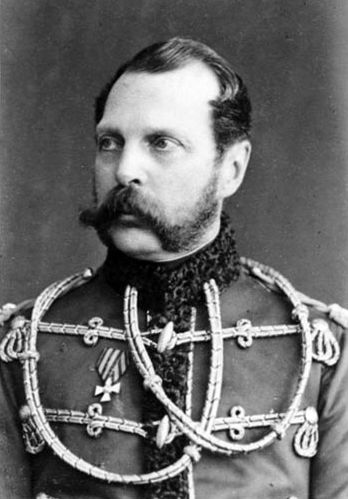 The People’s Will, which carried out the assassination of Alexander II in 1881, had a profound effect on both the revolutionaries and the authorities in the years before the 1917 revolution. Both revolutionary parties which developed at the end of the century – the Socialist Revolutionaries (SRs) and the Social Democrats (SDs) – can be considered the heirs of the People’s Will, while the assassination led to the development of new policing methods and an enhancement of the Okhrana, the secret police. Here we enter konspiratsia (world apart), a twilight zone where the worlds of the security police and underground activists met. It was an arena of police, spies and double agents, in which both sides acted stealthily to forestall the penetration of their defences while undermining the other’s operations. As one Russian writer put it, ‘One wonders who learned from whom: the Okhrana from the revolutionaries or the revolutionaries from the Okhrana’. This article is an exploration of how the police countered the revolutionary threat and the very significant impact their actions had on the revolutionaries, both before and after 1917.
Sudeikin and Degaev
Georgii Sudeikin, who was given responsibility for maintaining public order in St Petersburg in July 1881, illustrates konspiratsia. Expecting to be assassinated himself, he acted like an agent, with several aliases, passports and residences, wearing different uniforms and meeting contacts in hired cabs or suburban cottages. In 1879 and 1880 the People’s Will had managed to get one of their agents into the police department, and when he was unmasked in 1881 Sudeikin drew an important lesson. He decided that,rather than trying to deter revolutionaries by severe punishment, the police should destroy them from within. They should use information from captured revolutionaries to forestall their attacks, and at the same time they should sow confusion in their ranks by accusations that ‘the most dangerous revolutionaries were spying for the police’.
When revolutionaries had been arrested, after softening them up with a spell of solitary confinement and total silence, the friendly and courteous Sudeikin tried to persuade them to act with progressive elements in the government, like himself, for the good of the country. Throughout this period in fact most secret agents were recruited from the ranks of the revolutionary movement. In 1882 a prominent member of the People’s Will Sudeikin recruited in 1882 was Sergei Degaev.
Degaev was arrested after an underground printing press was found in his apartment. When he had been won over, he was released in January 1883 by means of a staged escape, and the information he gave led to a wave of arrests. The People’s Will were suspicious, and when Degaev was confronted and confessed his crimes they insisted that he murder Sudeikin as a partial penance.
Sudeikin was brutally murdered by Degaev and two accomplices in his flat in December 1883. Degaev then fled the country with his wife and ended up as Alexander Pell, the admired Professor of Mathematics at the University of South Dakota. His popularity among his students increased when he fought alongside them when rival supporters tried to steal the college football colours. ‘Jolly Little Pell’, as he was referred to in a campus newspaper, may have undergone a successful transformation, but Sudeikin’s fate shows the dangers of konspiratsia.
Zubatov
When Sergei Zubatov became Moscow Okhrana chief he had Sudeikin’s portrait hung in the office. Zubatov has been called ‘the mastermind of konspiratsia’ and for superiors and subordinates alike he was tsarism’s outstanding political policeman. Plehve, who had been in charge of the Okhrana in the early 1880s and was Minister of the Interior 1902- 1904, may have seen Zubatov as a reincarnation of Sudeikin with his innovative style, especially with his use of secret agents and sophisticated interrogation methods. Zubatov introduced photographic files and systematic registration of all political suspects. He took great care over the recruitment of security police, aiming to build up a body of honest, dedicated, educated men motivated by monarchist principles. The training course he introduced involved the techniques of conspiratorial work and education in the political doctrines of revolutionary parties. In his youth Zubatov had dabbled in revolutionary politics but soon developed pro-monarchical views and informed the Okhrana about the People’s Will before becoming a policeman. He knew the importance of secret agents and regarded his system for directing them as ‘devilish difficult’ to master.
He urged his men to treat each informant as a beloved woman with whom you have entered into illicit relations. Look after her like the apple of your eye. One careless move and you will dishonour her. Remember: the unmasking of an informant for you results in a slight setback to your career; for the informant it means civil, and often physical, death. Take this to heart: treat these people as I am advising, and they will understand your needs, will trust you, and will work with you honestly and selflessly … Never repeat the name of your informant to anyone, even to your director. Forget his true name and remember only his pseudonym.
At the end of the nineteenth century there were at most 200 permanent informants. Their number increased dramatically in 1902 and 1903, with the surge in revolutionary terrorism and political activity, and probably stood at roughly 500, costing roughly 200,000 roubles. Valuable long-term informers could earn up to 200 roubles a month, four times the wage of skilled metal workers. Few worked for longer than three years. Revolutionaries referred to informants as provocateurs, although few were agents provocateurs in the sense of encouraging or inciting revolutionaries to actions which would lead to their arrest. The police line was that agents were expressly forbidden ‘under any circumstances to engage in so-called provocation’; they were ‘secret collaborators collecting political intelligence’. However, it was difficult for agents to be completely passive and preserve their cover. Encouraging the publishing of revolutionary pamphlets could flush out printing presses, encouraging bombmaking could reveal bomb factories. If new cells were created, credit could be claimed for their discovery. Might it not also be necessary to encourage assassination?
Zubatov believed that repressive measures alone could not combat the revolutionaries and the appeal of socialism to the workers. The workers had to be convinced that their lives could be improved from within the existing system. This would be achieved by giving them trade unions and also educational and selfhelp organisations run by the workers themselves but supervised and partially funded by the police. Zubatov believed that the workers had to be led: ‘workers are not capable of being independent: they immediately fall under alien influences.’ His organisations would seek aggressively to implement social and economic reforms.
Zubatov put forward his ideas in a memorandum in 1898 and received the vital backing of the Grand Duke Sergei, governor general of Moscow and the Tsar’s uncle, and later from Plehve. Zubatov set up three unions in Moscow which submitted demands to their employers, who were then pressured by police representatives into making concessions to the workers. Police unions grew up elsewhere, notably in St Petersburg and Odessa. Zubatov’s greatest triumph was the orderly march of over 50,000 workers in February 1902 to the monument to Alexander II to celebrate the anniversary of the Emancipation of the Serfs. Even the revolutionary press acknowledged his success. Iskra carried 38 reports denouncing Zubatovism between 1901 and 1903; ‘it was more terrible to us than is police brutality’. Members of the government were worried too. Plehve’s deputy saw Zubatov as ‘the first revolutionary’ and found his schemes ‘fantastic in conception and harmful in results’. Others feared that he would politicise the workers and, in raising hopes that the Tsar could not satisfy, play into the hands of the revolutionaries. When a strike organised by police unions in Odessa escalated into a general strike requiring suppression by force, Zubatov was dismissed.
Historians have widely differing views on Zubatov’s strategy. Chris Read regards it as one of the self-inflicted blows which caused the 1905 revolution. ‘Wherever they were set up, Zubatov unions became a cover for radicals and blew up in the face of their sponsors.’ Jeremiah Scheidermann, on the other hand, points out that Zubatov’s programme was the only consistent labour policy emanating from government quarters. Yet an organised labour movement challenged both the traditional political structure and the industrialists. Zubatov’s dismissal showed, in Zuckermann’s view, that ‘it was impossible to be a liberal police chief in conflict-ridden Russian society’. In retirement, Zubatov remained deeply devoted to the monarchy.
The 1905 Revolution
When Zubatov left St Petersburg in disgrace in August 1903, among the very few who came to the station to see him off was the charismatic Father Gapon. The priest believed that the bond between the Tsar and his people could have massive appeal to the workers, and Zubatov had agreed to give him a subsidy. Gapon’s Assembly of Russian Factory workers was allowed to operate after Zubatov’s fall, and throughout 1904 the police regarded him as loyal and left him unsupervised. Yet by the end of that year he had become more radical. Although rejecting the revolutionary parties and remaining a firm monarchist, he was out of police control. Beryl Williams has argued that Gapon ‘had a real conviction of his destiny to improve the lot of the Russian working class and the label “police spy” was unfair, but he had no political strategy other than a reliance on the Tsar to help him.’ In January 1905 Gapon decided to petition the Tsar and march to the Winter Palace. The authorities feared deeply any mass demonstration designed to force political and economic concessions, but through a combination of callousness and mindlessness they failed to prevent the disaster of Bloody Sunday.
After ‘Bloody Sunday’ Gapon’s maverick tendencies came to the fore. Fleeing abroad, he was lionized by European society and flirted with the Social Democrats and then the SRs. In the autumn of 1905 he returned to St Petersburg, hoping to re-establish his worker’s organisation, and joined the SRs – but he still maintained contacts with the Okhrana. He confessed to the SR Petr Rutenberg, the very man who had marched next to him on Bloody Sunday and led him to safety, and offered him 100,000 roubles if he betrayed the SRs combat organisation to the Okhrana. When Rutenberg told the SR high command they immediately commissioned him to execute the now discredited catalyst of the 1905 revolution. Gapon was murdered in March 1906.
Some mystery surrounds the role of Envo Azef, the leader of the SR’s combat organisation and an Okhrana agent, in this murder. Authorities like Ascher speculate on Azef ’s motives: he could have been carrying out orders from the police who wanted Gapon removed, accommodating the SRs who considered him a traitor, or removing a man who knew that Azef was working for the police. Azef ’s biographer, Anna Geifman,disputes his centrality, pointing out that only after Azef ’s exposure in 1909 did Rutenberg begin to accuse him of having provoked Gapon’s murder.
Azef
Historians have been fascinated by Azef. Richard Pipes calls him the greatest double agent of them all. But was he actually a double agent? Was he playing a daring and financially profitable game, so that it is not possible to place him in either camp, or did he remain a police spy? Azef had a remarkably long, 15-year career. He became an informer, probably for financial reasons, in 1893 initially outside Russia, but was ordered back and quickly became Zubatov’s main agent among the SRs, penetrating the party’s centre and in 1903 becoming the overseer of the party’s Combat Organisation when it was at its most active. His first biographer, Nicolaevsky, claimed that while he provided information which led to arrests and failed terrorist acts he also arranged the murder of Plehve, the Minister of the Interior, in 1904, and Grand Duke Sergei, in 1905.
Nicolaevsky’s study was published in 1931 and has been followed by most historians. Nicolaevsky, a Menshevik, used left-wing sources mainly and these, combined with his own prejudices, painted a picture of a regime which was unscrupulous and engaged in shadowy, quasicriminal activities, using Azef as a pawn in blood-stained intrigues. Nicolaevsky contrasted this with the terrorist struggle, ‘a thing of great purity and beauty’. Seventy years later, however, Geifman has used recently available Okhrana archive material. She sees Azef ’s role as that of a typical spy and informer. An agent provocateur should provoke something, whereas Azef ‘far from inspiring or provoking terrorist activity, tried to talk people out of it’. He thwarted several assassinations through timely warnings to the police.
Geifman claims the assassination of Plehve was due to police incompetence as Azef had provided enough information to foil the attempt. Although he claimed the credit and his prestige reached new and unrivalled heights, Azef appears to have been taken by surprise. He was not in charge of the operation. Even J.W. Daly, who argues that Azef was a provocateur, admits that the Maximalists who split from the SRs in 1905 to carry out political terror independently and the armed squads who carried out most of the acts of terror associated with the SRs were ‘not under Azef’s watchful eye’.
After the assassination of Grand Duke Sergei, Azef met the new police chief regularly in a flat in St Petersburg and together they prevented any further assassination attempts on major figures until Azef ’s exposure in 1908. Azef was able to do this because in the SR party the leaders of the Combat Organisation had such a special position of honour and unbounded trust that he was not investigated. Indeed Burtsev was tried for slander when he first unmasked Azef. The evidence of a retired police chief acquitted Burtsev and exposed Azef. However, he eluded them, fleeing abroad with his mistress and eventually settling in Germany, where he died in 1918.
Whether Azef was a provocateur or not, all agree that his unmasking in 1908 was a devastating blow to the SRs and a mortal blow to the Combat Organisation. The central committee resigned and regional groups were thrown into disarray. Azef was a hero to the SRs, they trusted him unhesitatingly and were devastated. One member of the Combat Organisation wrote:
If the person we believed in as the best of friends, as a brother, turns out to be such a base traitor, does this not mean that it is no longer possible to believe in man altogether, that there is no truth in the world, that there is nothing worth living for? And if this is so, does it mean that no moral basis lies to life?
The idea of terrorism was so dominant and entrenched in the party that undermining it brought into question its entire operations. The exposure of almost two dozen more informers in the next four years fuelled the obsession with ‘provocateurs’. The deep divisions and the debilitating effect on the SRs were contributing factors to their failure in 1917. The party leader Chernov believed that Burstev’s relentless unmasking of traitors caused a mass exodus from the party.
Malinovsky
Lenin insisted that the revolutionary movement would triumph only if a ‘few professionals, as highly trained and experienced as our [security] police,’ were allowed to organise it. A tightly knit party built up in the image of the security police was the key. Hence the secret meeting places, forged passports, systematic vigilance against informants, secret codes, disciplined behaviour under interrogation, and aliases – Lenin himself had 150 of them. Nevertheless the Bolsheviks were thoroughly infiltrated by the Okhrana. Four out of five of the party’s St. Petersburg committee in 1908-9 were Okhrana agents and 1911 marked the pinnacle of spy-mania in Lenin’s opinion. The Bolsheviks took their own measures. A special three-man commission was set up in 1911 ‘to expose and isolate provocateurs’. It included Roman Malinovsky.
An admiring Lenin wrote of Malinovsky in 1912, ‘For the first time we have an outstanding leader from among the workers representing us in the Duma.’ Next to Zinoviev and Kamenev, Malinovsky was Lenin’s closest political confidant between 1912 and 1914 and inside the Duma he pursued Lenin’s line of keeping the Bolsheviks quite separate from the seven Mensheviks in an uncompromising way. Malinovsky was the only one of the six Bolsheviks who agreed with this policy. He did this because he was an Okhrana agent.
The Director of the Police Department, Beletsky, was determined to prevent the unification of the opposition and admitted that he employed Malinovsky to widen the split between the Bolsheviks and the Mensheviks. Beletsky supervised Malinovsky personally and paid him 500 roubles a month. Malinovsky was a heavy spender and had served three jail sentences for theft, but the Okhrana eased him into the Duma by falsifying documents to give him a clean past and arresting anyone who stood in his way. Lenin refused to consider the suspicions that he was a police agent and grew angry with those who did. Bukharin was convinced that his arrest at the end of 1910 was Malinovsky’s work and this was an abiding source of friction between Bukharin and Lenin until the police files finally established Malinovsky’s guilt in 1917.
In these files there are drafts of Malinovsky’s speeches with amendments in the handwriting of both Lenin and Beletsky. He submitted 88 reports on his SD colleagues between July 1910 and September 1913. Stalin, Sverdlov and Ordzhonikidze were among those Malinovsky had arrested, and he persuaded Lenin to appoint an Okhrana agent editor of Pravda. In 1913 Lenin, Zinoviev and Kamenev discussed Okhrana infiltration with Malinovsky and instructed him to be ‘as conspiratorial as possible’ to minimise the dangers of police penetration. Beletsky referred to Malinovsky as ‘the pride of the Okhrana’ and later ‘the Bolshevik Azef ’ and claimed that Malinovsky had shed more light on the revolutionary underground than any other police agent. By May 1914, however, Beletsky had been replaced and his boss, who hated undercover operations, decided that rising Bolshevik support might be undermined by exposing their best known and most eloquent spokesman as an agent provocateur. Malinovsky was sacked, resigned from the Duma, fled Russia – and visited Lenin. The Bolshevik leader still refused to believe that Malinovsky was a police spy and, at the Bolshevik commission of enquiry, he and Zinoviev confirmed Malinovsky’s political honesty. When Lenin returned to Russia in 1917 and read of Malinovsky’s guilt he went white with astonishment and said ‘What a scoundrel! He tricked the lot of us. Traitor! Shooting’s too good for him!’ After the revolution Malinovsky returned to Russia voluntarily, was put on trial and was shot.
Conclusion
In 1879-80 the security police were described by one of their opponents as ‘weak and disorganised … lamentable’. The situation soon changed. The Okhrana were the best secret service of their day. Molotov, a leading Bolshevik, admitted that they worked excellently and that ‘they had smarter people than ours’; and historian Simon Sebag Montefiore compliments their thoroughness and imagination. Typically, when SR terrorists in 1909 considered flying a dynamite- packed biplane into the Winter Palace, the Okhrana ordered the monitoring of all flights, as well as of people learning to fly and members of aeroclubs. They were well ahead of the FBI and CIA nearly a hundred years later.
Yet the Okhrana could not prevent the major upsurge in terrorism in Nicholas II’s reign. As well as the high profile assassinations mentioned, 3,600 government officials were killed or wounded during 1905. One official wrote: ‘Every day there are several assassinations, either by bomb or revolver or knife, or various other instruments, they strike and strike anyhow and at anybody … and one is surprised that they have not yet killed all of us.’ Even so, the Okhrana did have a profound negative impact on the revolutionaries. The effect on the SRs has been mentioned already, and the widespread penetration of the Social Democrats destroyed morale and comradeship. It ‘made everyone suspect everyone else’, and an SD leaflet described this fear as ‘an extremely noxious poison which seeps into all the pores of the organisation, kills all its tissues, and eventually paralyses its activities.’ The effect was lasting. Leggatt in his history of the CHEKA writes: ‘Its founder members, seasoned ex-revolutionaries, had absorbed the arts and crafts practised by the Okhrana and took them to a new plane.’ Simon Sebag Montefiore argues that the Okhrana ‘were so successful in poisoning revolutionary minds that … thirty years after the fall of the Tsars, the Bolsheviks were still killing each other in a witch hunt for non-existent traitors.’ Molotov, who in his retirement always justified Stalin’s terror, said, ‘We never forgot the agent-provocateur Malinovsky.’
Issues to debate
- What strategies were pursued by Tsarist agents from 1881?
- How successful was the Okhrana in this period?
- Why could the Okhrana not prevent revolutions in 1917?

