
'Soldiers Are We': Women in the Irish Rising
Charles Townshend has read hundreds of 'witness statements' from the men and women who took part in the Easter Rising, made available to the public in 2003 after decades in a government vault.
Charles Townshend has read hundreds of 'witness statements' from the men and women who took part in the Easter Rising, made available to the public in 2003 after decades in a government vault.
Geoffrey Hosking looks at the place of Russia within the Soviet Union, a position fraught with paradoxes that still resonate today.
Peter Neville says that Bush and Blair failed to draw the proper lessons from Munich 1938 when they raised the spectre of Chamberlain and appeasement to justify their war against Saddam.
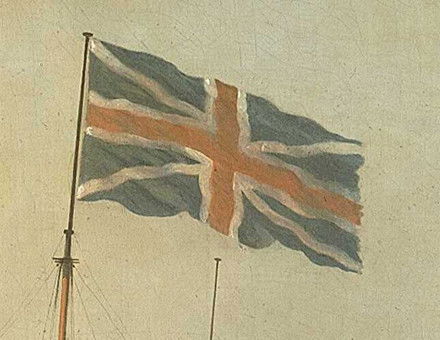
Richard Cavendish marks the anniversary of King James I's creation and proclamation of a union flag, on April 12th, 1606.
Linda Kaye describes a project to make accessible to the public the history of a series of ‘cinemagazines’ made by the Government in the 1950s and 60s to promote Britain overseas.
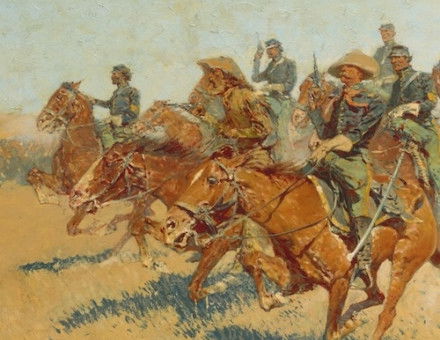
The expansion of the United States in the mid-19th century had a catastrophic effect on the Native Americans of the Great Plains.
Krista Kesselring describes how coroners in the Early Modern period tried to establish the cause of death in disputed cases.
Michael Hunter, an authority on the natural philosopher Robert Hooke, describes his excitement at the recent discovery of an unknown manuscript in Hooke’s hand. He explains its significance and why every effort should be made to keep it in Britain.
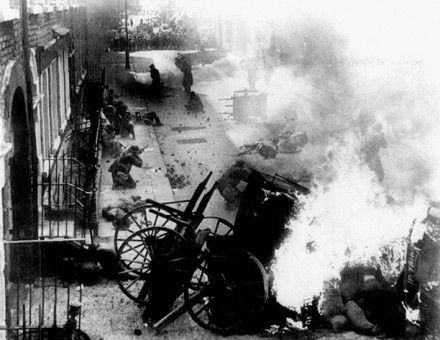
Anthony Fletcher uses the papers of his artistic great-aunt, who, as a young nationalist, wrote an eyewitness account of the Easter Rising, to explore her youthful patriotism and vigorous activism.
Juliet Gardiner reviews the current exhibition at Tate Liverpool that celebrates the British flair for documentary film-making.