

The Beginning of Greek Thought: Heracleitus
At Ephesus during the fifth century B.C., writes Colin Davies, the philosophy of Heracleitus combined elements from Eastern visionaries and from Greek rationalism.
At Ephesus during the fifth century B.C., writes Colin Davies, the philosophy of Heracleitus combined elements from Eastern visionaries and from Greek rationalism.
Leonard W. Cowie traces the development of a peculilarly English legal institution, from the pre-Reformation era, into Dickensian times.
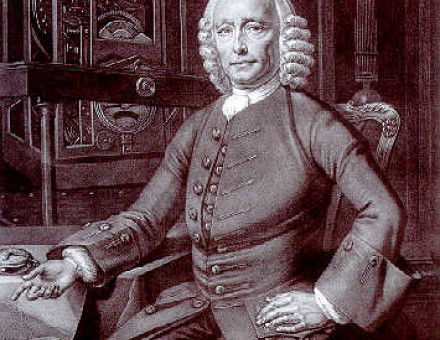
John F. Bailey describes how all early navigators, until the mid-eighteenth century, were baffled by the problem of longitude in finding their ships’ position.
Michael Paffard opens for the visitor Thomas Tusser’s books on husbandry, which expounded the practical virtues of ‘thrift’ to Tudor farmers.
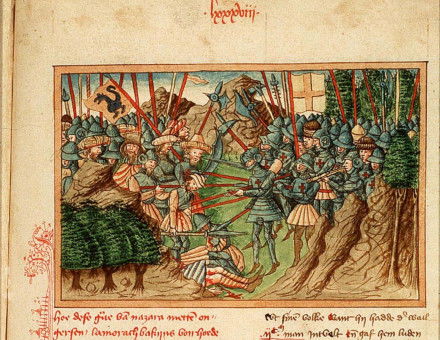
For Serbs the 1389 Battle of Kosovo was a physical defeat against the Ottoman Turks, but a moral victory that formed the backbone of Serbian national identity.
Four years after William I's conquest of England, writes J.J.N. McGurk, a Lincolnshire thegn named Hereward led a fierce resistance movement against Norman rule.
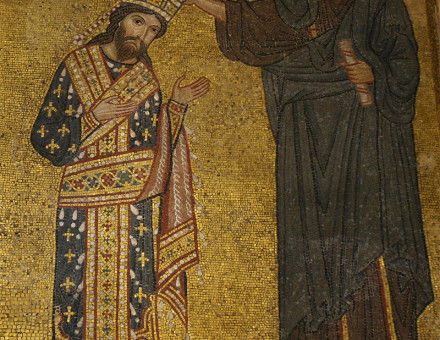
This cultured but energetic ruler left behind him ‘a governmental machine that was the wonder and envy of Europe’.
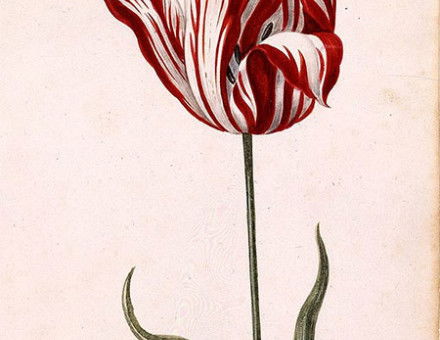
Stephen Usherwood describes how, in 1544, reports of a marvellous new flower, the tulip, first reached Western Europe, where it soon aroused a ‘fever of excited speculation’.
Joseph M. Levine introduces the modern historians' forerunners; the men who invented the techniques and defined the problems of studying the past.
Throughout his long life, including his years in Russia, Ribeiro Sanches kept in touch with ‘Men of Reason’ in many European countries.