

Travels Through Time: Ruthlessness and Richard III
Our latest podcast looks at the rise and fall of the House of York in 1483.
Our latest podcast looks at the rise and fall of the House of York in 1483.

Chris Skidmore praises Colin Richmond’s 1985 article, which offered a new theory, later confirmed, about the true location of one of the most famous battles in English history.

K.R. Dockray introduces a West Riding family of Percy retainers, whose land-holdings suffered from the Wars of the Roses and from legal disputes.
Albert Makinson assesses the rival party claims of Lancaster and York, which afforded the pretext for a blaze of plebeian discontent and patrician lawlessness that filled England for the next one hundred and fifty years with a profound horror of civil war genealogy of the ruling family, and fewer still in the principles of parliamentary democracy.
David Williams traces the Welsh heritage of England's greatest monarchy to medieval times and the Wars of the Roses.
L.W. Cowie explains how the Hansard merchants from northern Germany maintained their own Community in London from medieval times until 1852.

Derek Wilson discusses the future Henry VII's years in exile, and how this influenced his exercise of power after he seized the English throne.
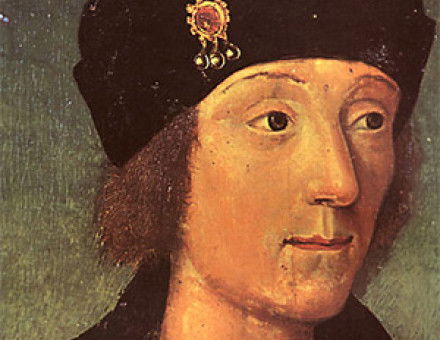
Derek Wilson looks at Henry Tudor’s long period of exile and asks what influence it had on his exercise of power following his seizure of the English throne in 1485.

Linda Porter is unconvinced by the claim that the discovery of Richard III's remains could "rewrite history".

The ‘biggest, bloodiest and longest battle on English soil’ was fought at Towton in Yorkshire on Palm Sunday 1461. Its brutality was a consequence of deep geographical and cultural divisions which persist to this day.