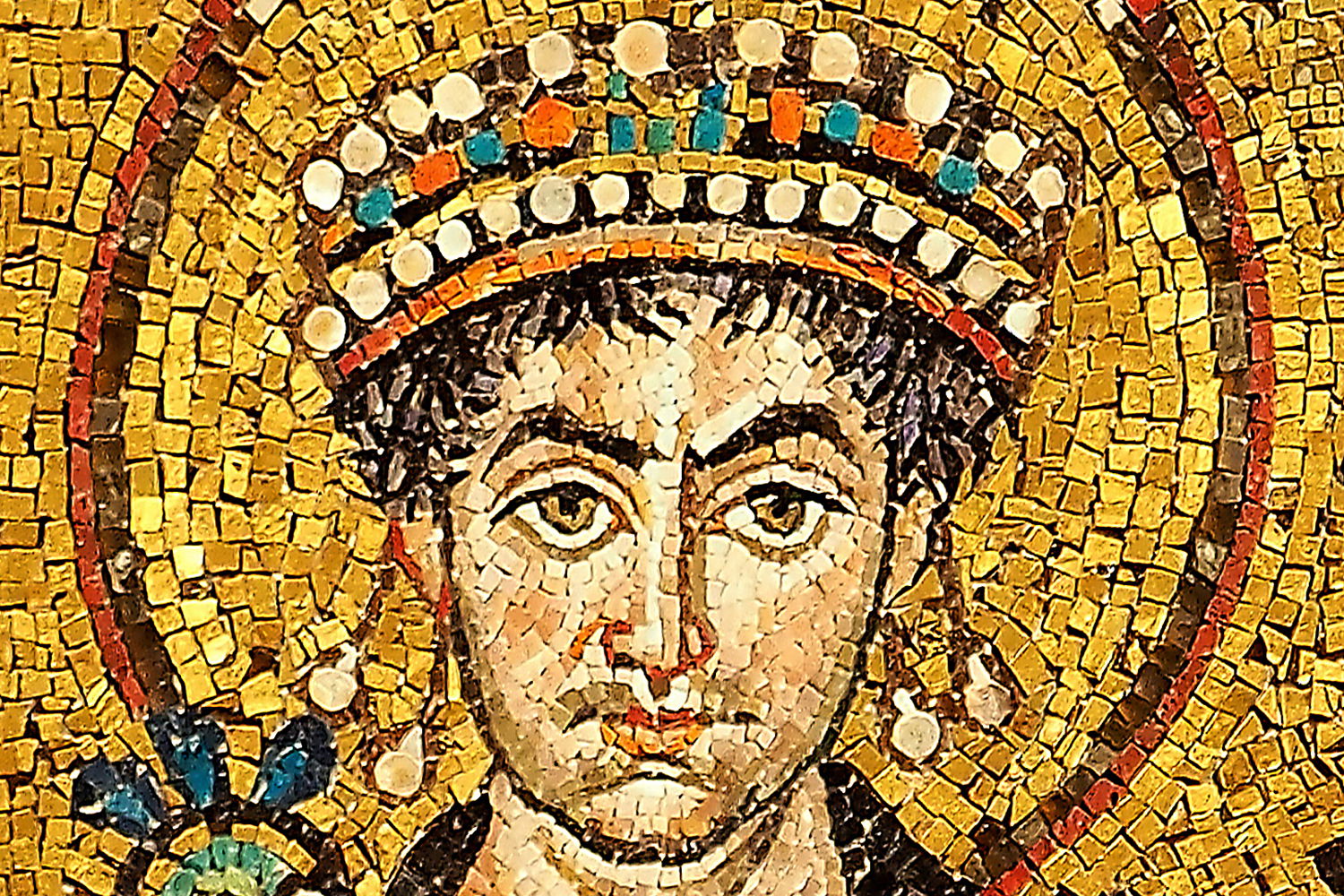
Byzantine Empire
|
Empire of western Asia and southeastern Europe, named for Byzantium, the Greek name of its capital Constantinople. Formed from the eastern Roman empire and lasting until the 15th century, it... read more |
|
EDITOR'S CHOICE
Alexander Kazhdan considers the influence of totalitarianism and meritocracy in the Byzantine empire – and its relationship to the growth of the Russian and other successor states in the East. |
To read any piece marked
, you'll need a subscription to our online archive
|
Christian Byzantium and the Muslim Abbasid caliphate were bitter rivals. Yet the necessities of trade and a mutual admiration of ancient Greece meant that there was far more to their relationship than war, as Jonathan Harris explains. Published in History Today, Volume: 63 Issue: 2, 2013
|
|
Five hundred years ago Constantinople—long a bastion of the Western world—fell to the armies of the Grand Turk. G.R. Potter gives his account of how the last remnants of the Byzantine Empire finally disappeared. |
|
The popular image of crusading is derived almost entirely from western accounts of the victorious First Crusade. Yet when historians examine Byzantine sources about the campaign a very different picture emerges, argues Peter Frankopan. |
|
The quest for spiritual virtue through personal austerity drove many Eastern Christians to lead solitary lives as hermits surviving in the wilderness. Andrew Jotischky describes how indifference to food became an integral part of the monastic ideal in the Byzantine era, one revived in the West in the 11th and 12th centuries. |
|
The building of Istanbul’s new underground railway has uncovered thousands of years of history, including the first complete Byzantine naval craft ever found. Pinar Sevinclidir investigates. |
|
Dionysios Stathakopoulos surveys the history of the Byzantine Empire from its foundation in 324 to its conquest in 1453. |
|
Marius Ostrowski explains why the Church was so dominant in the Middle ages, but also sees traces of a growing secularism. Published in History Review, 2006
|
|
Jonathan Phillips sees one of the most notorious events in European history as a typical ‘clash of cultures’. |
|
Richard Cavendish describes the Battle of Civitate, fought by the Normans and a papal coalition on June 18th, 1053. |
|
Judith Herrin tells the dramatic story of the final moments of Byzantine control of the imperial capital. |
|
Anthony Bryer considers the life and work of this great historian, who died in November 2000. |
|
Archaeologists in Turkey believe they could have unearthed some of the remains of the Great Palace of the Byzantine Empire which ruled much of the known world for nearly a thousand years from the heart of Constantinople. |
|
Penny Young details the archaeological work being carried out to save an early Christian church on the Black Sea coast.
|
|
Nicholas Soteri reflects on the early religious controversies of Eastern Europe, focusing in particular on an often overlooked kingdom, the Khazar.. |
|
Archaeological wonders in the Mediterranean |
- 1 of 2
- ››
- Home
- Location
- Period
- Themes
- Magazine
- Subscribe
- Archive
- Ebooks
- Reviews
- Blog
- Contact
Related Blog Posts
|
In this episode, Jonathan Harris examines the relationship between the... |
|
A gallery of objects on display at a major new exhibition at New York's... |
Book Reviews
|
A book review by Clive Foss. |
|
Charles Freeman surveys a scholarly study of the Byzantine emperor, Heraclius.
|
|
Paul Stephenson assesses three very different approaches to the eastern half of...
|
|
Two new books on medieval Mediterranean history |
From The Current Issue
|
Richard Weight
|
|
Santiago Martínez Hernández
|
|
Adrian Mourby
|