Jump to Navigation

Downton Abbey: Nostalgia For An Idealised Past?

By Jerome de Groot | Posted 19th September 2011, 9:02
Print this article   Email this article

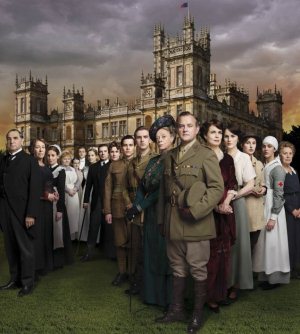
The cast of 'Downton Abbey'The new series of Downton Abbey, which began on Sunday 18th September, promises new revelations and the slow breaking apart of the institutions of the aristocracy due to the threat of war. The first series was a huge and unforeseen hit, with up to 10 million viewers in the UK and good figures abroad (and the DVD boxset has also sold healthily). This is really unparalleled for a costume drama since the heady days of Brideshead Revisited in the early 1980s. Why? What was it that made this particular series quite so attractive to viewers?
The series had some interest in ruffling the nostalgic view of the pre-war Edwardian period. The aristocrats were more interesting than normal (patrician in the best possible way, interested in their staff, concerned about politics and statecraft) as well as vulnerable (both bodily, as seen with the miscarriage suffered by Cora, but also as an institution, as seen by the sudden inheritance crisis that is a consequence of the death of the direct heir on the Titanic). Below stairs, the staff were a mixed bunch. Some were insufferably nice; some nicely evil. They all reflected upon the strange symbiotic relationship they were in with each other and the family they served.

The sanctity of the country house as ordered, harmonious and class-bound was never really challenged, and, indeed, the audience cheered when the various selfish and evil characters were sent on their way by nicely loyal folk who knew the value of their place. Whilst the series played with Irish politics and the suffragette movement, and dutifully showed ‘other’ identities (homosexuality, female sexuality, middle-class identity, the development of a medical provision) it shied away from any kind of critique of English society.

Particularly absent was the British Empire (in contrast, BBC’s remake of Upstairs, Downstairs was pitiless in its presentation of fascist sympathising amongst the upper classes in the 1930s). The Boer war was mentioned but there was little else to suggest that the series was really interested in comprehending the historical otherness and strangeness of the early part of the 20th century. Sometimes the action became sub-Jeeves and Wooster (particularly the moving of a corpse from one room to another in the dead of night).

Heritage television such as this is regularly criticised for engendering nostalgia about an idealised past. In a classic critique, the film scholar Andrew Higson suggested that such work as was made in the 1980s served to present a conservative Englishness that never existed. Whilst his position has been modulated, this kind of criticism lingers. It is unarguable that Downton Abbey presents a kind of lovingly rendered, uninterrogative version of the past. The most celebrated moments come when Maggie Smith’s arrogant Dowager Countess dismisses the horrible workings of the modern world (‘What is a weekend, exactly?’).

Whilst it is something of a cliché to see the period before the war as an end of an era of class-based privilege, it remains the case that the onset of war will put the cosy world of Downton under interesting pressure. Whether it will allow the series to have anything particularly profound to say about the past remains to be seen.

Tags:

About Us | Contact Us | Advertising | Subscriptions | Newsletter | RSS Feeds | Ebooks | Podcast | Student Page
Copyright 2012 History Today Ltd. All rights reserved.