Jump to Navigation

President or King?

Print this article   Email this article
How the Republican triumph over the Federalists in the fiercely fought US elections of 1800 was due to skilful appropriation of the American Revolution to partisan ends

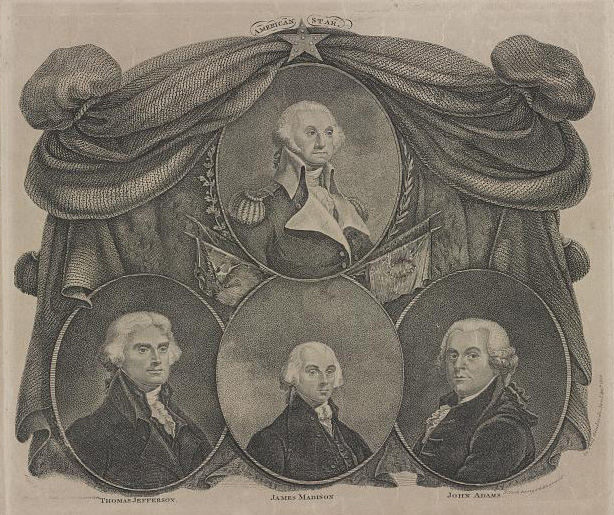
As the media frenzy surrounding the approaching US presidential election reaches a climax, the historically-minded may wish to cast their minds back 200 years, to the election of 1800. That election appears essentially modern in its forms and practices. Two surprisingly well defined political parties, the Federalists and Republicans, submitted competing tickets to the democratic will of a broad (albeit white male) electorate. Party structure, although paling in comparison with today’s organisations, was sufficiently robust to ensure energetic attempts at voter mobilisation, with urban-based central committees co-ordinating partisan activity through communication with statewide local elites and politicos. Above all, America’s burgeoning print media furnished party activists with an ideal means of getting their message to a dispersed population. By the end of the eighteenth century America not only had the largest circulation of newspapers per person in the Atlantic world, but possibly the most partisan as well. As Thomas Jefferson, the Republican presidential candidate in 1800, observed in 1799, ‘The engine is the press’.

Closer inspection, of course, reveals many differences between the political culture of 1800 and that of the present day. Popular deference towards elites, arguably declining everywhere, remained high, though uneven across the states (greater, for example, in Virginia than in Pennsylvania); women and African Americans only infrequently invaded political space in anything other than a passive role; the clergy, especially in New England, remained an important and at times intemperate source of political cues, frequently incurring the wrath of secular opponents; and slavery restricted the legitimate forms of partisan celebration in those areas of the South where whites comprised a self-conscious minority. Beneath the modernistic forms and practices of electoral politics, therefore, late eighteenth-century American political culture retained much that was pre-modern.


 This article is available to History Today online subscribers only. If you are a subscriber, please log in.

Please choose one of these options to access this article:

Call our Subscriptions department on +44 (0)20 3219 7813 for more information.

If you are logged in but still cannot access the article, please contact us


About Us | Contact Us | Advertising | Subscriptions | Newsletter | RSS Feeds | Ebooks | Podcast
Copyright 2012 History Today Ltd. All rights reserved.