
Who Killed Jan Masaryk?
Robin Bruce Lockhart looks at the Anglophile his father knew and discusses new theories on how he died and why.
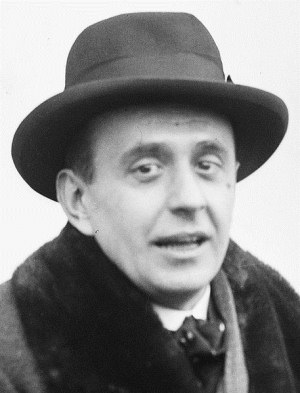
September 14th this year, is the 53rd anniversary of the death of Thomas Masaryk, founder of Czechoslovakia. Coincidentally, it is also the 106th anniversary of the birth of his son Jan. And, on this very special day, I shall be in Prague to receive the Historic Medal posthumously awarded to my father, Sir Robert Bruce Lockhart KCMG, much of whose life was spent doing battle on behalf of Czechoslovak causes; initially in 1920 as a member of the first British Legation in Prague, then as a director of the Anglo-Czechoslovak Bank. In the early days of the Second World War, as Foreign Office Representative to Dr Benes' provisional government in London, he fought and obtained official recognition for it and, as Director General of the Political Warfare Executive, helped sustain Czechoslovak internal resistance to the Germans. After the Communist coup of February 1948, he kept alive Czechoslovak hopes for a return of freedom by broadcasting to the country once a week for seventeen years. Although forbidden to listen to him – and some were gaoled for doing so – it was said that the streets of Prague were empty at the time of his broadcasts. I go to Prague with both pride and humility.

Thomas Masaryk was a philosopher and a deeply spiritual man who would frequently stress the need to place Jesus before Caesar in the political jungle. In Plato's Republic kings were philosophers; Thomas Masaryk was a philosopher who was almost a king. A man who did not know how to lie, my father described him as 'the most inspiring moral force with which I have come into contact'.
It was the 1920s which saw the birth of a friendship between my father and Thomas Masaryk's son, Jan, which ripened over the years into a love such as exists between brothers, greatly cemented by their shared grief at the eternal shame of Munich when Chamberlain referred to Czechoslovakia as that 'small far away country of which we know nothing'. In the spring of 1939, Nazi troops marched into Prague and Hitler declared: 'Czechoslovakia has ceased to exist'. Jan Masaryk was to devote the rest of his life fighting to bring back that Czechoslovakia which his father had created.
After spending his youth in the United States as a steel worker, on the creation of Czechoslovakia Jan Masaryk joined his country's diplomatic service, working for two years in Washington and London before taking up a post in the Foreign Ministry in Prague. His long association with Britain began in 1925 on his appointment as Czechoslovak Minister in London. His charm found him friends at all levels and his wit as a raconteur and ability to sing and play the piano made him the life and soul of many a party. To one and all – even his valet – he was simply known as 'Jan'. On top of everything else, he was a brilliant linguist.
Jan's love for the British even found him providing excuses for Munich. He was to say:
In spite of what they did to us at Munich, they are, I think, more reliable than other people. I would he infinitely happier in Manchester on £4 a week than as a general in Madrid or as a member of the Supreme Soviet with thousands of roubles and a house in the country.
It was not until July 1941 that my father's efforts were successful in gaining full recognition of the Benes government in exile. Accompanying Foreign Minister Jan Masaryk to the Foreign Office, there were tears in Jan's eyes as he thanked Anthony Eden for the full recognition. In his diary, my father wrote:
Mr. Eden, who, feeling embarrassed cut him short. 'I've done very little', he said, 'but you owe a great deal to this fellow here'. He pointed at me. When we came out into the corridor Jan put his arms around me and kissed me on both cheeks in front of the Office-Keeper.
His objective for Czechoslovaks in exile achieved, my father was appointed director-general of the newly created Political Warfare Executive (PWE) which aimed through overt and covert means to support resistance in occupied Europe and undermine German morale. Much of its work remains secret to this day but among its achievements were the fostering of some superb influential broadcasts by Jan Masaryk to his country.
In April, 1945, Benes and Jan Masaryk were off on the via dolorosa to Moscow to treat with Stalin who had banded together a collection of pawns – exiled Czech Communists – destined for key posts in a post-war Czechoslovak government to do his bidding. Jan detested the later-to be premier, Clement Gottwald, on sight. Worse was to follow when, contrary to Allied assurances given to Benes, General Patton, on its doorstep, was refused permission to liberate Prague. On May 9th, 1945, the Soviet army marched into the capital while Stalin claimed that the Red Army was exclusively responsible for liberating Czechoslovakia.
It was early in 1944 that I myself had my first of several encounters with Jan. The first occasion was while I was on leave from the Royal Navy and over a lunch at Benes' house. Although Jan was always deferential to the president, I was struck by the contrast between the seemingly cool and rather calculating Benes and the almost overwhelming charm and vivacity of Jan. The last occasion we met was in August 1945 on the eve of VJ Day at a small dinner party to celebrate the end of all hostilities. Jan, who had been in Prague earlier in the year, spoke of the cooling of Czech enthusiasm for the Russians and of the common sense of the Czechoslovak people which he was sure would prevail. His somewhat ebullient optimism was sadly misplaced.
After two years in which he spent much time in the US as Head of the Czechoslovak delegation to the UN. Jan was back in Prague as foreign minister. When my father went to stay with him in May 1947, he found him pessimistic over the lack of economic aid from the West – Stalin had vetoed Czechoslovakia's participation in the Marshall Plan – but optimistic that the Communists were losing ground. In September of the same year, a clumsy attempt to assassinate Jan, with a bomb in a parcel marked 'perfume', failed; it had been organised by Minister of the Interior Gottwald's son-in-law. On a subsequent visit to New York, Jan was strongly advised not to return to Prague. Jan replied: 'I know that "they" will kill me but I must return'. The last time my father met Jan was in December of that year. Jan's parting words referred to the Communists ('We'll beat the bastards yet!') he said.
Two months later, in February 1948 came the Communist coup. After first filling senior police posts with Communists, Gottwald and his fellow lackeys of Moscow took over the reins of government. 'Action Committees' went to work purging opposition everywhere. At the request of Benes, the non-party Jan Masaryk stayed on as foreign minister in the hope of preserving some elements of democracy for a stunned and fearful people.
Only days after the coup, my father received a message from Jan, from a source which he could not reveal 'for security reasons’, of his intention to get out and on March 8th, the American writer Marcia Davenport, who was deeply in love with Jan, arrived in London from Prague sent by him with a similar message to my father. At 5am on March 10th, Jan was found lying dead in his pyjamas in the courtyard below a window of his apartment in the Czernin Palace. More than anything else, his death brought home to the Czechoslovak people the loss of their liberty.
There is no evidence to support Communist claims that Jan Masaryk committed suicide following criticism from friends for staying on in the new government. And, while it has been said that Jan was subject to a melancholic disposition at times and therefore liable to commit suicide, he always bounced back quickly from such temporary 'black' moods. In any event, my researches while working on a biography of Jan's life and also while assisting in the research for Brook Productions Channel 4 television documentary Death of a Democrat have revealed that alongside evidence of Jan's intention to escape stands a pile of medical and other evidence – some admittedly circumstantial but totally damning – that he was murdered on instructions from Moscow.
Marcia Davenport said she knew Jan was getting money out of the country. On March 9th, he lunched with Benes when, according to another guest – Dr Klinger, Benes' personal physician – he said he was through with the 'whole dirty business' of working with the Communists and was determined to get out. Count Max Lobkowitz, former Czechoslovak ambassador in London, learnt from Heydric, head of the Czechoslovak Foreign Ministry that Jan had made 'all his plans to escape': he had only to do so at some international conference. Jaroslav Smutny, head of Benes' Chancery, had been with Jan less than twenty-four hours before his body was found and noticed nothing in Jan's manner pointing to suicide. Indeed, he accepted an invitation to lunch from Madame Smutny for a few days later.
With Benes broken in health and spirit, Jan Masaryk with his immense popular appeal was Moscow's only serious opponent in Czechoslovakia. 'It is obvious', my father wrote, 'that if the Communists had discovered Jan's intention of leaving the country, they had every motive for silencing him for ever'.
Evidence abounded that here was another case of Soviet murder made to look like suicide. Dr Teply, who first examined the body, told Smutny that the post-mortem on Jan had not been carried out properly; Teply himself 'committed suicide' in a police station shortly afterwards. Dr Hajek who signed the autopsy certificate did so under duress. The considerable disorder in Jan's apartment showed signs of a major struggle. Expert independent medical opinion considered that the nature of the injuries to the body could only have arisen had Jan been pushed as opposed to having jumped. Virtually all those present at the Czernin Palace on the night of death 'disappeared' one way of another. Some of those who suggested it was murder were gaoled and several executed.
Any British jury would have brought in a verdict of murder but against whom? The debate still goes on, but my investigations lead me to believe that it was organised by a Moscow trained NKVD Sudetan Czech – a known killer – by the name of Major Augustin Sram. My father was much impressed by detailed evidence to this end provided to him by Major Stefen-Mastny, a Czechoslovak war hero who had organised an anti-Communist cell in the War Ministry after the 1948 coup d'etat. Warned that his life was in danger he made a daring escape to England where he changed his identity for safety. I myself met with him recently; although failing in health, he convinced me of being an upright and truthful man.
A few weeks after Masaryk's death, an unidentified young man called at Sram's house and shot him dead, whereupon some 200 young Czechs were rounded up, imprisoned and most were sentenced to anything up to twenty-five years in gaol. Two of these, Mila Choc and his 'assistant' Slavoj Sadek were executed for the murder of Sram. A few months ago I spoke with a woman who as a girl was imprisoned in the cell above Choc; she told me that everyone in the prison was convinced of Sram's responsibility for Masaryk's murder. Choc, while admitting membership of an anti-Communist cell, trained by the Americans, denied to the end any complicity in Sram's death. His last letter to his fiancée – of which I have a photocopy – written just six hours before his execution, is an extraordinary revelation of love and fortitude.
Nothing has yet emerged from former STB (State Secret Police) in Prague or old NKVD files in Moscow about either Sram or Choc; many archives in these domains have been destroyed – where not falsified – to protect individual members of the security services' hierarchy. A 1992 attempt by Czech Communists to avoid accusations of involvement in Jan Masaryk's murder was the production of an undoubtedly forged letter alleged to have been written by Jan to Stalin announcing his intention to commit suicide. Had he really meant to do so, he would have wanted the world to know and communicated his intent to my father or Marcia Davenport; he would have known that Stalin would never make public such a letter denouncing Communism.
The Communists may have been beaten but it is indeed sad that Czechs and Slovaks now intend to split into separate states. Not for one moment do I believe such a move would occur were Jan Masaryk alive today. Nevertheless may the freedom and justice for which he strived for his fellow countrymen grow peacefully into maturity. From his grave, Jan Masaryk has made good the vow he made to my father: 'We'll beat the bastards yet!'
If you enjoyed this article, you might like these:
- Home
- Location
- Period
- Themes
- Magazine
- Subscribe
- Archive
- Ebooks
- Reviews
- Blog
- Contact
From The Current Issue
|
Benn Steil
|
|
Sarah Gristwood
|
|
Peter Murrell
|