Aids to Independence
A distant monarch, political factionalism, vainglorious commanders and the distraction of European enemies helped George Washington seal victory in the American War of Independence, writes Kenneth Baker, who explores the conflict through caricature and print.
Most of the paintings of the War of Independence that Americans hold dear, such as ‘Washington Crossing the Delaware’ by Emanuel Leutze,were produced in the 19th century to depict their nation’s heroic foundation story. It was a challenge to go back to the contemporary prints and caricatures to see how they reflected what was happening at the time, for caricatures are like snapshots capturing a moment in the shutter of the artist’s eye.
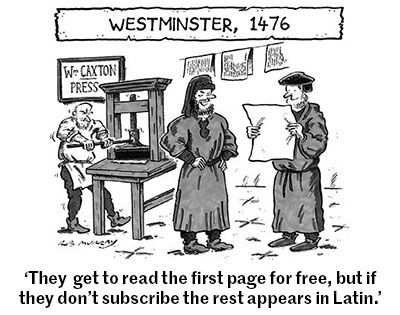
This article is available to History Today online subscribers only. If you are a subscriber, please log in.
Please choose one of these options to access this article:
- Purchase a online subscription and receive unlimited access to our archive for one week, one month or a year
- Purchase a print and website subscription, giving you one year's access to all our content and 12 editions of History Today magazine.
- If you are already a print subscriber, purchase the online archive upgrade for a year's worth of access at a reduced price
Call our Subscriptions department on +44 (0)20 3219 7813 for more information.
If you are logged in but still cannot access the article, please contact us
If you enjoyed this article, you might like these:
- Home
- Location
- Period
- Themes
- Magazine
- Subscribe
- Archive
- Ebooks
- Students
- Blogs
- Contact
Newsletter
From The Current Issue
|
Richard Jones
|
|
Tim Stanley
|
|
Ramona Wadi
|
|
Claudia Baldoli
|
From The Archive
|
The Hudson's Bay Company was one of the central forces moulding the development of the vast tracts of land that today are Canada - but as Barry Gough explains here, the circumstances of its launch in 1670 also reveal much about the commercial forces, personalities and rivalries of Restoration England. |