The Civil Wars’ Troubled Waters
The often overlooked importance of maritime affairs on the course of the Civil Wars.
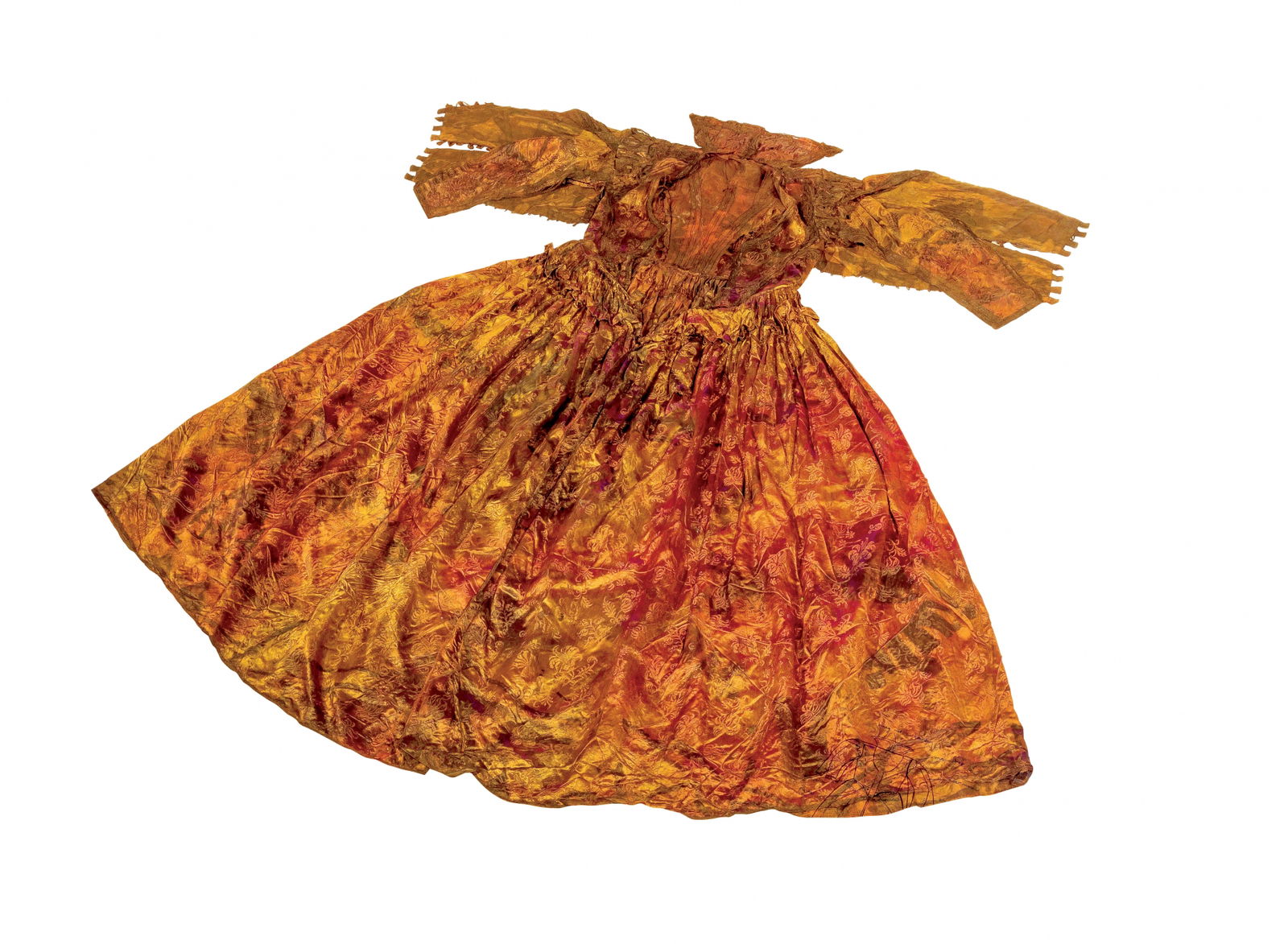 It was a fascinating discovery, made in the spring of 2015: a 400-year old shipwreck off the Dutch island of Texel. Among the objects found were a strikingly well-preserved dress and a book cover bearing the royal arms of the Stuart monarchs. Research about the ship is ongoing, but the wreck probably dates from the middle of the 17th century. It may have been part of one of several royal missions sent to the Netherlands from Britain during that period, such as the one led by Queen Henrietta Maria, wife of Charles I, in 1642, with the ostensible purpose of bringing her daughter, the young Princess Mary, to her new husband, Willem II, the Prince of Orange.
The real objective, however, was to pawn the crown jewels and to purchase ammunition for Charles, who was struggling to suppress his rebellious subjects. Though much about the wreck remains mysterious, it symbolises a relatively unknown side of the Civil Wars: their maritime, European and imperial contexts. In July 1642, only a few months after the expedition and provoked by it, Parliament and the king contended for control of the Royal Navy. Most sailors sided with Parliament, giving it control of the strategically crucial fleet.
Over the course of the Civil Wars, the parliamentarians expanded naval operations beyond anything Charles I had attempted, purchasing and building new vessels and hiring merchant ships to increase numbers. Their main motive was to prevent exactly the kind of appeal to outside help undertaken by Henrietta Maria in 1642, as most European rulers were sympathetic to Charles. The queen herself made it back to England in February 1643, but as soon as she landed in Bridlington she was bombarded by a parliamentarian naval squadron. Forced to flee, she insisted on turning back briefly to collect her pet spaniel, Mitte.
Henrietta Maria’s mission to the Netherlands was only the beginning for the Royalists. Charles attempted to establish his own squadron, using ships which his army seized when they captured Bristol in 1643. But a more successful tactic was to issue privateering licenses to both British and European captains. The Catholic Irish Confederates, who had taken control of much of Ireland, also set out their own substantial privateering fleet, many of whom operated from European bases such as Dunkirk and Ostend.
Parliament, too, authorised a large number of privateers. At the same time, the Eighty Years’ War between the Dutch and the Spanish (1568-1648) and conflict in the Baltic between Sweden and Denmark (1643-45) created a complicated maritime situation in northern Europe. Both Royalists and parliamentarians complained that their ships had been seized by the French, the Spanish or the Dutch – all of whom protested that the English antagonists were just as rapacious, since they indiscriminately seized any ships trading with their enemies’ ports around Britain.
Skirmishes at sea
A diplomatic incident kicked off in April 1644, when the parliamentarian privateer Robert Zachary was arrested by the Dutch after prize-hunting within their territorial waters. Zachary was accused by the Royalist press of being ‘a Native Turke, who [had] been a Pyrate’; or, if he was not actually a ‘Turke’ (meaning anyone belonging to the Islamic world of the Middle East and North Africa), he was at least a ‘Renegado’, a convert to Islam. There was widespread anxiety about corsairs from the regencies of Algiers, Tripoli and Morocco and fear about the captives of these corsairs ‘turning Turk’. Although there is no substantive evidence to support this statement about Zachary, the incident highlights the complexities of early modern warfare at sea.
Considering the messy international situation and the absence of a coordinated Royalist fleet, it is not surprising that the Civil Wars saw no gigantic battles like those which characterised the naval actions of later conflicts. The seas were hardly peaceful, however. Commerce-raiding was commonplace, fights involving just a few ships happened regularly and the Irish Sea was a particularly violent region, where one of Parliament’s naval squadrons tried to cut off the Irish Confederates from Europe to suppress Confederate privateering. Parliamentarian vice-admiral Richard Swanley was notoriously bloodthirsty, summarily executing Irish Catholics whom he took prisoner.
These conflicts spread further afield. Both sides sent privateers to the Mediterranean and across the Atlantic. There were skirmishes near Barbados and in Chesapeake Bay, the latter involving a Dutch ship and again provoking a diplomatic incident. Often these were armed merchant ships on trading voyages, carrying privateering licenses in case they encountered any prizes, and there were clashes between London and Bristol ships because of the different allegiances of those ports. In 1644 mutineers aboard one East India Company vessel, the John, which, having come from London, had reached Madagascar, turned their ship around and went back to Bristol, where they joined the Royalists.

In addition to individual altercations, the Civil Wars had important consequences for English imperial activities. The Earl of Warwick, who served Parliament as Lord Admiral, financially and politically supported the early stages of England’s involvement in both American colonisation and the transatlantic slave trade. Those merchants and shipowners who, alongside Warwick, took over naval administration on Parliament’s behalf, included colonial investors in the Caribbean and North America, as well as those who traded with India and West Africa. Under the influence of this group from the late 1640s and into the 1650s – as Parliament became victorious in the Civil Wars and during the various governments of the Interregnum – English naval and commercial policy became distinctly more aggressive and expansionist.
While it is clear that the maritime dimension of the Civil Wars embroiled Britain in wars in Europe, and exported conflict around the Atlantic, there is some disagreement among historians about the importance of this seaborne fighting on the course of the Civil Wars as a whole. Its immediate tactical significance was limited: only in a few instances did the navy make a direct impact on the land war, such as at the sieges of Plymouth in 1643 or Lyme in 1644, or in supporting Oliver Cromwell’s invasion of Ireland in 1649.
Nevertheless, the consequences of warfare at sea were more wide-reaching than this conclusion suggests. Parliament’s concentrated naval forces allowed them to protect London and its commerce, providing them with customs revenues and discouraging direct intervention by other countries, despite Henrietta Maria’s best efforts. It is interesting to consider this question in terms of counterfactual alternatives: if Charles I had controlled the navy, he would have had access to more military resources from his European allies and he would have been able to put greater pressure on Parliament’s power base. It would not necessarily have won the war, but it would certainly have made a difference.
One reason the drowned dress, book and other objects were such an evocative discovery is that they resonate with the popular image of romantically doomed Cavaliers. Yet the maritime context of the Civil Wars, symbolised by this shipwreck, actually take us in a different direction. They remind us that the struggle to control the three British kingdoms and the seas around them could have had many alternative outcomes, that it ranged further than is often thought and that it had a number of unexpected consequences for Britain and the world.
Richard Blakemore is Lecturer in the History of the Atlantic World at the University of Reading and the author, with Elaine Murphy, of The British Civil Wars at Sea (Boydell & Brewer, forthcoming).