Magna Carta Matters
Nigel Saul marks the 800th anniversary of the sealing of Magna Carta with a comprehensive overview of the landmark books that dominate the field.
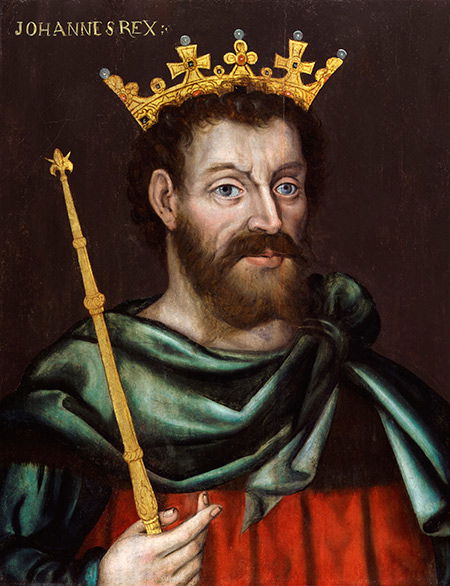
Among this year's many anniversaries, it is the 800th anniversary of the sealing of Magna Carta in 1215 that occupies pride of place. What happened at Runnymede in that year was by any standard a landmark event and a defining moment in England's constitutional history. The slew of publications marking the anniversary gives us the chance to re-evaluate the Charter and assess changing responses to it over the centuries.
For many years, scholarship in the field was dominated by J.C. Holt's Magna Carta, first published in 1965 to mark the 750th anniversary and reissued and substantially enlarged in 1992. Holt's achievement was to view Magna Carta contextually, seeing it not as a constitutional document, but in some sense as an argument; a critique of Angevin government, drawn up by barons who were themselves familiar with government and wanted to apply to the king rules that he had long expected them to apply to others.
So authoritative was Holt's work that it held the field for a generation and little else of significance was written. The first signs of a new approach were afforded by the publication of Nicholas Vincent's Magna Carta: A Very Short Introduction (2012), a stimulating essay, which re-evaluated the subject and accorded greater importance to the role of ideas. Vincent stressed how familiar both king and barons were with the new legal thinking and highlighted the evidence even of Biblical influence in the choice of the unusual number of 25 for the enforcers of the Charter. Vincent developed his ideas further in the early chapters of his co-authored Magna Carta: The Foundation of Freedom, 1215-2015 (2014), a study which carries the Charter's history down to the present day.
A book which builds on Vincent's foundations is David Carpenter's outstanding Magna Carta (2015). Modestly masquerading as an edition of the Charter with a commentary, this is in fact a full-scale re-examination of the document, incorporating some of the many exciting discoveries made by Vincent's Arts and Humanties Research Council-funded research project on the Charter's texts. For Carpenter, as for Holt, it is the barons and not Langton or any of the clergy who are the real originators of the Charter. In sharp contrast to Holt, however, Carpenter sees the barons acting self-interestedly, feathering their own nests and, through creation of the 25, setting themselves up as a shadow government, a situation which no self-respecting king could accept.
Carpenter's early chapters tell us much about England in the reign of King John and the kind of society out of which the issues dealt with in the Charter grew. The nature of English society in the 13th century is also explored by Anthony Arlidge and Igor Judge, in Magna Carta Uncovered (2015), although, as might be expected from authors who are lawyers, the approach is somewhat legalistic. Much the best portrait of the age still remains Danny Danziger's and John Gillingham's, 1215: The Year of Magna Carta (2003), a brilliant study, compellingly readable, which always keeps the Charter itself centre-stage.
Discussion of the Charter inevitably leads onto the character and kingship of John himself. Typically dismissed, in the language of 1066 And All That, as a 'bad king', John's reputation benefited from the publication of W.L. Warren's revisionist biography, King John in 1961 (reissued 1997) and the process of re-examining and re-assessing his reign goes on. Stephen Church offers a new account of the reign in King John: England, Magna Carta and the Making of a Tyrant (2015), a book which puts the most favourable gloss on the king's misdeeds, but adds little to what Warren said and ultimately fails to convince. More plausible is the approach taken by Marc Morris in King John: Treachery, Tyranny and the Road to Magna Carta (2015), a lively overview, which eschews a linear narrative in favour of flashbacks to John's earlier life and which offers a damning indictment of the king in the conclusion. The terrible sequel to the reign, which saw the destruction of Magna Carta three months after its making and a civil war which drew in the French, is the subject of an excellent study in military history, Sean McGlynn's Blood Cries Afar: The Forgotten Invasion of England, 1216 (2011). The period of warfare and chaos is also treated in the later chapters of Thomas Asbridge, The Greatest Knight: The Remarkable Life of William Marshal, the Power Behind Five English Thrones (2015), a briskly written biography which traces its subject's role in saving England after the young Henry III's accession and which, in so doing, highlights the bad write-up of the boy's father in John of Earley's verse life of the Marshal.
The later history of the Charter has developed its own literature, largely separate from that of the events of 1215 and the actual making of the document. The story of the Charter's gradual mutation from document to artefact and of its growing veneration as a symbol of liberty and touchstone of good government, is told by Ralph V. Turner, Magna Carta Through the Ages (2003) and, more recently, in richly illustrated versions by Vincent and his co-authors in Magna Carta: The Foundation of Freedom and Claire Breay's and Julian Harrison's catalogugue of the British Library's exhibition, Magna Carta: Law, Liberty and Legacy, which is reviewed on p.59. Along with Vincent's Very Short Introduction, these are all works which stress how ownership of the Charter was claimed by multiple audiences and how, over the centuries, the Charter has come to mean all things to all men.
The quirkiest and most personal book published in connection with the anniversary is David Starkey's Magna Carta: The True Story Behind the Charter (2015), not quite the book of the television programme in which it originated, the 17th century being omitted, but recognisably based on the same material. This is a book more argument than narrative, a passionately argued case for Magna Carta as that uniquely English thing, a conservative revolution – revolutionary because it was imposed on the king against his will and conservative because it was ultimately brought under control. Starkey believes that we are becoming too comfortable about Magna Carta, taking its achievement for granted and he is right. We need to be more assertive about our liberties and that is why this anniversary matters.
Nigel Saul is Professor of Medieval History at Royal Holloway University of London.