Licence to Crenellate
Power, function and myth have always jostled on the battlements.
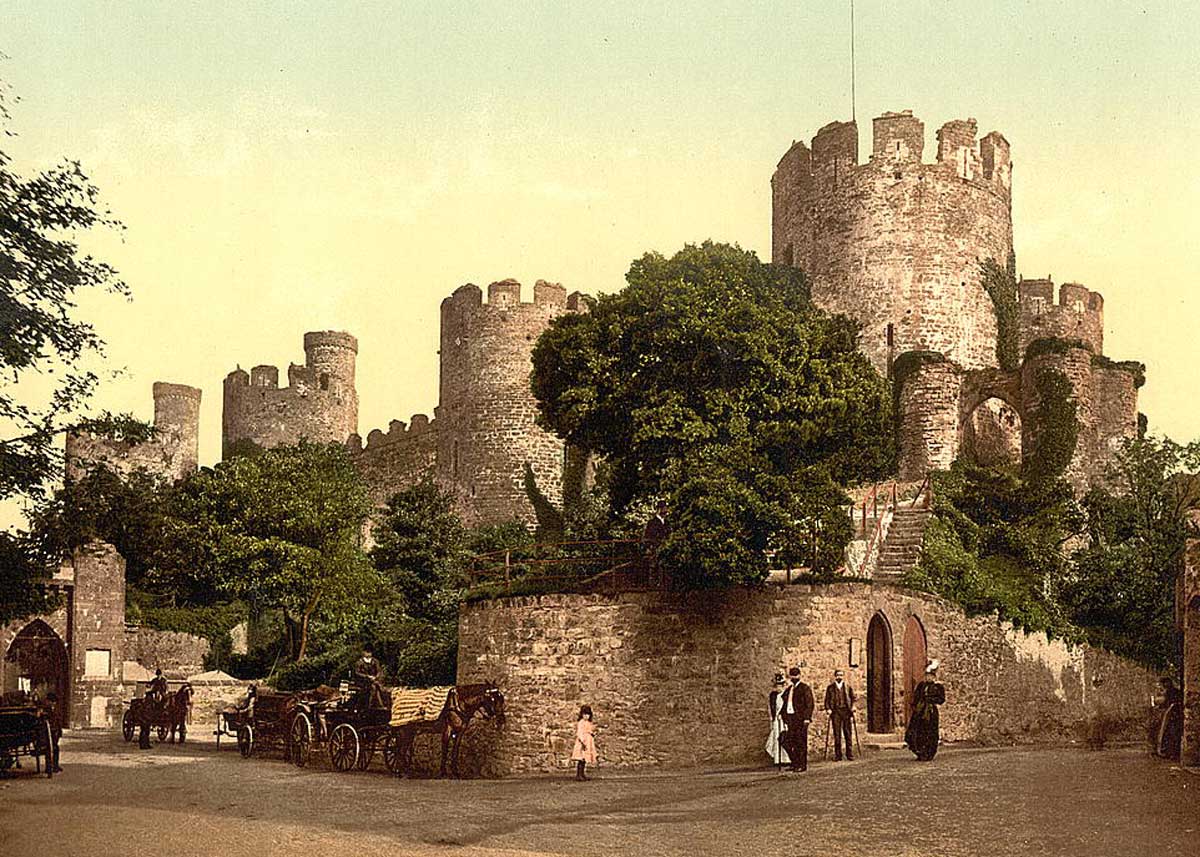
For John Goodall, the pre-eminent English scholar on castles, there is no such thing as a ‘real castle’. His aim in this clever account is to recalibrate a building type, clarify misunderstandings and remove distortions. Goodall has an easy turn of phrase and a graceful manner: ‘If people called something a castle then it is the duty of the historian to explain why they used the term, not to presume to tell them why they got it wrong’.
Employing a rich assortment of contemporary accounts, he provides the human element so often missing in purist architectural studies. For example, a toddler’s body discovered in 1303, stiff with frost at dawn in the moat below Conwy Castle, offers a ‘moment of illumination … in the midst of so much that is forgotten’. In fact two-year-old Roger, the son of the castle cook, made a seemingly miraculous recovery after a bystander offered prayers to Thomas Cantilupe, the former Bishop of Hereford. There, in the record of his canonisation process four years later, lies this story and a wealth of detail about the place of the castle and its staff within the life of the town gathered around its walls.