Death of Felix Mendelssohn
The prolific composer died on 4 November, 1847.
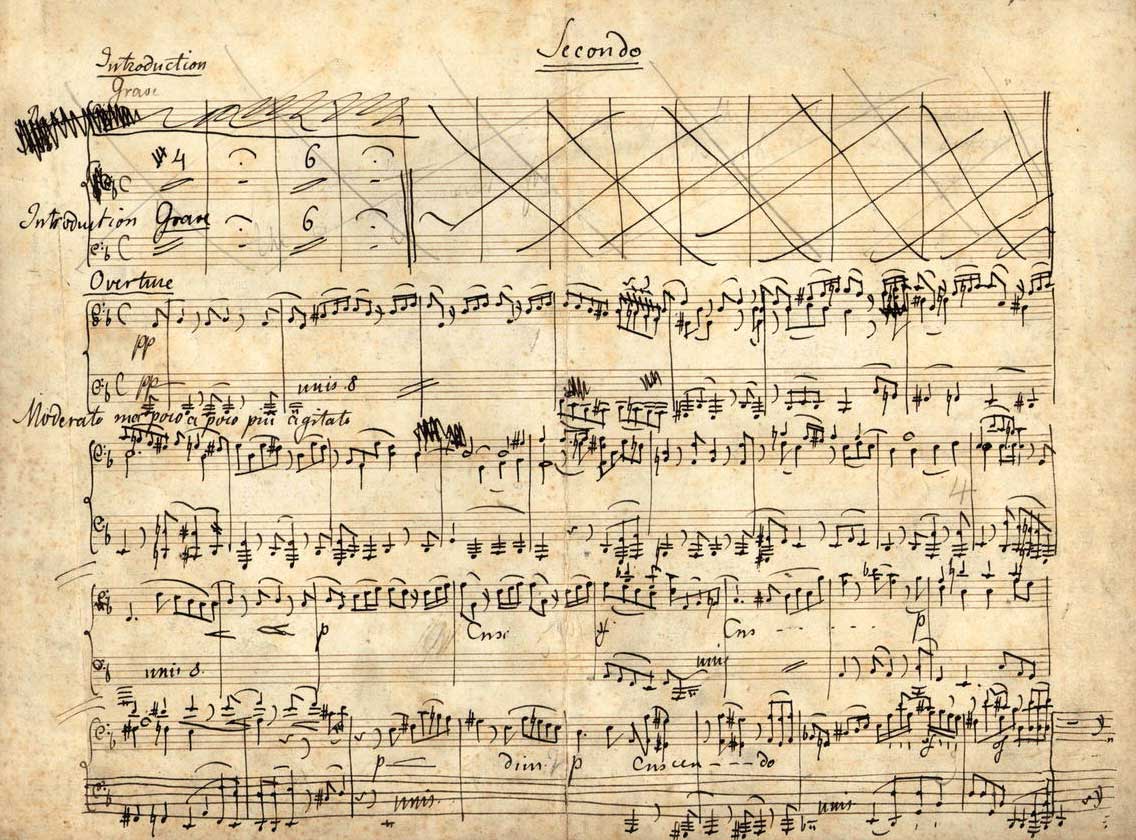
Enormously popular in his lifetime, Felix Mendelssohn is today chiefly remembered for the Wedding March, a tune enthusiastically mangled every July and August by church organists throughout the land.
But there is much more to Mendelssohn. While his own output was prolific, he also worked tirelessly to promote the work of other musicians and, like Handel and Haydn before him, spent much time in Britain, bringing culture to a concert-going public starved of good music in the dark days between the death of Purcell (in 1695) and the advent of Elgar.
Born into a well-to-do Jewish family in Berlin in 1809, Mendelssohn never really settled there. This may have had something to do with the anti-Semitism prevalent in the city, as well as its poor musical reputation. As a result, Mendelssohn spent much of his short life on the move, composing on the hoof and finding inspiration in the places he visited. England was his favourite destination, where his music was extremely popular, and he came to call it his second home, spending much time here until he became Chief Conductor of Leipzig’s prestigious Gewandhaus orchestra in 1835.
As a boy, Mendelssohn’s talent developed early. A piano soloist at nine, his first compositions were completed a year later, in the form of a violin concerto, two piano concertos and twelve short symphonies. His reputation was such that at twelve he was taken to Weimar to meet Goethe developing a friendship that lasted until the Poet’s death in 1832. By the time he was sixteen he had already composed his first mature masterpiece, his ‘Octet for Strings’, described as ‘perhaps the single most astounding achievement of any child composer. At sixteen even Mozart and Schubert produced nothing finer’.
But whilst he poured out music at a prodigious rate – piano concertos, oratorios, the ‘Songs Without-Words’ cycle and the opera ‘St Paul’, he also worked constantly on behalf of other musicians. In 1829 he staged J.S. Bach's massive ‘St Matthew Passion’, a work unperformed in over 100 years. The performance was a huge success, with over 1,000 people locked out of Berlin’s Singakademie on the concert's first night. ‘To think’ he said ‘that ... a Jew should give back to the people the greatest Christian music in the world.’ Similarly, Mendelssohn fostered his contemporaries’ careers. As head of the Gewandhaus orchestra he pushed the work of the city’s resident musical genius, Schumann, and, memorably, Schubert, whose final symphony was first performed in Leipzig after Schumann had discovered the manuscript among the dead composer’s effects in Vienna.
The one blip in Mendelssohn’s career came between 1841-44, when he was summoned to Berlin by the new king Friedrich Wilhelm IV, to oversee the musical life of the Prussian capital. The sheer weight of administrative responsibility, the lack of funds from the crown, and the Perennial problem of Berlin’s ‘miserable’ musicians made his time in Berlin unproductive, composing just a series of small songs, including ‘Wedding March’. Tired and frustrated, he returned to Leipzig in 1844. Once away from Berlin, Mendelssohn’s spirits revived and in 1846 he re-visited London. On earlier visits he had been moved to compose works such as the ‘Hebrides Overture’, after a visit to the Scottish Highlands. This time he composed the oratorio ‘Elijah’, his final masterpiece, which was ecstatically received. In May 1847 Mendelssohn left London, exhausted but exultant. Yet six months later he was dead – from what has variously been described as series of strokes or a ruptured brain artery. In all probability Mendelssohn simply worked himself to death, both on his own projects and on behalf of others. As such, he perhaps deserves a more fitting epitaph than the one tune he is best remembered for.