India’s Kuka Revolt Ends in Death
On 17 January 1872, 49 Namdhari Sikhs – dubbed ‘Kukas’ by the British – were executed by cannon, supposedly for spreading insurrection.
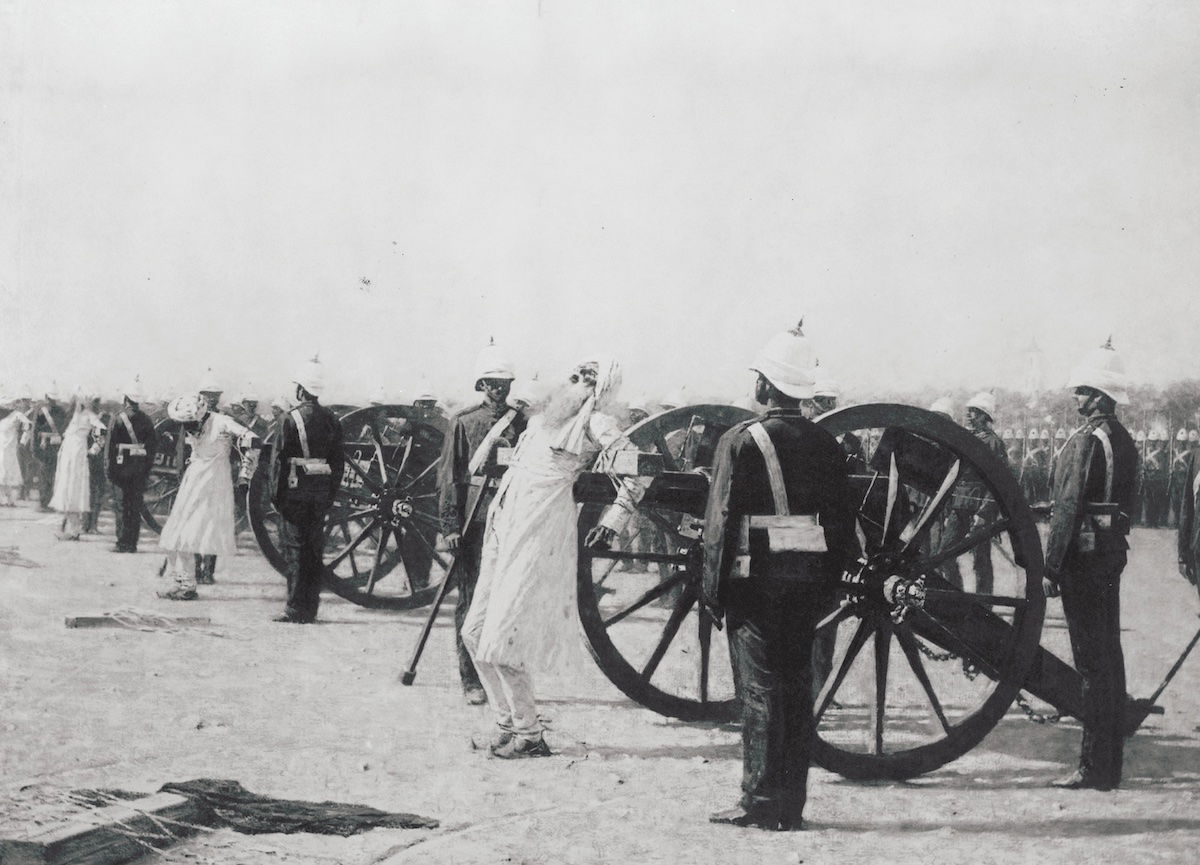
Was it even a revolt? Afterwards, there were doubts. But in January 1872 the British Empire’s man in Punjab, deputy commissioner John Lambert Cowan, was sure.
There had been unrest among the minority Namdhari Sikh population – ‘Kukas’, the British called them – in what was a Muslim region. Some 200 Namdhari had rampaged through a neighbouring province. On 14 January they tried a night raid on the fort at Malodh. The next morning, they attempted to take the town of Malerkotla. Both efforts failed. Some Namdhari were killed, many were wounded. The rest surrendered or fled.
‘Tranquility restored’, Cowan telegraphed, arriving on the 17th. But towards sunset that day he ordered 49 of the captured Namdhari to be strapped backwards over cannon muzzles on the Malerkotla parade ground. A bugler sounded the command and they were blown to pieces – a technique learned from the Mughals and infamously deployed during the 1857 ‘mutiny’.