Garden of Sweden
Patricia Cleveland-Peck goes on the trail of the scientist Linnaeus, whose tercentenary this year is being marked in Sweden at a variety of locations associated with the great man.
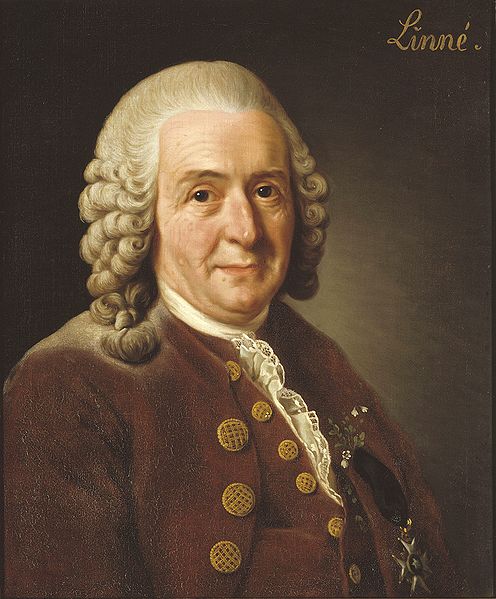 What do the Chelsea Flower Show, an East India clipper ship, a new issue of stamps and numerous sites in Sweden have in common?
The last-named gives a clue: they are all involved in celebrating the tercentenary of Sweden’s most important scientist, Carl Linnaeus who was born on May 23rd, 1707. He laid the foundations of the binomial system of classification which allocates genus and species names to flora and fauna, something which even today, permits botanists and zoologists to communicate worldwide.
Linnaeus was born in the little hamlet of Råshult in Småland where his father Nils was the pastor and there, as in many parts of Sweden and farther afield, preparations have been made to celebrate his life and achievements this year. Nils was a keen gardener and it was at Råshult that the infant Carl first caught sight of the flowers which were to remain a passion throughout his life. Now the hamlet is maintained as a cultural reservation. The land is farmed with horses in the old-fashioned way, and in anticipation of the influx of visitors, the red-roofed rectory has been restored in 1707 style.
In fact Linnaeus only lived in Råshult until the age of two as his father then obtained the living of nearby Stebrohult.
At the age of nine Carl started at the Karolinhuset School in Växjö, 30 miles away. He did not enjoy his days here, preferring to be outdoors. However, the building will form the background for performances about him throughout the summer. At the age of fifteen, Linnaeus met Dr John Rothman who spotted his potential and introduced him to the rudiments of Tournefort’s system of classifying plants and showed him Vaillant’s essay on plant sexuality.
Thus Linnaeus found his métier and he went on to continue his studies at his father’s old university at Lund before moving to Uppsala University where he hoped he would learn more about plants. At first he was disappointed, the botanical garden was neglected and no botanical lectures took place. After a while, however, his talents were recognized by Professor Olof Rudbeck the Younger (whose father had created Uppsala Botanical Garden in the 1650s) who invited Linnaeus to give demonstrations, something unheard of for a second-year student. Carl later named the Rudbekia after him.
Carl was passionate about order, he began to find and classify plants animals, insects and birds according to his own system. He made a famous journey to Lapland, acquiring a fiancé on the way back. It wasn’t until several years later in 1739, after obtaining his doctorate in Holland and visiting London, Paris and Germany, that Dr Linneaus in fact returned and married Sara Lisa at Svenden near Falun. Their wedding cottage has been refurbished and the garden restored ‘in the spirit of Linnaeus’ for the tercentenary.
Linnaeus eventually became Professor of Medicine at Uppsala and many of the festivities including the Linné Gala, an eighteenth-century festival, floral installations and parades will take place there. The focus will be his house near the university, now a museum, and the garden he created and filled with plants sent to him from all over the world by people like Catherine the Great of Russia and Louis XV of France.
Many plants too, were supplied by his ‘apostles’, ex-students who travelled to India, China, Africa and the New World hunting for novelties. This year the replica East India clipper Götheborg is sailing ‘In Linnaeus’s Wake’ collecting and documenting marine life for Göteborg University.
Linnaeus himself was a good teacher. He took his pupils on walks known as ‘herbationes’ during which they discussed what they saw and found. One of the most intriguing aspects of the celebrations this year is the re-opening of some of the Linnaeus Paths around Uppsala so that visitors can literally follow in the master’s footsteps.
As his fortunes improved Linnaeus was able to buy more properties in the neighbouring countryside and these paths often linked them. The family’s summer home at Hammarby is perhaps the most evocative of all the sites with its gardens of old fashioned flowers, its orchards and the little hut that Linnaeus used for teaching. Here there will be events all summer: a day devoted to the women in Linnaeus’s life, a beekeeping day, a scything party and an exhibition. Sävja, another of his properties, is where his walking groups often took breakfast. It was to Sävja that Linnaeus made his own last journey the winter before he died in 1778. There more drama presentations will take place this summer.
Linnaeus made several journeys in Sweden employed by the government in order to find ways of increasing the country’s prosperity. In 1741 he visited the Baltic Islands of Gotland and Öland (where he was taken for a Russian spy) and found more than a hundred new plants. On Gotland this summer riding expeditions are planned to take visitors on horseback or in carts ‘in the footsteps’ of Linnaeus. In 1749 he made a similar fact- finding trip to Skåne but by this time he had been ennobled and so he eased his journey by travelling by coach and lodging with nobles in their castles. For the tercentenary, travel agents have put together a trip which will take visitors on a journey encompassing not only Skåne but also Lund, Råshult and Uppsala. Sweden is also issuing a stamp in his honour (the 100 Kronor note already bears his image).
After the death of Linnaeus, his widow sold his papers and specimens to a young Englishman, James Edward Smith. Smith became first president of The London Linnean Society where the collection has been housed ever since. This society, in common with the ten or so other Linnean societies worldwide, is this year hosting events and exhibitions including a display ‘Linnaeus’ Legacy – 300 years of Naming Nature’ at the Chelsea Flower Show. The Swedes, in gratitude for the care with which the collection has been looked after in England for 300 years, have also offered the Chelsea Flower Show a garden designed by Ulf Nordfjell, a modern interpretation inspired by Linnaeus’ sense of curiosity and love of nature.