Who was Herbert Butterfield?
Michael Bentley looks at the father of British historiography who was an eloquent and controversial opponent of teleology.
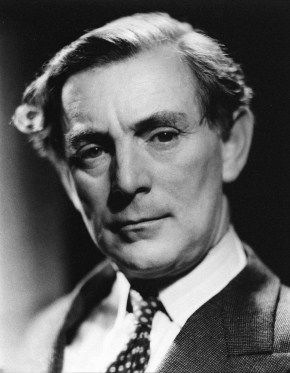 Who was Herbert Butterfield? The answer is no longer obvious. Readers of ‘a certain age’ will recall the name and may remember reading The Whig Interpretation of History in their younger days. For those under 50 Butterfield may have little or no resonance, supplanted as he was by E.H. Carr and What is History? He also fell victim to a general view that his greatest opponent, Lewis Namier, was a far more important historian.
Fashions change, however, and recently there has been a revival of interest in Butterfield as a serious historical thinker with a breadth of vision that encompassed history, religion, science, politics and international relations. So when I was asked by the Butterfield family to write a full biography the time seemed right to make the attempt. Its appearance in print leaves me reflecting on what makes him worth the effort to re-introduce to a new generation of readers.
At least three things matter about Butterfield: first, he consistently defended a Christian view of history and politics, even when doing so made him look marginal or ridiculous; second, he had an important understanding of how history should be studied and taught; third, he was the first serious scholar in Britain to undertake the academic study of historical writing as a form – what we now call ‘historiography’.
Born in Oxenhope, near Keighley, in Yorkshire, the son of a clerk in one of the local mills, Butterfield made his way through scholarships to Keighley Trade and Grammar School and then, in 1919, to Peterhouse, Cambridge, where he would spend most of his life. He read history under the eye of the formidable Harold Temperley and a tutor, Paul Vellacott, who helped socialise him into the ways of a different class and culture. With the exception of a year in Princeton and several lengthy visits abroad, he remained at Peterhouse, retiring as its master in 1968.
Two dimensions of Butterfield’s personal make-up throughout these years are particularly relevant. First, his Methodist background has frequently been misread and overstated: he retained his Methodist connections, certainly, but moved away from most of the positions he held as a youth and finished as a near Anglican with serious reservations about organised religion. Second (which no one dwells on because no one knows), during the 1930s Butterfield fell deeply in love with a woman who was not his wife and the experience transformed him both as a person and social theorist. It also gave rise to a private archive of letters that richly illuminate a period of his life about which little was formerly known. Together, these two themes give us a very different Butterfield from the one usually portrayed. In particular they comment on his convoluted relationship with the Third Reich, which was falsely taken by some to indicate that he was pro-Nazi.
Most who go back to Butterfield do so because of what he wrote and the universal complaint is that he did not write enough. It is often implied, too, that he was an academic failure because he never finished, and sometimes did not even start, books that he said he would write. The allegation is true and false. He wrote neither the life of Charles James Fox nor one of Harold Temperley that he was supposed to write; but he did produce a number of studies on a wide range of subjects from the political history of the 18th century to the nature of historical thought itself. Two of his shortest works, The Whig Interpretation (1931) and Christianity and History (1949), won a spectacular audience and many reprints. His little-read Origins of Modern Science 1300–1800 (1949) may be seen as the first account of the scientific revolutions of the 16th and 17th centuries and confirmed a lifetime’s interest in the idea of science and its relation to social and intellectual change. His teaching, meanwhile, spanned a vast period from the Renaissance to the French Revolution and he made many enemies by refusing to reduce its width. He insisted that change could not be understood in the short term. Its motor – the divine force he called Providence – required a long track to make its presence felt.
The Whig Interpetation established the young scholar as a serious commentator on how history should, and especially should not, be written. This essay, the first to argue coherently against ‘reading history backwards’, looks unimpressive today. Yet in 1931 the ‘Whiggish’ tendency to make the past look like a preparation for the present and to make the story a ‘ratification’ of current perceptions offered a much bigger target. Butterfield’s future enemy, Lewis Namier, had already blown away part of the target in 1929 in a brilliant analysis, The Structure of Politics at the Accession of George III, which showed how modern ideas of party, then usually read backwards into 18th-century behaviour, played virtually no role in the 1760s. Butterfield went further in generalising that argument. ‘Whig’ historians, he complained, told a triumphalist story of English progress since the Glorious Revolution of 1689; they applauded anybody who contributed to that progress and they used moral judgements to condemn past people who had not seen the direction in which ‘history’ was going. Now of course Butterfield was himself vulnerable in assuming that it would be possible to write history without beginning in the present; but he scored powerfully by contending that the past need not be made to reinforce that present. One of his favourite examples appeared in the writing of history after the arrival of the League of Nations in 1919. Before then historians made the 19th century look like a preparation for the First World War and singled out events and processes that made that end-point sometimes inevitable. After 1919 they stood the former ‘19th century’ on its head and made it seem like a gradual process of international enlightenment and revulsion against war that would eventually culminate in the League.
Butterfield muddied the waters some years later by writing a book during the Second World War that congratulated England on having produced Whig history. The Englishman and his History (1944) appeared to many readers a recantation and they accused him of self-contradiction. In fact the contradiction did not exist. He continued his criticism of Whig history but argued that, bad history though it was, it produced political and cultural advantages that helped Britain resist Hitler. All the same, it might have been better for his future reputation if he had never written the book.
It did help him win the Chair of Modern History at Cambridge, however, and the postwar decade would become his period of greatest prominence. The appearance in 1949 of three books, Christianity and History, George III, Lord North and the People and Origins of Modern Science proved Butterfield’s golden moment, establishing him as a public intellectual, broadcaster and columnist. Now a senior professor, he took very seriously the idea of reaching a wide audience because he believed that the study of history was a crucial ingredient in forming educated citizens. He worked hard for the Historical Association, giving lectures and attending conferences. His diaries show him standing on more windswept railway platforms than he cared to remember. Something else was happening, too: a deeper concern about where his subject seemed to be heading. The anxieties Butterfield had nursed for some years about Namier’s approach to the past – his denial that ideas mattered in explaining historical events, his willingness to reduce human behaviour to self-interest and ambition, above all his disregard of story in presenting snippets of the past with no attempt to make a satisfying account of change over time – hardened into frank and open opposition.
It all exploded in 1957. Following an increasingly sharp series of exchanges in the academic press, Butterfield decided on a ‘full-dress’ attack at book length. George III and the Historians became a crucial statement in which Butterfield nailed Namier and his ‘squadrons’. What Butterfield contended is now common currency – that history has to be about ideas and not just manipulation, that politics cannot be understood without ideology, that there is more to history than politics in any case, that all sources require attention and not just private jottings in the archives of an elite. Historical writing and teaching had to function as a social education stimulated by creative minds. Namier’s followers had turned it into a vocational apprenticeship, like plumbing and joinery. Wrong in some of its particulars, the rebuttal was right in its essentials and Butterfield acted with considerable bravery in taking on what he regarded as forces of darkness.
Namier died in 1960 but the sixties had little time for Butterfield who never again produced a major piece of history. It was a period when historians emphasised ‘analysis’ and ‘reconstruction’; it was not a moment for narrative, now despised as romantic and anecdotal, and Butterfield seemed part of a past world. His reputation needed a revival of that idea of narrative as a precondition for renewed interest in what he had to say. This came about at the end of the 1970s, just as Butterfield himself died. The strange mixture of ideas we loosely label ‘postmodernism’ came, curiously, to Butterfield’s aid. He would have hated all of it: he believed to the end in firm historical facts and the potential objectivity of ‘scientific’ historical accounts. ‘Relativism’, the idea that the past owes its changing nature to the various presents from which it is viewed, frightened and appalled him. Nevertheless, the coming of a relaxed ‘cultural history’ and the rediscovery of story in historical method helped revive his memory.
Of course, some of his views did not travel well. Religion lost its hold on British society during his lifetime and its centrality in his thinking would always place a limit on his appeal to a modern public. His failure to see ‘the truth’ about Hitler and the Third Reich continues to repel those who assume that they would have seen it at once. The books remain, all the same, as witness to a mind of great intelligence and originality and they deserve to attract the attention of younger historians who have never penetrated the thought-world that Butterfield so powerfully represented.