Germany's Jewish Soldiers
Tim Grady on postwar Germany’s attempts to remember the contribution made by its Jewish combatants in the First World War.
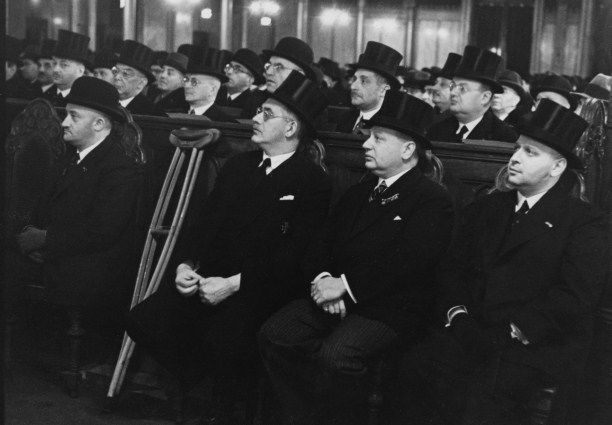 Each November, as part of Germany’s annual Volkstrauertag, the Day of National Mourning, Jewish cemeteries in Berlin and Munich play host to elaborate remembrance services. The guest lists for the two events are usually extensive. Aside from senior members of both cities’ Jewish communities, dignitaries from regional and state institutions also attend. Last year in Berlin, for example, the then serving defence minister, Karl-Theodor zu Guttenberg, put in an appearance. Those present at the service were privy to a highly ritualised military ceremony, which included an army guard of honour and a ceremonial wreath laying. What is most significant about these annual Jewish remembrance events, however, is that they are staged ostensibly for German-Jewish soldiers killed in the First World War, rather than for the victims of the Holocaust.
Jewish participation in the German armed forces of the First World War was considerable. From a population of roughly 550,000 almost 100,000 German Jews served in the army, both in the reserves and on the front line. Many joined up at the start of the conflict out of a strong sense of patriotism, determined to defend Germany from external danger. As with all Germans, the country’s Jewish population ended up making huge sacrifices during the conflict. Somewhere in the region of 12,000 German-Jewish soldiers lost their lives and thousands more were wounded. It is to the memory of these Jewish men that the Berlin and Munich memorials featured in last year’s Day of National Mourning were originally dedicated.
Historical writing has tended to be rather dismissive of these soldiers, suggesting not only that they died in vain, but that their sacrifice was also quickly forgotten. According to this common interpretation, German Jews suffered one humiliation after another. During the war their dedication to Germany’s cause earned them only scorn and ridicule. Even the German army failed to recognise the scale of their contribution and in 1916 instigated a humiliating census to determine how many Jews were actually in the trenches. Most historians suggest that the situation worsened still further at the war’s end. Against the backdrop of defeat and revolution, the Jewish soldiers found themselves increasingly ostracised. They were ignored by their former comrades and banned from attending mainstream memorial events. As is often emphasised, the Jewish soldiers’ final reward for their wartime sacrifice came under the Nazi regime, when they were persecuted and then brutally murdered by the same country for which they had once risked their lives.
At a recent remembrance service Charlotte Knobloch, former president of the Central Council of Jews in Germany, remarked that many people are still unaware of the fact that ‘Jewish soldiers fought and fell for their fatherland’. According to Knobloch, it was this perceived lack of public knowledge that, over the last few years, prompted Jewish communities to introduce new remembrance ceremonies for the Jewish war dead on the Day of National Mourning. In Berlin the first large-scale ceremony took place in the Weißensee cemetery in 1995, while the service in Munich’s Garchinger Straße cemetery was only introduced in 2003. At first glance the reason for Jewish participation in Germany’s annual Day of National Mourning appears clear. Because the Nazis had all but erased the wartime sacrifice of German Jews from public memory, these ceremonies offer an opportunity to re-acquaint people with a long neglected aspect of the recent past.
Yet there is one major difficulty with such an explanation: Jewish soldiers were not completely forgotten. Indeed since 1945 the German-Jewish servicemen who lost their lives in the First World War have never been far from the surface of Germany’s collective memory. What has continually changed, however, is the actual form this remembrance activity has taken. Depending on wider social and political circumstances, different aspects of the Jewish soldiers’ war experience have either been emphasised or downplayed. The remembrance ceremonies in Munich and Berlin, then, are just the most recent in a long line of commemorative activity for the Jewish war dead that has taken place in postwar Germany.
Following the defeat of the Nazi regime and the ending of its genocidal war, it did not take long for evidence of Jewish soldiers to resurface. Occupied by the victorious Allies but also serving as a temporary home for some 180,000 Jewish survivors of the Holocaust, Germany provided the terrain on which Jews, Germans and the Allies were forced to interact. As these three groups began to pick through the ruins they frequently stumbled across the remnants of the country’s once flourishing Jewish communities. In particular, letters published in newspapers from aid workers and Jewish survivors frequently contained descriptions, sometimes even photographs, of ruined synagogues and cemeteries.
Many of the sites rediscovered in the immediate postwar years also yielded some sign of Jewish military service in the First World War. In Hamburg, for example, British aid workers, shocked at the overgrown state of the city’s Jewish burial ground, urged the German authorities to set about restoring it. When workers eventually carried out repairs to the grounds of Hamburg’s Jewish war cemetery, the graves of 87 soldiers killed in the First World War emerged from the undergrowth. In Heilbronn in the south of Germany, American troops discovered that the city’s main war memorial had been Aryanised during the 1930s. The names of the Jewish war dead had simply been chiselled out and replaced with those of famous battles. In order ‘to offset this discrimination’, the local American commander ordered the Jewish names to be returned. The initial probing of Jews, Germans and the Allies in cities such as Hamburg and Heilbronn gradually revealed the long-neglected sites of memory for the Jewish soldiers of the First World War.
However the survival of some memorials and cemeteries did not necessarily mean that public commemoration of the German-Jewish soldiers was also restored. Remembrance requires more than just sites of memory; a will to remember is needed, too. With the Jewish communities reduced to a fraction of their prewar size and many Jews uncomfortable with the idea of celebrating Jewish heroism for Germany there was little enthusiasm for remembering the dead of an earlier conflict. There was also no great desire among many non-Jewish Germans to commemorate Jewish victimhood. This, though, should come as no surprise. After all, Germans were themselves still trying to come to terms with the civilian and military losses from the most recent war. For this reason, when the West German state relaunched the Day of National Mourning in 1952, the focus was almost entirely on the German victims of military conflict, rather than on those murdered or killed by the German army. In this way it served to distance West Germany from the recent past by demonstrating that Germans, too, had suffered under the Nazi regime.
Yet West Germany’s nascent memory did not overlook the German-Jewish soldiers entirely. The Jewish dead of the First World War had not lost their lives in the extermination camps in the east, but rather in the trenches of the Great War. To all intents and purposes, then, they were classed as German soldiers killed in a conventional conflict. As such, the Jewish war dead fitted smoothly into the remit of the new Day of National Mourning. When designing the new remembrance ceremony, the West German authorities did not start with a completely blank canvas. Often they simply took elements from ceremonies held during the Weimar Republic and reconfigured them for their current purposes. In Hamburg, for example, the Day of National Mourning in 1952 was based on the 1932 event. Memorials, including the Jewish war cemetery, that had received official wreaths before the Nazis’ rise to power were once again included in the new event. The Jewish victims of the Holocaust may, therefore, have been largely absent from this ceremony, but the Jewish war dead were certainly included.
 In many ways this was remembrance as a by-product. Jewish soldiers of the First World War continued to be commemorated not because they were Jewish, but because they were viewed as German soldiers. As such the heroism of the German army was emphasised, while its participation in the Nazi regime’s atrocities was ignored. It was only during the 1960s, at a time of growing Holocaust awareness, that this situation gradually began to change. Generational shifts, a gradual liberation of society, as well as the first major German trials of Nazi era criminals all helped to encourage a greater engagement with the recent past during this decade. It was against this backdrop that some West Germans started to take a greater interest in the fact that in the First World War Jews had fought and died for Germany. Suddenly it was the Jewishness of these soldiers that was important.
This new public focus on the Jewish war dead was prompted not by liberal voices, but by a staunchly conservative figure: the West German defence minister, Franz Josef Strauß (1915-88). In the early 1960s Strauß began to take a new and unexpected interest in the history of German Jewry. Most significantly he arranged for the republication of a collection of German-Jewish soldiers’ letters from the First World War that had first been published in 1935. The new edition of the book also contained a lengthy introduction, ostensibly penned by Strauß, which laid bare the soldiers’ fate during the Third Reich. As the text explained, during the years of National Socialist rule the Jewish soldiers ‘were chased across the borders, thrown into concentration camps, internment sites, ghettos and gas chambers or simply shot’. In this rather brief overview of the Nazis’ racial crimes, the Jewish soldiers were the only group to feature. There was no mention of other European Jews killed in the Holocaust or even of other less obviously patriotic German Jews.
Strauß justified his focus on the basis that memory of the Jewish soldiers’ ‘spirit of sacrifice’ needed to be restored. Yet, as was clear from the first postwar Day of National Mourning, the Jewish war dead remained the one Jewish group that Germans continued to remember each year. Why, then was Strauß so keen to re-emphasise the contribution made by German-Jewish soldiers? It seems this focus on the Jewish soldiers offered a simple way for him to improve his own personal standing as well as that of the new West German army. At a time of a growing Holocaust consciousness, the history of the German-Jewish soldiers allowed Strauß to demonstrate some empathy with Jewish suffering without having to acknowledge the extent of the Nazis’ genocidal crimes. All he had to focus on was a small group of patriotic German Jews who had died fighting for Germany. For Strauß the Jewish soldiers also had the added advantage of helping to distance the German army from the Nazis’ crimes. If Germans and Jews had fought side by side for Germany then the implication was that the military was not involved in the murder of its own soldiers during the Holocaust.
Despite the rather opaque reasons for Strauß’s republication of the Jewish war letters his inter-vention nonetheless marked a significant break in the postwar remembrance of the German-Jewish war dead. First, it helped to bring these soldiers out of the shadows. Up until this point, no particular public emphasis had been placed on them. While not forgotten, they were simply commemorated on the Day of National Mourning together with all other victims of the two World Wars. Second, Strauß’s focus on the Jewish soldiers’ sacrifice and then later persecution helped to draw a direct connection between them and the Holocaust. Third, and perhaps most importantly, Strauß laid down a remembrance model for other conservative groups and individuals to follow. He demonstrated that it was possible to focus on Jewish suffering while also continuing to celebrate Germany’s military past.
The first organisation to follow in Strauß’s footsteps was the German War Graves Commission (Volksbund deutscher Kriegsgräberfürsorge). Like Strauß, the War Graves Commission had good reason to attempt a rehabilitation of its public image. With the emergence during the 1960s of a younger West German generation more critical of nationalist and militarist values, the commission came under pressure to reform its remembrance rituals. The organisation also faced increasing criticism that its public activity concentrated almost solely on German victimhood, while paying little attention to those murdered by Germans. For the War Graves Commission, the Jewish First World War dead seemed to provide a ready solution. The organisation already had some responsibility for these soldiers, as it maintained Jewish war graves in the large cemeteries scattered throughout Europe. Thus, without having to make significant changes to its existing commemorative practices, the commission was able to counter growing criticism by focusing on the German-Jewish soldiers.
The War Graves Commission’s intervention was a simple one. In consultation with the Central Council of Jews in Germany it designed a new headstone to go above the graves of the Jewish war dead. Based on the image of the Star of David, the new headstone was inscribed with the individual soldier’s personal details and a short Hebrew inscription. From 1969 onwards the organisation began to replace the original Christian cross on Jewish war graves in France and Belgium with the new headstone.
Echoing Strauß’s remarks, the commission also described its remembrance of the Jewish soldiers as a ‘rediscovery’. In one sense this episode did indeed involve an element of discovery. What the commission’s efforts revealed was not so much the existence of the soldiers themselves, but rather the Jewishness of those killed. For almost 50 years this group had been commemorated as German soldiers. With the replacement of the existing headstones for markers containing a Star of David and a Hebrew inscription, they had now become Jewish fighters. This change was not without consequence. In a very visible way it served to alter the context in which the deaths were commemorated. Instead of being viewed solely as military victims of conflict, they became a distinct group remembered as much for what occurred during the Second World War as the First.
It was the dual strands of memory that the Jewish soldiers now represented that encouraged the West German armed forces to reach for the history of this German-Jewish group in the mid-1970s and then again in the early 1980s. On the first occasion the defence ministry arranged for two of its military installations to be renamed in honour of Jewish servicemen killed in the First World War. In the Bavarian town of Neuburg an der Donau it named an air force base after Wilhelm Frankl, a highly decorated German-Jewish pilot. A few months later, Mannheim’s Lüttich army barracks was re-dedicated in honour of Ludwig Frank, who had been the only Reichstag member to be killed at the front in the conflict. The renaming exercise also inducted West Germany’s armed forces into the remembrance of the Holocaust. Without having to probe into its own involvement in the genocide of European Jewry, the army was able to stress that it had distanced itself from the horrors of the past by embracing its former Jewish members.
A similar logic underpinned the defence ministry’s most expansive attempt to remember German-Jewish soldiers, which it launched in 1981. Under the title of ‘German Jewish Soldiers, 1914-1945’, it established a touring exhibition that set out to describe how and why Jews fought for Germany in the First World War. As with the defence ministry’s earlier interest in these soldiers the broader message was that the new German army represented a modern, democratic, forward-thinking armed force which had successfully distanced itself from the aggressive nationalism of the past. The only concrete evidence for this transformation was the defence ministry’s engagement with German-Jewish soldiers of the First World War. As the introduction to the exhibition catalogue stated, for an army based in ‘a free democratic legal system’ its treatment of the memory of the Jewish soldiers ‘is a measure of its credibility’.
In effect the exhibition had three overlapping points of focus: German-Jewish soldiers of the First World War; the Holocaust; and the reformed West German army. These multiple and to some extent contradictory aims proved less than satisfactory, as the defence ministry’s attempts to stress its democratic values dimmed the memory of the past. Nonetheless the exhibition provided another space in which the Jewish soldiers were visibly remembered. The exhibition itself, although now much revised, remains a part of the defence ministry’s public relations work and is frequently displayed in venues throughout Germany.
After this long line of remembrance events it is clear that the Jewish war dead have never been completely absent from Germany’s postwar collective memory. But the question remains: why have Jewish soldiers been ‘rediscovered’ in recent years?
An answer is to be found in recent changes to Germany’s culture of official memory. In 1996 Germany established an annual remembrance day for the victims of National Socialism, Gedenktag für die Opfer des Nationalsozialismus. The creation of this new event in memory of all those persecuted by the National Socialist regime had the effect of permanently separating the remembrance of Germany’s own war dead from the Jewish and non-Jewish victims of Nazism. As a result, the Day of National Mourning has once again become primarily a space for honouring Germans killed in the two world wars. While this appeared to be a perfectly sensible arrangement, as the two victim groups now had separate days in the commemorative calendar, it was a matter of concern for some German Jews. There was an understandable fear that the absence of the victims of Nazism from the Day of National Mourning could lead to the Nazis’ genocidal crimes being downplayed.
With these changes, the German-Jewish First World War soldiers suddenly had a greater significance for the Jewish communities. They now offered a way for German Jews to continue to play a central role in the annual ceremony. As the Jewish soldiers had been killed at the front in the First World War, they fitted the remit of the revamped remembrance day, while the Jewish victims of Nazism did not. The presence of the Jewish soldiers made it possible for some mention of the Holocaust to feature, too. In last year’s ceremonies, for example, reference was made to the persecution and deportation of German Jews. As Charlotte Knobloch remarked: ‘In the eyes of the Nazis, Jews could not be heroes.’ By commemorating the Jewish war dead, then, the hope was that public remembrance of the Holocaust would also remain a part of the Day of National Mourning.
Since 1945 there have been repeated attempts to reclaim the ‘forgotten’ German-Jewish soldiers of the First World War. For conservative groups, a focus on Jewish military service allowed them to demonstrate their commitment to a new liberal Germany by engaging with the suffering of a group of highly patriotic German Jews. In recent years, as Germany’s memory culture has steadily evolved to embrace a series of remembrance days, the German-Jewish communities have also started to rediscover these soldiers. Unlike the conservative groups, who remembered the Jewish soldiers as a means to extrapolate themselves from the Nazis’ crimes, German-Jewish communities have turned to the First World War to ensure that an understanding of Jewish suffering remains in the public’s consciousness. Remembering the Jewish war dead has been an ongoing process in postwar Germany. The soldiers themselves have certainly never been forgotten. The particular aspect of their past that has been remembered, though, has been subject to continual and ongoing change.